Professional Tax Explained: A Complete Guide for Employees & Businesses in 2026
Professional Tax is often misunderstood as a tax charged only to salaried employees. In reality, Professional Tax is a state-level tax that may apply to individuals earning income through employment, profession, trade, or other occupations, depending on the rules of the particular state. It is important for employers, professionals, and business owners to understand their responsibilities to remain compliant.
Professional Tax is different from Income Tax. Income Tax is imposed by the Central Government based on taxable income, while Professional Tax is imposed by the respective state government or local authority where applicable. The maximum amount that can generally be levied as professional tax is governed by the Constitution, while the actual rates and slabs are decided by individual states.
For salaried employees, Professional Tax is usually deducted by the employer from the employee’s salary when applicable. The employer then deposits the deducted amount with the relevant state authority. The deduction may appear as a separate item on the employee’s salary slip.
Businesses may also have professional tax compliance responsibilities. Depending on the state and the nature of the business, an employer may need to obtain Professional Tax Registration and, where applicable, enrolment for the business or eligible individuals. The exact requirements can vary, so businesses should check the rules applicable in their state.
Timely payment and return filing are important parts of professional tax compliance. Employers generally need to deposit the tax deducted from employees within the prescribed timeline and may also have to submit periodic returns. Missing deadlines can result in interest, late fees, or other consequences under the applicable state law.
Professionals such as consultants, freelancers, doctors, lawyers, accountants, and other self-employed individuals may also fall under professional tax provisions depending on their state and circumstances. Therefore, being self-employed does not automatically mean that professional tax requirements do not apply.
Maintaining accurate payroll and accounting records makes compliance much easier. Businesses should keep salary records, professional tax deductions, payment challans, registration certificates, and applicable returns properly organized. Accounting and payroll software can also help automate salary calculations and tax deductions.
Professional Tax can sometimes be considered while calculating taxable income under the applicable Income Tax provisions, subject to the relevant rules. Therefore, maintaining proper records of professional tax payments can also be useful during Income Tax Filing.
As businesses expand across different states, professional tax compliance can become more complicated because rules, slabs, exemptions, registration requirements, and filing procedures may differ from one state to another.
In 2026, understanding Professional Tax is an important part of responsible payroll and business accounting. By checking the applicable state rules, completing required registrations, deducting the correct amount, maintaining records, and making payments on time, businesses and professionals can avoid compliance issues and manage their finances more efficiently.
Keywords: Professional Tax Explained, Professional Tax Registration, Professional Tax in India, Professional Tax for Employers, Professional Tax for Freelancers, Payroll Compliance, Salary Tax Deduction, Professional Tax Return, Business Tax Compliance, Accounting Services India.
Professional Tax Explained: A Complete Guide for Employees & Businesses in 2026

Akshita tyagi
@ tyagiakshita78@gmail.com
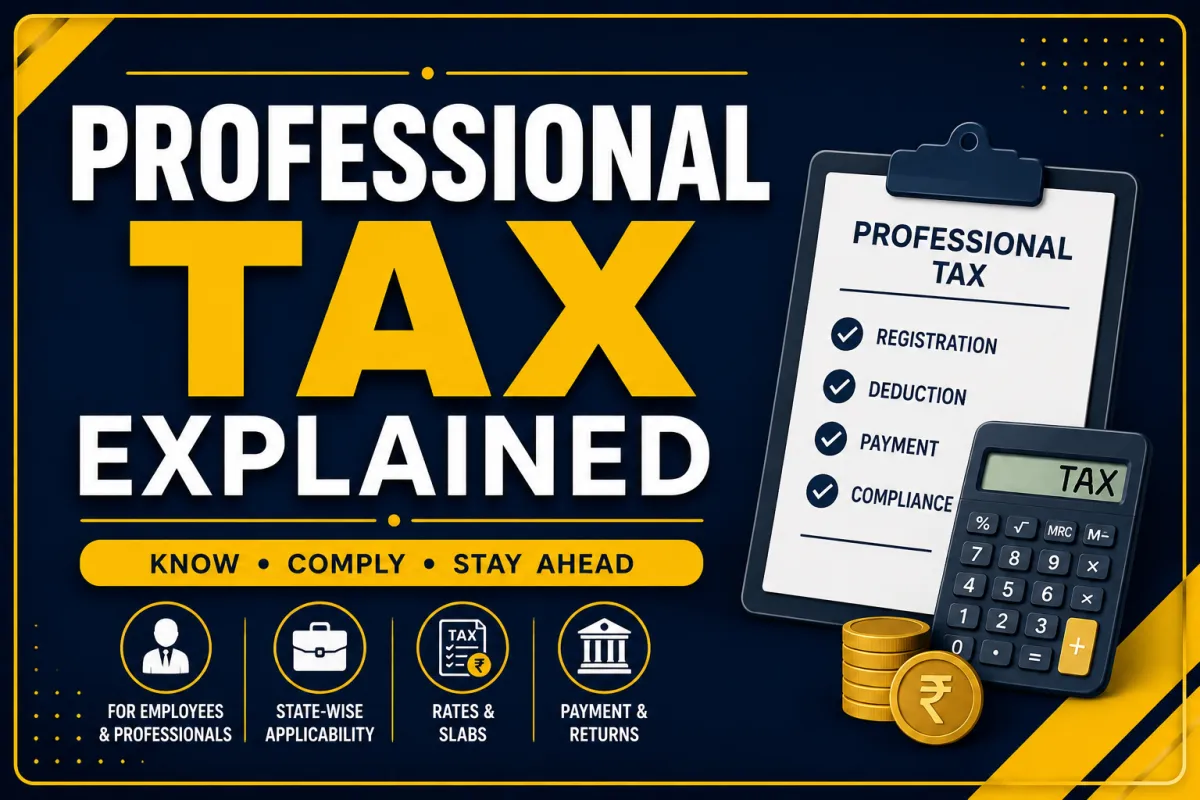
Professional Tax is a state-level tax imposed on individuals earning income through employment, profession, or trade in applicable Indian states. Employers may deduct it from employees’ salaries, while eligible professionals and businesses may have registration and payment responsibilities. Understanding registration, deduction, returns, and compliance helps avoid unnecessary penalties.

Comments (0)
Please login to comment.