Choosing the right accounting method is an important decision for every business. The two most commonly used methods are cash accounting and accrual accounting. Although both methods are designed to record financial transactions, they differ significantly in the timing of recognizing income and expenses. Understanding these differences helps business owners select the most appropriate accounting system, improve financial reporting, comply with statutory requirements, and make informed business decisions.
Cash accounting is the simpler of the two methods. Under this approach, revenue is recorded only when payment is actually received, and expenses are recorded only when they are paid. For example, if a business issues an invoice in March but receives payment in April, the revenue is recognized in April. Similarly, an expense is recorded only after the payment has been made. Because of its simplicity, cash accounting is commonly used by small businesses, freelancers, consultants, and sole proprietors with relatively straightforward financial transactions.
The primary advantage of cash accounting is its ease of implementation. Business owners can easily monitor actual cash inflows and outflows, making it useful for managing day-to-day cash flow. Since transactions are recorded only when money changes hands, financial records are simple to maintain and require less complex accounting procedures. However, cash accounting may not always reflect the true financial position of a business because outstanding receivables and unpaid liabilities are not recorded until payment occurs.
Accrual accounting follows a different principle. Under this method, revenue is recognized when it is earned, regardless of when payment is received, and expenses are recognized when they are incurred, regardless of when they are paid. For example, if a business provides services in March but receives payment in April, the revenue is still recorded in March. Likewise, if an expense relates to March operations but is paid later, it is recorded in March itself. This approach provides a more accurate representation of business performance during a particular accounting period.
One of the major advantages of accrual accounting is that it presents a complete picture of a company’s financial health. Since all earned revenue and incurred expenses are recorded in the appropriate accounting period, management can evaluate profitability more accurately. Accrual accounting also facilitates preparation of financial statements, budgeting, financial forecasting, and strategic planning. Larger businesses, companies, and organizations that follow accounting standards generally use accrual accounting because it supports comprehensive financial reporting.
Another important difference lies in compliance and reporting. Many statutory reporting frameworks and accounting standards require businesses above specified thresholds to maintain their books using the accrual method. Accurate recording of receivables, payables, inventories, depreciation, accrued expenses, and prepaid expenses enables businesses to comply with regulatory requirements and produce reliable financial statements.
Regardless of the accounting method chosen, businesses should maintain proper books of accounts, preserve supporting documents, reconcile bank accounts regularly, and use reliable accounting software to improve accuracy and efficiency. Consulting a qualified Chartered Accountant can help determine which accounting method is most suitable based on the nature, size, and legal requirements of the business.
Both cash accounting and accrual accounting offer unique advantages depending on the needs of the organization. Cash accounting provides simplicity and focuses on actual cash flow, while accrual accounting delivers a more comprehensive view of financial performance by recognizing transactions when they occur. Understanding the differences between these two methods enables business owners to establish an effective accounting system, improve financial management, and support sustainable business growth.
Cash Accounting vs Accrual Accounting: Understanding the Key Differences for Businesses

Akshita tyagi
@ tyagiakshita78@gmail.com
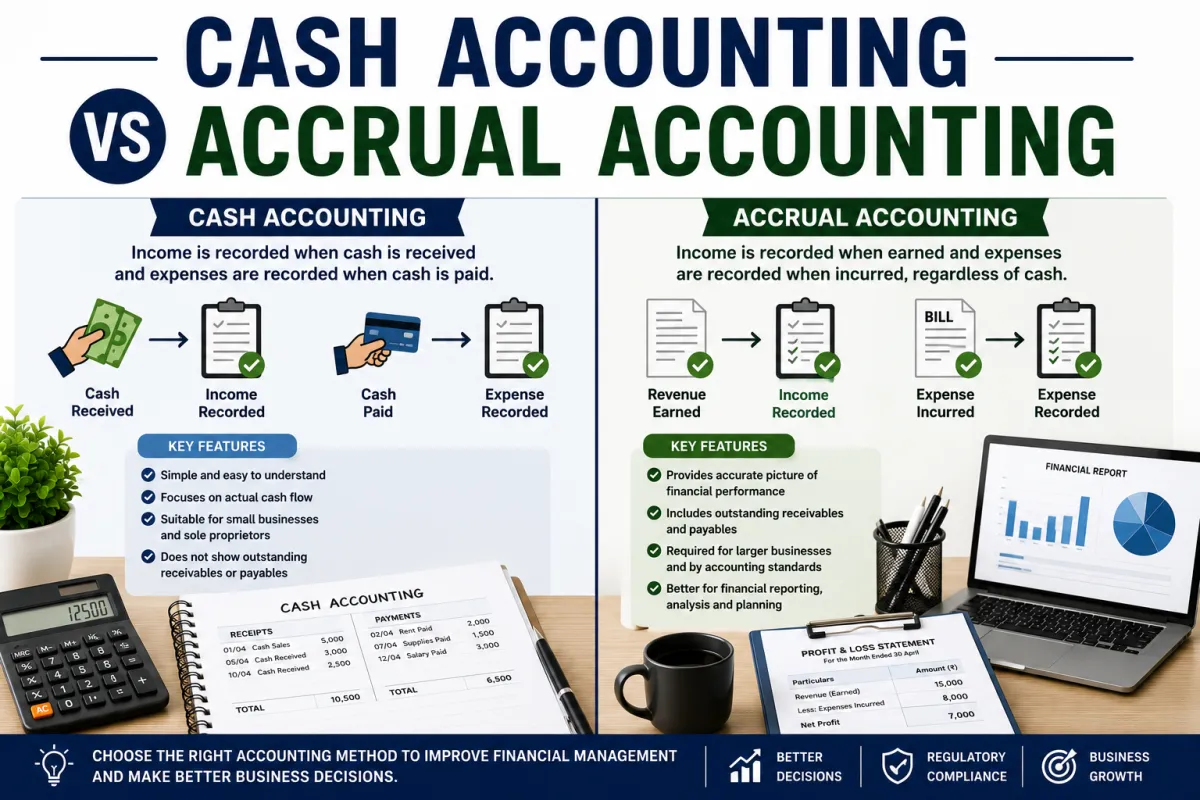
Cash accounting and accrual accounting are two widely used accounting methods for recording financial transactions. While cash accounting records income and expenses only when money is received or paid, accrual accounting records transactions when they are earned or incurred, providing a more accurate picture of a business’s financial performance.



Comments (0)
Please login to comment.