Choosing the right business structure is the foundation of every successful business. Before starting a new venture, entrepreneurs must carefully evaluate the legal structure that best suits their business objectives, investment plans, ownership model, and future growth strategy. The business structure determines how the business will be managed, taxed, regulated, and governed throughout its lifecycle. Making the right choice at the beginning can help avoid legal complications, reduce compliance burdens, and support sustainable business growth.
Several business structures are available in India, each designed to meet different business needs. Common forms include Sole Proprietorship, Partnership Firm, Limited Liability Partnership (LLP), One Person Company (OPC), Private Limited Company, and Public Limited Company. Each structure has unique features, benefits, limitations, and regulatory requirements.
A Sole Proprietorship is one of the simplest forms of business organization and is suitable for small businesses operated by a single owner. It offers easy formation, minimal compliance, and complete managerial control. However, the owner has unlimited personal liability, meaning personal assets may be used to settle business obligations if required.
A Partnership Firm is suitable for businesses owned by two or more individuals who agree to share profits and responsibilities. Partnerships are relatively easy to establish and offer operational flexibility. However, partners generally have unlimited liability unless the business is structured as a Limited Liability Partnership.
A Limited Liability Partnership (LLP) combines the operational flexibility of a partnership with the benefit of limited liability. Partners are generally protected from personal liability beyond their agreed contribution, making LLPs a popular choice for professional firms, consultants, and small to medium-sized businesses seeking limited legal exposure with moderate compliance requirements.
A One Person Company (OPC) is designed for individual entrepreneurs who want the benefits of a corporate structure while operating as a single owner. An OPC provides limited liability and a separate legal identity while requiring comparatively fewer compliances than larger companies.
A Private Limited Company is one of the most preferred business structures for startups and growing businesses. It offers a separate legal identity, limited liability for shareholders, easier fundraising opportunities, greater business credibility, and continuity of existence. Although it involves higher compliance requirements, it is often suitable for businesses planning expansion or seeking investment from external investors.
A Public Limited Company is generally suitable for large organizations intending to raise capital from the public. It is subject to more extensive regulatory requirements, corporate governance standards, and disclosure obligations compared to other business structures.
When selecting a business structure, entrepreneurs should evaluate several factors, including ownership pattern, number of promoters, investment requirements, taxation, liability protection, compliance obligations, funding opportunities, management flexibility, and future expansion plans. There is no universal structure suitable for every business; the ideal choice depends on the specific objectives and operational needs of the enterprise.
Maintaining proper books of accounts, statutory records, tax compliance, and regulatory filings is essential regardless of the business structure selected. Accurate financial reporting supports legal compliance, improves transparency, and strengthens business credibility with investors, lenders, customers, and regulatory authorities.
Modern accounting and compliance management software can help businesses manage bookkeeping, tax filings, payroll, invoicing, financial reporting, statutory deadlines, and regulatory documentation efficiently. Automation reduces administrative burden and improves compliance accuracy.
Since the legal, tax, and compliance implications of each business structure vary, entrepreneurs should seek professional guidance before making a final decision. Consulting qualified Chartered Accountants, Company Secretaries, or legal professionals helps business owners evaluate available options, understand regulatory requirements, and select the structure that best aligns with their long-term business goals.
Choosing the right business structure is a strategic decision that influences every aspect of a business, from daily operations to long-term growth. By carefully evaluating legal, financial, and operational factors, entrepreneurs can establish a strong foundation for success, reduce compliance risks, and position their business for sustainable expansion. Making an informed choice at the beginning contributes significantly to the long-term stability and growth of any enterprise.
Choosing the Right Business Structure: A Complete Guide for New Entrepreneurs

Akshita tyagi
@ tyagiakshita78@gmail.com
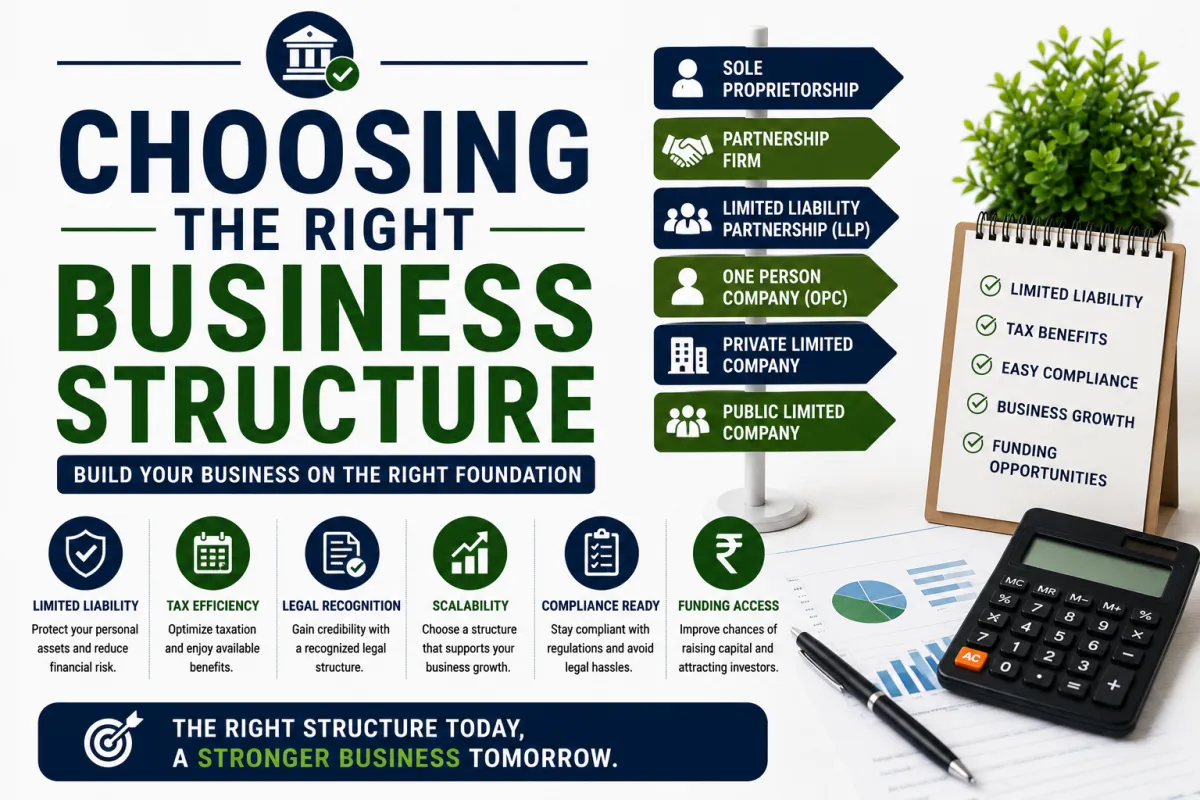
Choosing the right business structure is one of the most important decisions for any entrepreneur. The legal structure of a business affects taxation, liability, compliance requirements, ownership, fundraising opportunities, and long-term growth. Selecting the appropriate structure helps businesses operate efficiently while meeting legal and financial obligations.

Comments (0)
Please login to comment.