Every startup operates within a legal and regulatory framework that requires timely compliance with various statutory obligations. From tax filings and corporate compliances to labour law requirements and regulatory reporting, startups must meet several deadlines throughout the financial year. A compliance calendar serves as a structured schedule that helps businesses monitor important due dates, maintain legal compliance, and avoid unnecessary penalties or operational disruptions.
The primary purpose of a compliance calendar is to ensure that no statutory obligation is overlooked. It provides a centralized record of filing deadlines, tax payments, annual compliances, payroll responsibilities, and regulatory submissions. By planning compliance activities in advance, startups can allocate sufficient time and resources to complete each requirement accurately and on time.
One of the most important areas covered by a compliance calendar is tax compliance. Startups should track due dates for Income Tax Return filing, GST registrations and returns, TDS returns, advance tax payments, tax audits (where applicable), and other tax-related obligations. Timely tax compliance helps businesses avoid interest, penalties, and legal complications while maintaining a positive compliance record.
Corporate compliance is equally important for companies registered under the Companies Act. Businesses should monitor annual filings with the Ministry of Corporate Affairs (MCA), board meetings, annual general meetings (AGMs), maintenance of statutory registers, Director KYC requirements, financial statement filings, and other applicable corporate obligations. Maintaining corporate compliance strengthens governance and supports regulatory transparency.
Payroll and labour law compliances should also be included in the compliance calendar. Businesses employing staff may need to monitor Provident Fund (PF), Employees’ State Insurance (ESI), Professional Tax (PT), Labour Welfare Fund (LWF), Tax Deducted at Source (TDS) on salaries, gratuity, and other employee-related statutory requirements. Timely payroll compliance ensures smooth employee management and reduces legal risks.
Startups should also schedule regular accounting activities such as monthly bookkeeping, bank reconciliations, inventory verification, financial statement preparation, accounts receivable reviews, accounts payable monitoring, and cash flow analysis. Routine financial management improves accuracy and ensures that records remain audit-ready throughout the year.
Maintaining proper documentation is another important aspect of compliance management. Businesses should preserve invoices, purchase bills, contracts, tax payment receipts, payroll records, statutory filings, board resolutions, licenses, registrations, and other legal documents in an organized manner. Well-maintained records simplify audits and regulatory inspections.
Digital accounting and compliance management software can significantly improve compliance tracking. Modern software provides automated reminders, filing schedules, document management, dashboard reporting, statutory updates, and compliance alerts. Automation reduces manual errors and helps businesses stay informed about upcoming deadlines.
The compliance calendar should be reviewed and updated regularly because statutory requirements and filing deadlines may change due to amendments in tax laws, corporate regulations, or government notifications. Businesses should monitor regulatory updates and revise their compliance schedules whenever necessary.
Startups can further strengthen compliance by assigning responsibilities to specific team members or departments for different statutory obligations. Clear accountability improves coordination, ensures timely completion of compliance activities, and minimizes the risk of missed deadlines.
Consulting qualified Chartered Accountants, Company Secretaries, or legal professionals is highly recommended to ensure that all applicable compliances are identified and completed accurately. Professional guidance helps startups remain updated with changing regulations and maintain full compliance with applicable laws.
A compliance calendar is more than a list of deadlines—it is a valuable management tool that supports business continuity, financial discipline, and regulatory compliance. By tracking statutory obligations, maintaining organized records, monitoring deadlines, and reviewing compliance activities regularly, startups can avoid penalties, strengthen governance, and focus confidently on business growth. A well-managed compliance calendar creates a strong foundation for sustainable and legally compliant business operations.
Compliance Calendar for Startups: Essential Deadlines Every New Business Should Track

Akshita tyagi
@ tyagiakshita78@gmail.com
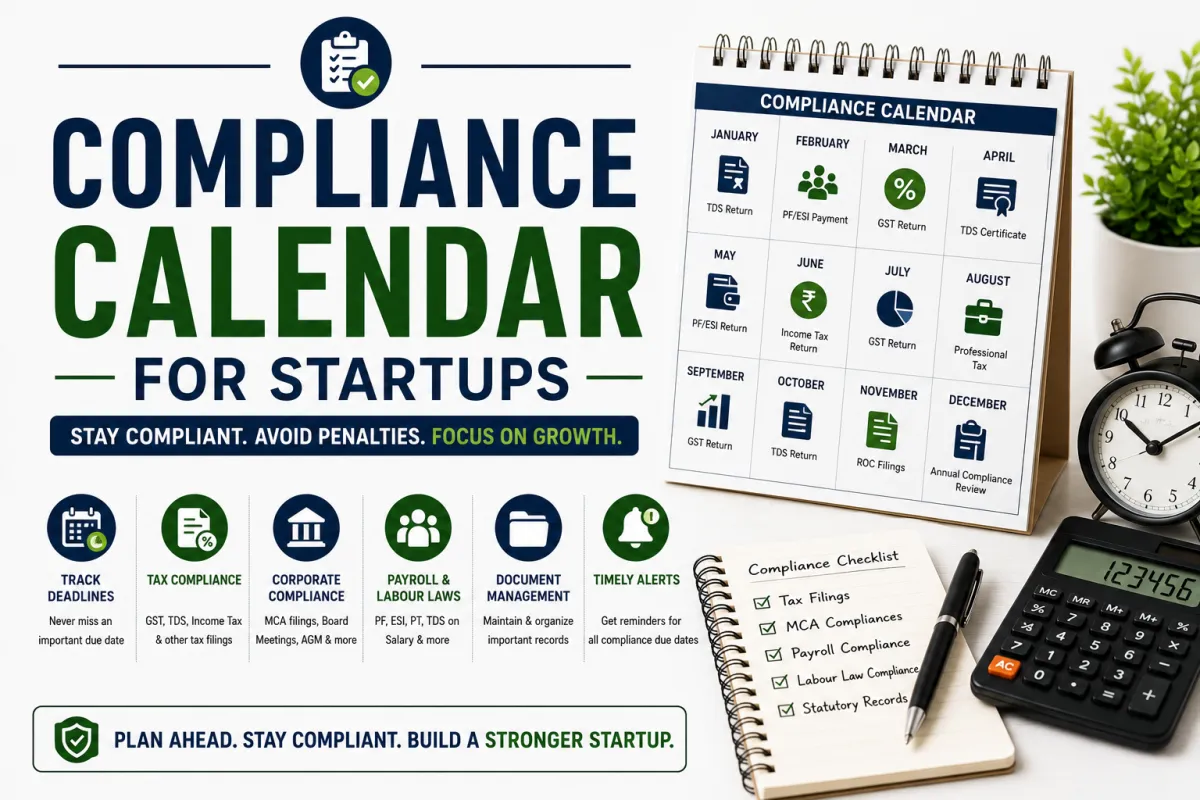
A compliance calendar helps startups track important statutory deadlines, regulatory filings, tax obligations, and legal requirements throughout the year. Maintaining a well-organized compliance calendar ensures timely filings, avoids penalties, and supports smooth business operations.


Comments (0)
Please login to comment.