GST for Flipkart Sellers: Everything You Need to Know in 2026
Starting an online business on Flipkart has become easier than ever, but understanding GST for Flipkart sellers is equally important. Whether you are a new entrepreneur or an established business expanding online, complying with GST regulations ensures that your business runs smoothly without legal complications.
Under the GST law, most sellers on Flipkart are required to obtain GST registration before listing their products. Since Flipkart operates as an e-commerce marketplace, it collects Tax Collected at Source (TCS) on behalf of the government. This makes GST compliance mandatory for the majority of sellers, even if their turnover is below the normal GST registration threshold.
Once your GST registration is complete, you must provide your GSTIN while creating your seller account. Every sale made through Flipkart is recorded, and the platform deducts the applicable TCS before transferring the remaining payment to your account. These deductions are reflected in your GST records and can be claimed while filing GST returns.
Another major advantage of GST is the Input Tax Credit (ITC). If you purchase raw materials, packaging materials, office supplies, or other business-related goods and services, you can claim credit for the GST paid on those purchases. This reduces your overall tax liability and improves your business profitability. To claim ITC successfully, always collect proper GST invoices from your suppliers.
Flipkart sellers are also responsible for filing GST returns on time. Regular filing helps maintain compliance, avoids late fees, and keeps your GST account in good standing. Delayed or incorrect filings can result in penalties and may affect your business operations.
Maintaining accurate records is equally important. Keep invoices, purchase bills, sales reports, shipping records, and payment statements safely organized. Since Flipkart provides detailed transaction reports, reconciling them with your GST returns helps identify any mismatches early and prevents future notices from tax authorities.
If you sell products in multiple states using warehouses or fulfilment services, additional GST compliance requirements may apply. Understanding the place of supply, interstate transactions, and stock transfers can help you avoid unnecessary tax issues. Consulting a GST professional can save both time and money as your business grows.
In 2026, GST compliance remains one of the most important responsibilities for Flipkart sellers. Proper registration, timely return filing, accurate bookkeeping, and effective use of Input Tax Credit not only ensure legal compliance but also improve financial efficiency. Whether you are selling fashion, electronics, home essentials, or handmade products, staying updated with GST rules will help your Flipkart business grow confidently and sustainably.
Keywords: GST for Flipkart Sellers, Flipkart GST Registration, GST Registration Online, GST Return Filing, Input Tax Credit (ITC), Tax Collected at Source (TCS), E-commerce GST, GST Compliance, Online Seller GST, Flipkart Business.
GST for Flipkart Sellers: Everything You Need to Know in 2026

Akshita tyagi
@ tyagiakshita78@gmail.com
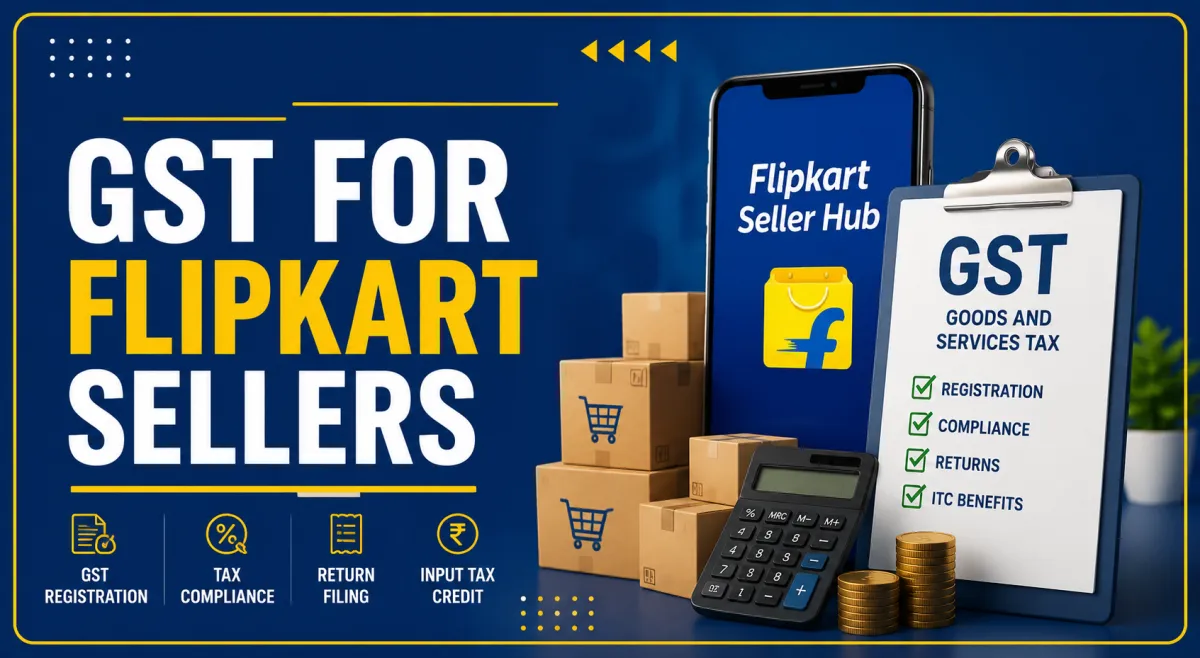
Selling on Flipkart is a great opportunity for businesses to reach millions of customers across India. However, every seller must understand GST compliance to avoid penalties and ensure smooth business operations. From GST registration to filing returns and claiming Input Tax Credit (ITC), following the right GST procedures helps sellers stay compliant while reducing tax costs. This guide explains the GST requirements for Flipkart sellers in simple language.

Comments (0)
Please login to comment.