GST registration is the process through which a business obtains a unique Goods and Services Tax Identification Number (GSTIN), allowing it to collect GST, claim eligible Input Tax Credit (ITC), and comply with the provisions of the GST law. Understanding the fees associated with GST registration helps entrepreneurs make informed decisions and avoid unnecessary costs or fraudulent practices.
One of the most important facts about GST registration is that the Government of India does not charge any official fee for registering under GST through the official GST portal. Eligible businesses can complete the registration process online without paying any government registration charges. However, the application must be completed accurately and supported by the required documentation.
Although government registration is free, many businesses choose to engage Chartered Accountants, tax consultants, or GST practitioners to assist with the registration process. These professionals may charge service fees for document verification, application preparation, registration filing, advisory services, and post-registration support. The amount varies depending on the complexity of the business, the scope of services provided, and the professional’s pricing structure.
Businesses should also be aware that GST registration itself does not include any hidden government charges. However, after obtaining registration, businesses are responsible for complying with ongoing GST requirements such as maintaining proper books of accounts, issuing GST-compliant invoices, filing GST returns, paying applicable taxes, and preserving statutory records. These ongoing compliance activities may involve accounting or professional service costs.
Before applying for GST registration, businesses should ensure that all required documents are readily available. Commonly required documents may include PAN, Aadhaar, proof of business address, bank account details, identity and address proof of promoters or authorized signatories, photographs, and other documents depending on the constitution of the business. Proper documentation helps avoid delays in processing the application.
Choosing whether to register independently or seek professional assistance depends on the complexity of the business. Small businesses with straightforward documentation may complete the registration process themselves, while companies with multiple partners, directors, branches, or specialized business activities may benefit from expert guidance to ensure accuracy and compliance.
Entrepreneurs should remain cautious of unauthorized agents claiming that GST registration requires mandatory government fees or promising guaranteed approvals for additional payments. Since the official registration process is free, businesses should always verify information carefully and deal only with qualified professionals or authorized service providers when seeking assistance.
Maintaining compliance after registration is equally important. Registered taxpayers should issue proper tax invoices, maintain accounting records, reconcile transactions, file GST returns within prescribed due dates, and claim eligible Input Tax Credit in accordance with GST regulations. Timely compliance helps avoid penalties and supports smooth business operations.
Modern accounting and GST software simplifies post-registration compliance by automating invoice generation, tax calculations, bookkeeping, reconciliation, return preparation, and compliance reminders. Digital tools improve efficiency while reducing the risk of manual errors.
GST laws and compliance procedures may be updated periodically through government notifications and legislative amendments. Businesses should stay informed about the latest regulatory changes and ensure that their compliance practices remain aligned with current legal requirements.
Consulting qualified Chartered Accountants or GST professionals can provide valuable assistance not only during registration but also in maintaining ongoing compliance, tax planning, return filing, and regulatory reporting. Professional guidance helps businesses reduce compliance risks and focus on business growth.
Understanding GST registration fees helps entrepreneurs avoid misconceptions and make informed financial decisions. While official GST registration through the government portal is free of cost, businesses may choose to pay reasonable professional service fees for expert assistance. By maintaining accurate documentation, ensuring timely compliance, and staying informed about GST regulations, businesses can successfully manage their GST obligations and build a strong foundation for long-term growth.
GST Registration Fees Explained: What Businesses Need to Know Before Applying

Akshita tyagi
@ tyagiakshita78@gmail.com
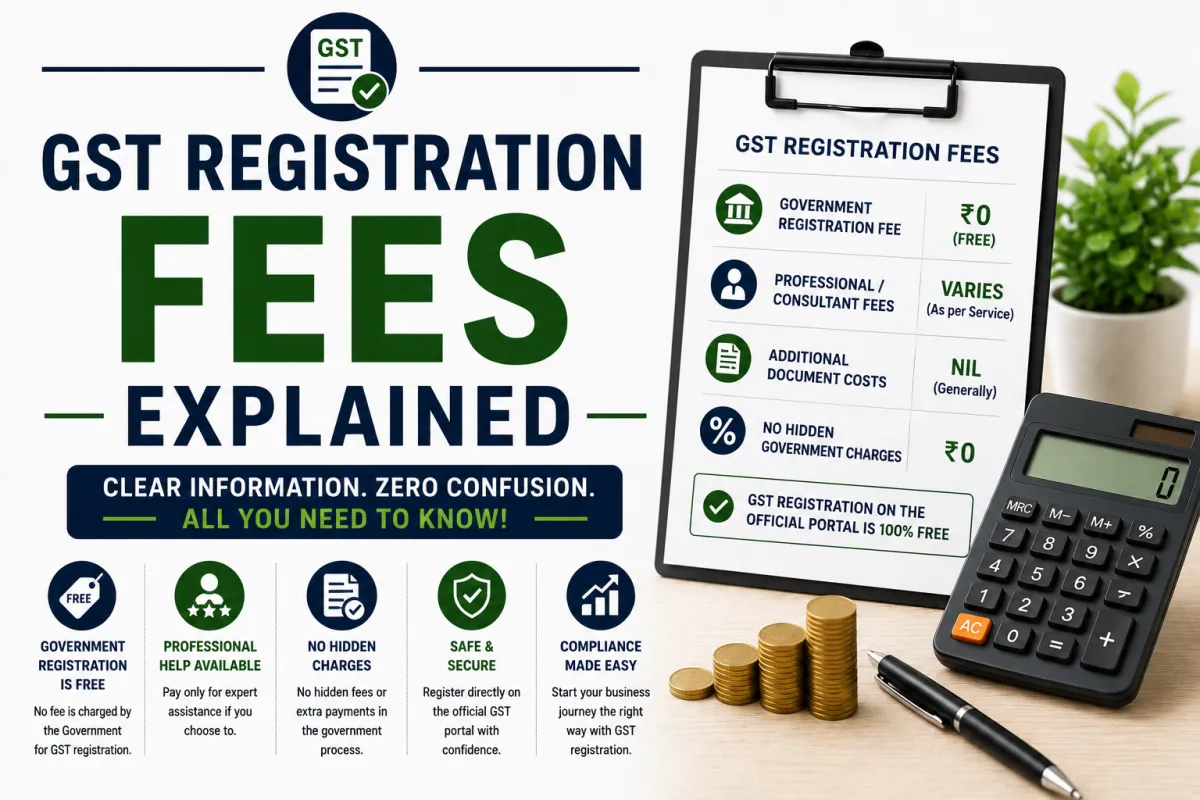
GST registration is an important legal requirement for eligible businesses in India. While the government does not charge any fee for obtaining GST registration through the official portal, businesses may incur professional service charges if they seek assistance from tax consultants or Chartered Accountants.



Comments (0)
Please login to comment.