The Goods and Services Tax (GST) has transformed India’s indirect tax system by creating a unified taxation framework for businesses across the country. Whether you are starting a new business, expanding operations, or crossing the prescribed turnover limit, obtaining GST registration is an essential step toward legal compliance. GST registration allows businesses to collect GST from customers, claim Input Tax Credit (ITC), and conduct business smoothly with suppliers, clients, and government agencies. It also enhances business credibility and supports long-term growth.
The GST registration process in 2026 continues to be fully online through the official GST portal, making it convenient for businesses to complete the registration from anywhere. The first step is determining whether your business is required to register. Registration is generally mandatory for businesses exceeding the prescribed turnover threshold, interstate suppliers, e-commerce sellers, exporters, importers, and businesses falling under specific categories notified by the government. Even if registration is not mandatory, many businesses choose to register voluntarily to avail themselves of Input Tax Credit and improve market credibility.
To begin the registration process, applicants must gather essential documents, including the PAN card of the business or proprietor, Aadhaar card, business registration proof, identity and address proof of promoters or directors, bank account details, and proof of the principal place of business. Once the documents are ready, the applicant can submit the online application through the GST portal by providing accurate business information and uploading the required documents. Aadhaar authentication may be required to verify the applicant’s identity. In certain cases, tax authorities may conduct additional verification or request further documentation before approving the application.
After successful verification, a unique Goods and Services Tax Identification Number (GSTIN) is issued, along with the GST Registration Certificate. Once registered, businesses must issue GST-compliant invoices, maintain proper books of accounts, file GST returns within the prescribed due dates, and comply with all applicable GST regulations. Timely filing of returns and accurate record-keeping are essential to avoid penalties, interest charges, and compliance notices.
GST registration offers several important benefits. It enables businesses to claim Input Tax Credit on eligible purchases, participate in interstate trade without restrictions, improve customer confidence, and work with larger organizations that prefer GST-registered vendors. It also strengthens a company’s professional image and ensures compliance with Indian tax laws. Businesses should regularly stay updated with GST notifications, filing requirements, and regulatory changes to maintain smooth operations.
Whether you are a startup, freelancer, trader, manufacturer, service provider, or growing enterprise, GST registration is a valuable step toward building a legally compliant and financially efficient business. By understanding the registration process, maintaining accurate records, and fulfilling ongoing compliance requirements, businesses can minimize tax-related risks and focus on sustainable growth in India’s evolving business environment.
GST Registration Process in India (2026)

Akshita tyagi
@ tyagiakshita78@gmail.com
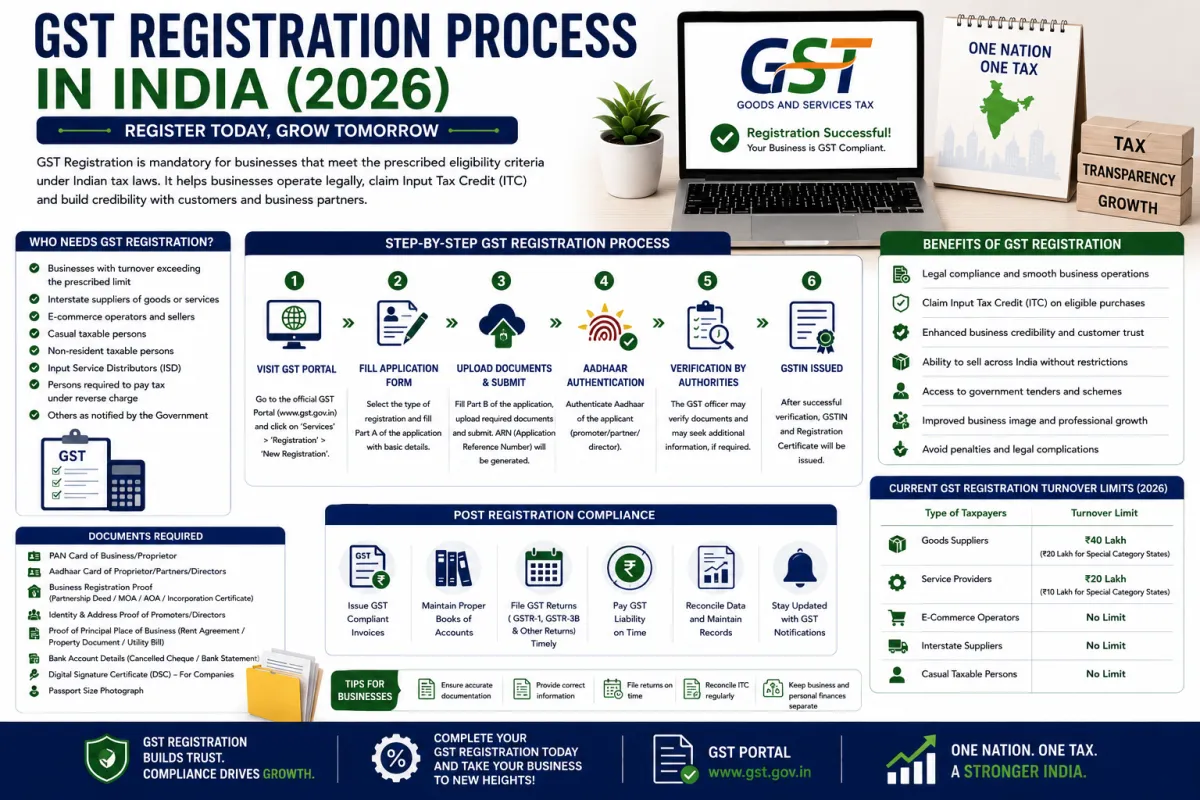
GST Registration is mandatory for businesses that meet the prescribed eligibility criteria under Indian tax laws. Registering under GST helps businesses operate legally, claim Input Tax Credit (ITC), and build credibility with customers and business partners.



Comments (0)
Please login to comment.