How Automation Is Changing Modern Accounting
Technology is rapidly changing the accounting industry, and automation has become one of the biggest drivers of this transformation. Businesses are adopting automated accounting solutions to simplify routine financial tasks, improve efficiency, and ensure greater accuracy in financial management.
Accounting automation eliminates repetitive manual work, allowing finance professionals to focus on strategic planning, budgeting, and business growth.
What Is Accounting Automation?
Accounting automation refers to the use of software and digital tools to perform routine accounting tasks with minimal human intervention. These systems automatically record transactions, reconcile bank statements, generate invoices, calculate taxes, prepare financial reports, and monitor expenses.
Automation not only speeds up financial processes but also minimizes the chances of human error.
Benefits of Accounting Automation
1. Saves Time
Automated systems complete routine accounting tasks in minutes instead of hours, increasing overall productivity.
2. Reduces Errors
Manual data entry often leads to mistakes. Automation improves accuracy by processing transactions consistently.
3. Faster Financial Reporting
Businesses can generate real-time financial reports, including profit and loss statements, balance sheets, and cash flow reports.
4. Improved Compliance
Automation helps businesses stay compliant with tax regulations by calculating taxes accurately and reminding users about important filing deadlines.
5. Better Cash Flow Management
Automated expense tracking and invoice reminders help businesses monitor cash flow more effectively.
6. Increased Productivity
Finance teams spend less time on repetitive work and more time on financial analysis and decision-making.
Features of Automated Accounting Software
Automated bookkeeping
Invoice generation
Expense management
Bank reconciliation
Payroll processing
Tax calculations
Financial dashboards
Inventory management
Audit trails
Multi-user collaboration
Best Practices for Implementing Automation
Choose software that matches your business needs.
Train employees on the new system.
Review automated reports regularly.
Maintain secure user access.
Back up financial data periodically.
Challenges to Consider
While automation offers many advantages, businesses should also monitor data security, software updates, employee training, and system integration to ensure smooth operations.
Conclusion
Accounting automation is transforming financial management by making accounting faster, more accurate, and more efficient. Businesses that invest in automation can reduce operational costs, improve compliance, and gain better financial insights for long-term growth.
How Automation Is Changing Modern Accounting

Manjeet saini
@ Mnjeet_saini
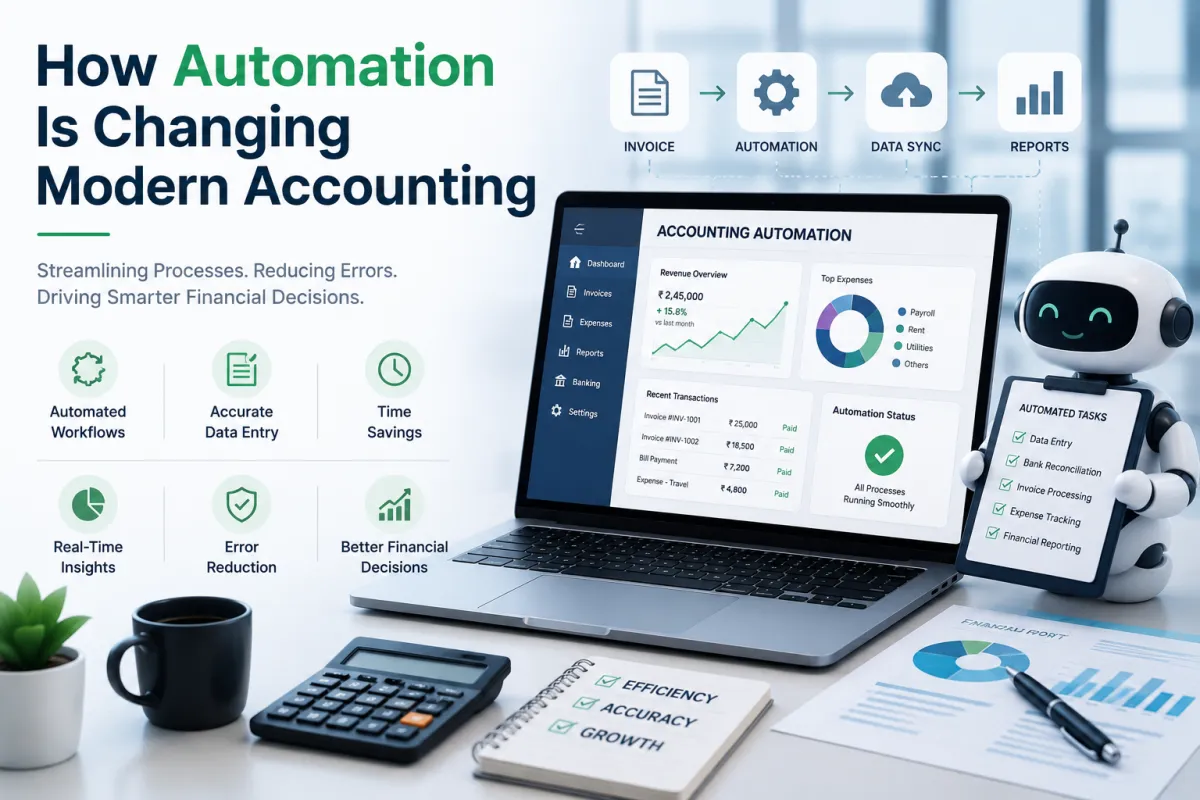
Accounting automation is helping businesses save time, reduce manual errors, and improve financial accuracy. Learn how automated accounting tools are transforming bookkeeping, payroll, invoicing, and financial reporting.



Comments (0)
Please login to comment.