How to Prepare for a Tax Audit

Akshita tyagi
@ tyagiakshita78@gmail.com
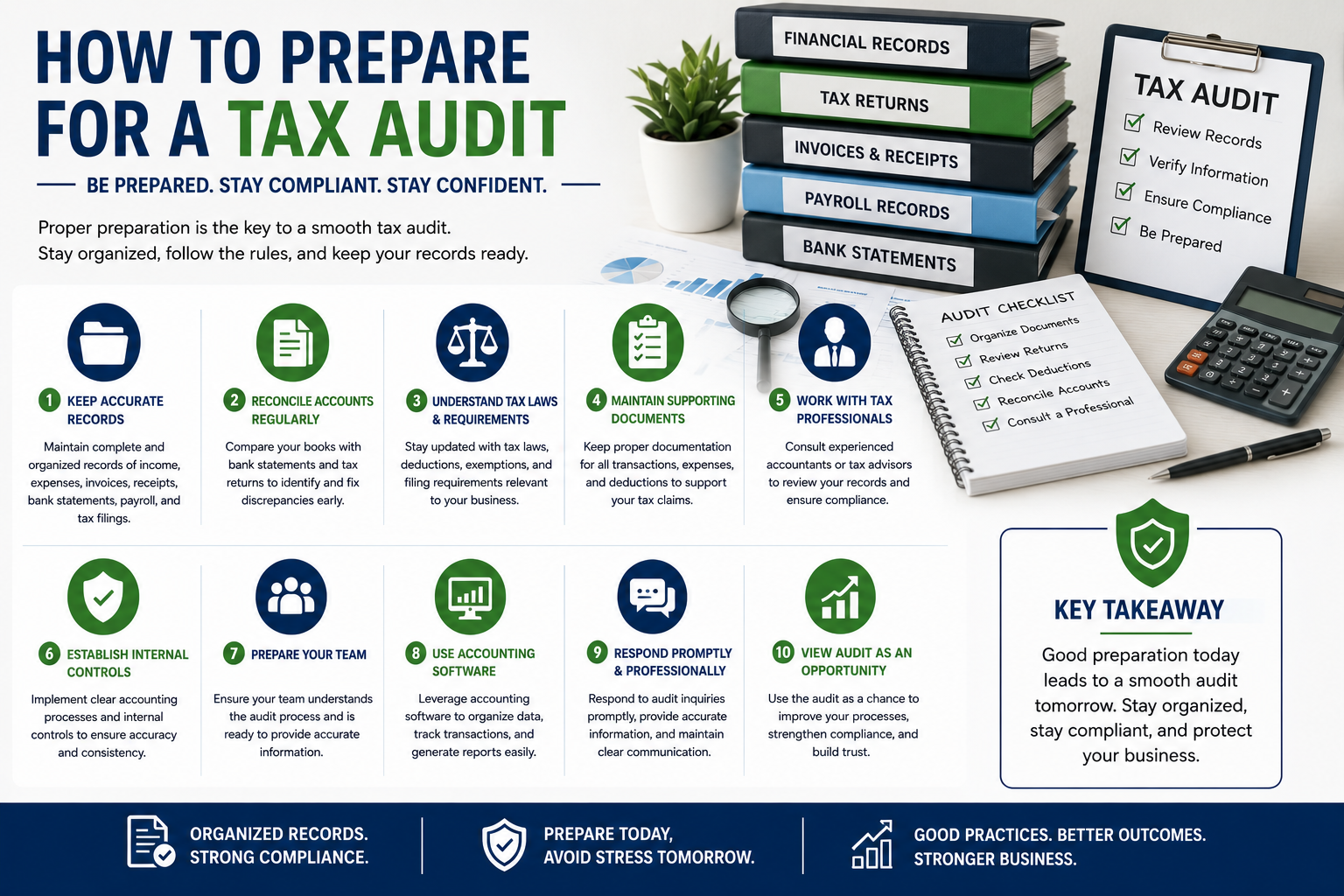
A tax audit can be a stressful experience for any business, but proper preparation can make the process smooth and manageable. Maintaining accurate records and staying compliant with tax regulations are key to successfully handling a tax audit.
A tax audit is an examination conducted by tax authorities to verify the accuracy of a business’s financial records, tax returns, and compliance with applicable tax laws. While the possibility of an audit may seem intimidating, businesses that maintain organized records and follow proper accounting practices can navigate the process with confidence. The first step in preparing for a tax audit is ensuring that all financial records are accurate, complete, and easily accessible. Businesses should maintain organized documentation of invoices, receipts, bank statements, payroll records, tax filings, expense reports, and supporting financial documents for the required retention period. Proper recordkeeping not only simplifies the audit process but also demonstrates transparency and compliance. Another important aspect of audit preparation is regularly reconciling financial accounts. Businesses should compare accounting records with bank statements, tax returns, and supporting documents to identify and correct discrepancies before an audit occurs. Reviewing previous tax filings for errors or omissions can also help reduce potential issues during an audit. It is equally important to understand applicable tax laws and regulations relevant to the business. Staying informed about tax obligations, filing requirements, deductions, and exemptions can help ensure compliance and minimize audit risks. Businesses should also establish clear internal controls and accounting procedures to maintain consistency in financial reporting. During an audit, tax authorities may request explanations for specific transactions or deductions. Therefore, maintaining detailed records and supporting documentation for all business expenses is essential. Working with qualified accounting and tax professionals can provide valuable guidance throughout the preparation process. Experienced professionals can review records, identify potential compliance concerns, and assist in responding to audit inquiries effectively. Businesses should also prepare employees who may be involved in providing information during the audit process and ensure that all communication with tax authorities remains professional and accurate. Additionally, using modern accounting software can improve record management, automate financial tracking, and generate reports that support audit readiness. Rather than viewing an audit as a negative event, businesses should see it as an opportunity to verify the accuracy of their financial practices and strengthen compliance procedures. Proper preparation can significantly reduce stress, save time, and improve the outcome of a tax audit. By maintaining organized records, following tax regulations, conducting regular financial reviews, and seeking professional assistance when necessary, businesses can confidently face tax audits and protect their financial reputation. Effective tax audit preparation ultimately supports stronger financial management and long-term business success.

Comments (0)
Please login to comment.