Why Every Small Business Needs Proper Bookkeeping

Akshita tyagi
@ tyagiakshita78@gmail.com
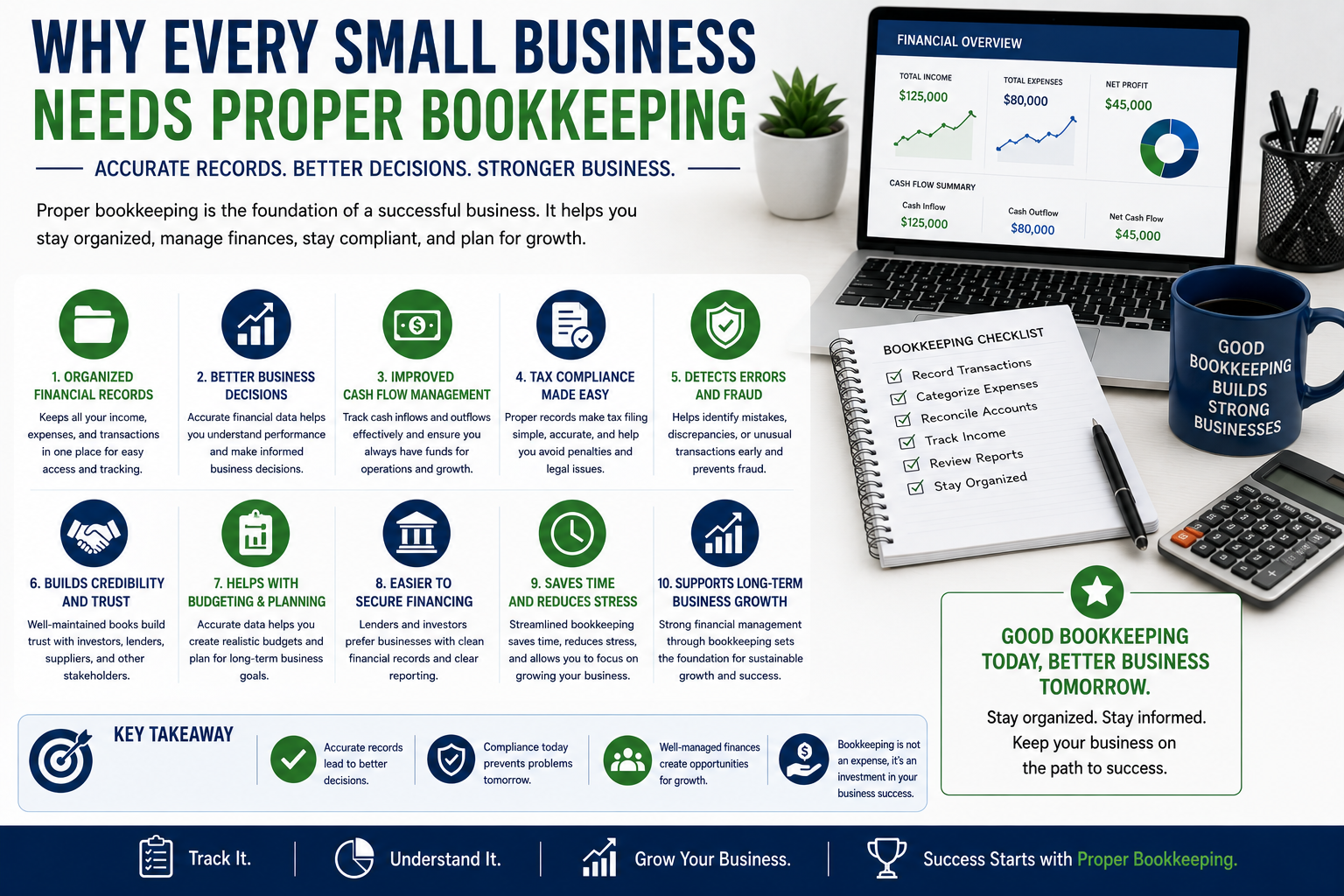
Proper bookkeeping is the foundation of a successful small business. It helps business owners track income and expenses, maintain accurate financial records, and make informed decisions for sustainable growth.
Bookkeeping is one of the most important financial functions for any small business. It involves recording, organizing, and maintaining all financial transactions, including sales, purchases, expenses, payments, and receipts. While many small business owners focus on sales and growth, proper bookkeeping is essential for understanding the financial health of the business and ensuring long-term success. One of the primary benefits of bookkeeping is accurate financial tracking. By maintaining detailed records of all transactions, businesses can monitor their income and expenses, identify spending patterns, and evaluate profitability. This information allows owners to make informed business decisions and plan effectively for future growth. Proper bookkeeping also plays a crucial role in cash flow management. Understanding how much money is coming into and leaving the business helps prevent cash shortages and ensures that financial obligations such as supplier payments, employee salaries, and operating expenses are met on time. Another important advantage is tax compliance. Accurate bookkeeping makes it easier to prepare tax returns, calculate tax liabilities, and maintain supporting documentation for deductions and credits. Businesses with organized financial records are also better prepared for audits and can avoid penalties resulting from inaccurate reporting. Bookkeeping additionally provides valuable insights into business performance through financial reports such as profit and loss statements, balance sheets, and cash flow statements. These reports help business owners identify strengths, address weaknesses, and set realistic financial goals. Proper bookkeeping can also improve relationships with investors, lenders, and financial institutions. When seeking business loans or investment opportunities, accurate financial records demonstrate professionalism, transparency, and financial stability. Furthermore, maintaining organized records reduces the risk of fraud, accounting errors, and financial mismanagement. Modern bookkeeping software has made the process more efficient by automating transaction recording, invoice management, expense tracking, and financial reporting. Small businesses can save time and improve accuracy while gaining real-time access to financial information. As a business grows, bookkeeping becomes even more important for managing increasing transaction volumes and maintaining compliance with financial regulations. Whether a business is a startup or an established company, proper bookkeeping provides the financial clarity needed to make strategic decisions and achieve sustainable growth. Investing time and resources in effective bookkeeping practices can help small businesses improve efficiency, strengthen financial control, and build a solid foundation for long-term success in a competitive marketplace.



Comments (0)
Please login to comment.