Working Capital Management is one of the most important aspects of financial management for every business, regardless of its size or industry. It involves managing current assets such as cash, inventory, accounts receivable, and current liabilities like supplier payments and short-term obligations. Efficient working capital management ensures that a business has sufficient funds to operate smoothly while maintaining financial stability and supporting long-term growth.
The primary objective of working capital management is to maintain an optimal balance between liquidity and profitability. A business must have enough working capital to pay salaries, purchase inventory, settle supplier invoices, pay taxes, and meet other day-to-day expenses. At the same time, excessive idle funds should be avoided, as they may reduce overall business profitability. Maintaining this balance is essential for sustainable financial performance.
Cash flow management is the foundation of effective working capital management. Businesses should regularly monitor incoming payments from customers and outgoing payments to suppliers, employees, lenders, and government authorities. Preparing regular cash flow forecasts helps identify potential shortages in advance and allows management to take timely corrective action.
Efficient management of accounts receivable is another key component. Businesses should issue invoices promptly, establish clear payment terms, follow up on outstanding payments, and encourage timely collections. Reducing the time required to collect receivables improves cash availability and reduces dependence on external financing.
Inventory management also plays a significant role in working capital optimization. Maintaining excessive inventory ties up valuable funds and increases storage costs, while insufficient inventory may lead to production delays or lost sales. Businesses should regularly review inventory levels, monitor stock movement, and implement effective inventory control systems to achieve an optimal balance.
Managing accounts payable strategically helps preserve cash without affecting supplier relationships. Businesses should negotiate favorable payment terms, utilize available credit periods responsibly, and ensure timely payments to maintain a positive reputation with vendors. Responsible payable management supports healthy cash flow while strengthening long-term supplier partnerships.
Maintaining accurate accounting records is essential for effective working capital management. Businesses should regularly update books of accounts, reconcile bank statements, prepare financial statements, monitor outstanding receivables and payables, and maintain proper documentation for all financial transactions. Reliable financial information enables better decision-making and financial planning.
Technology significantly improves working capital management. Modern accounting and ERP software automate invoicing, inventory tracking, bank reconciliation, payroll processing, GST compliance, financial reporting, and cash flow analysis. Real-time financial information allows business owners to monitor working capital efficiently and respond quickly to changing business conditions.
Business owners should also regularly analyze key financial indicators such as current ratio, quick ratio, inventory turnover, receivable turnover, payable turnover, and cash conversion cycle. Monitoring these financial metrics helps identify operational inefficiencies and improve overall financial performance.
Professional guidance from Chartered Accountants and financial advisors can help businesses strengthen working capital management practices. Experts assist with cash flow planning, budgeting, financial reporting, inventory valuation, tax compliance, business financing, and financial analysis. Their expertise supports informed decision-making and long-term financial stability.
Access to appropriate business financing can further strengthen working capital during periods of expansion or temporary cash shortages. Businesses should evaluate suitable financing options, maintain a healthy business credit profile, and borrow responsibly when additional working capital is genuinely required.
Effective Working Capital Management is essential for maintaining business continuity, improving operational efficiency, and achieving sustainable growth. By managing cash flow carefully, controlling inventory, improving receivable collections, maintaining accurate financial records, leveraging technology, and seeking professional financial guidance, businesses can optimize their working capital and strengthen their financial position. Sound working capital management not only supports daily operations but also creates a solid foundation for long-term business success.
Working Capital Management: Strategies to Improve Cash Flow and Business Performance

Akshita tyagi
@ tyagiakshita78@gmail.com
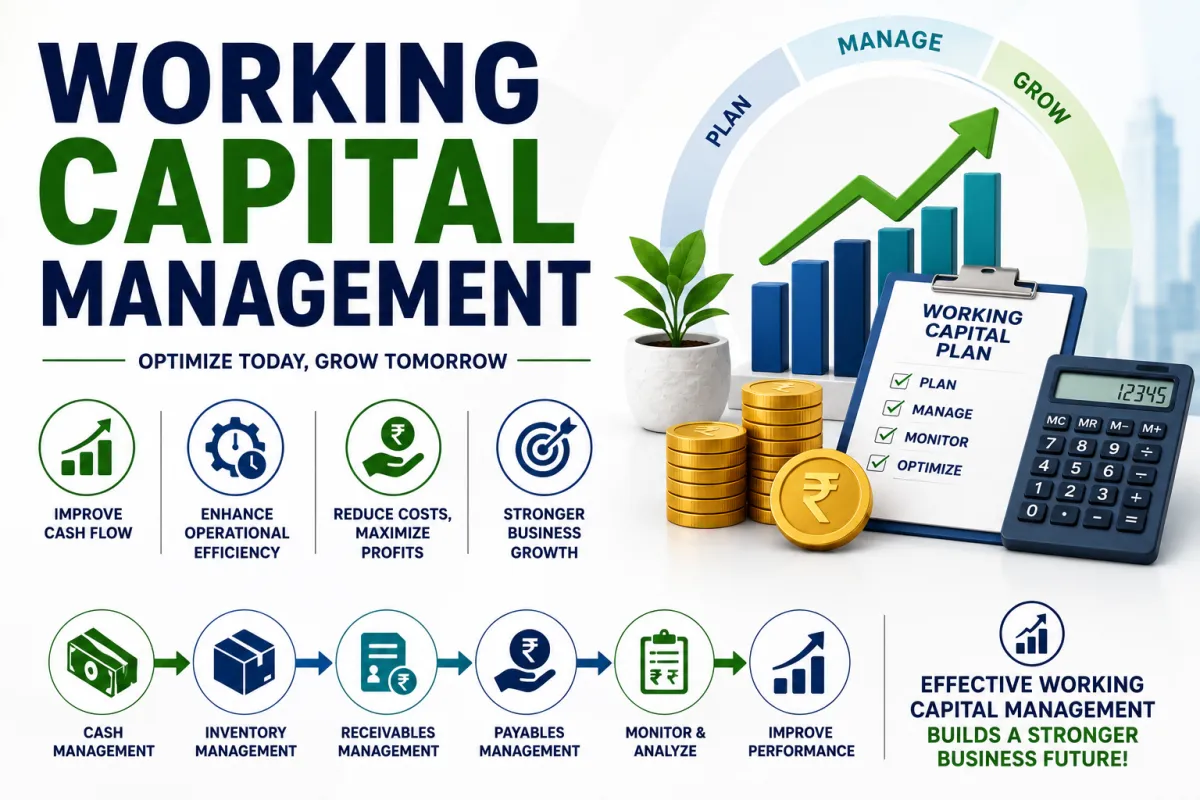
Working Capital Management is the process of managing a company’s short-term assets and liabilities to ensure smooth day-to-day operations. Effective working capital management improves cash flow, enhances profitability, and helps businesses meet their financial obligations without disruption.



Comments (0)
Please login to comment.