Business budget planning is one of the most important financial management practices for organizations of all sizes. A budget serves as a financial roadmap that estimates future income, expenses, and resource allocation over a specific period. It helps business owners understand where money is being earned, how it is being spent, and what financial adjustments are needed to achieve business objectives. Whether you operate a startup, small business, or established enterprise, a well-prepared budget provides greater financial control and supports long-term business success.
The first step in business budget planning is analyzing historical financial data and estimating future revenue based on realistic business expectations. Business owners should review previous sales trends, customer demand, seasonal fluctuations, and market conditions before preparing revenue projections. Conservative forecasting helps businesses avoid overestimating income and encourages more responsible financial planning.
After estimating revenue, businesses should identify and categorize all expected expenses. These may include fixed expenses such as office rent, employee salaries, insurance premiums, software subscriptions, and loan repayments, along with variable expenses like marketing, inventory purchases, transportation, utilities, and business travel. Proper classification of expenses allows business owners to monitor spending patterns and identify opportunities for cost optimization.
Cash flow planning is another essential component of business budgeting. Even profitable businesses can face financial challenges if cash inflows and outflows are not managed effectively. Preparing monthly cash flow forecasts helps businesses maintain sufficient working capital, meet operational expenses, pay suppliers on time, and avoid unnecessary borrowing. Businesses should also maintain an emergency fund to manage unexpected expenses or temporary revenue fluctuations.
A successful business budget should also include provisions for tax obligations, statutory compliance, and future investments. Businesses should allocate funds for GST payments, Income Tax, TDS, payroll obligations, ROC filings, and other regulatory requirements to avoid last-minute financial pressure. At the same time, budgeting for technology upgrades, employee training, equipment purchases, and business expansion helps organizations prepare for sustainable growth.
Regular monitoring is equally important. A budget should not remain a static document throughout the year. Business owners should compare actual financial performance with budgeted figures regularly, identify variances, and take corrective actions whenever necessary. This ongoing review process improves financial discipline, supports better decision-making, and helps businesses respond quickly to changing market conditions.
Technology can significantly simplify budget planning and financial monitoring. Modern accounting and budgeting software enable businesses to automate financial reporting, track expenses in real time, generate forecasts, and analyze business performance more accurately. Seeking guidance from Chartered Accountants or financial advisors can further improve budgeting accuracy and ensure that financial plans align with business objectives.
Business budget planning is much more than estimating income and expenses—it is a strategic tool that supports financial stability, profitability, and long-term growth. By preparing realistic budgets, monitoring financial performance regularly, managing cash flow effectively, and maintaining financial discipline, businesses can make confident decisions, reduce financial risks, and build a strong foundation for future success. A well-managed budget empowers organizations to achieve their goals while remaining financially resilient in an increasingly competitive business environment.
Business Budget Planning: A Complete Guide to Managing Business Finances Effectively

Akshii
@ Manaksh
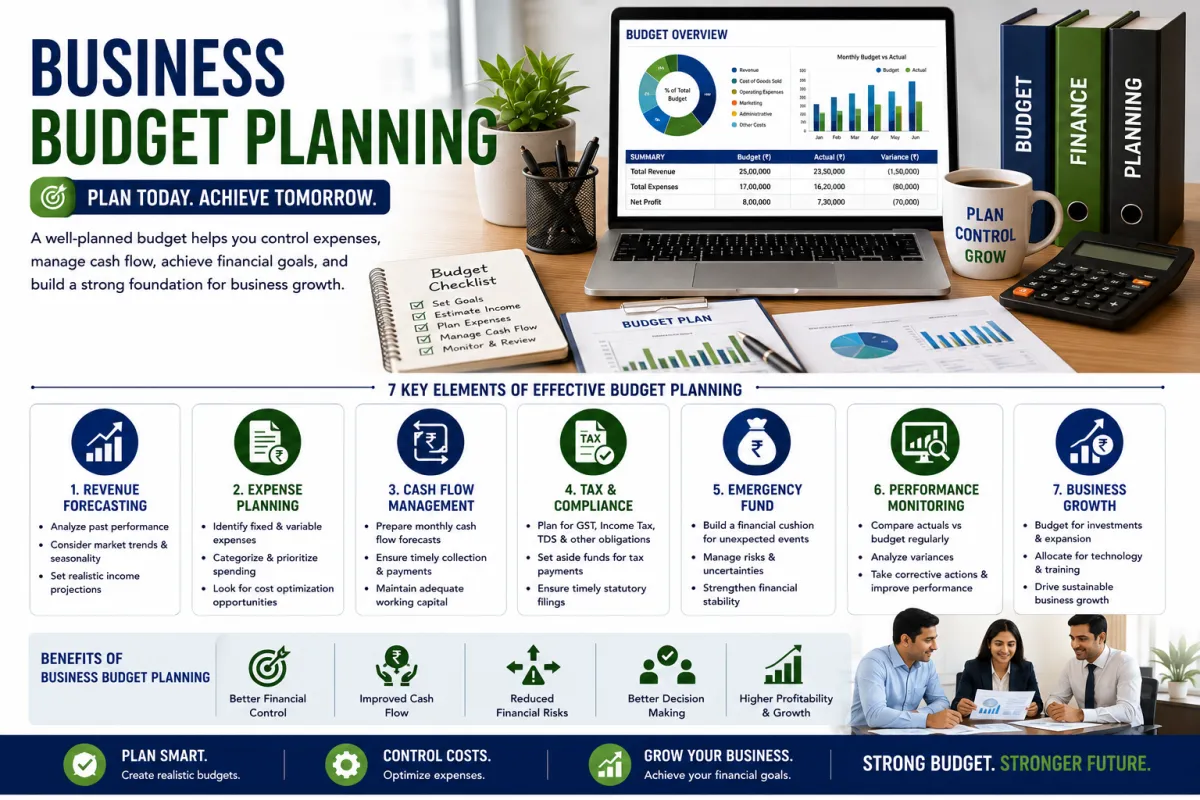
A well-planned business budget helps organizations control expenses, manage cash flow, and achieve financial goals efficiently. Effective budgeting enables businesses to make informed decisions, improve profitability, and prepare for future growth.



Comments (0)
Please login to comment.