Author

Akshii

@ Manaksh

Blog Author

Published Blogs

Blog

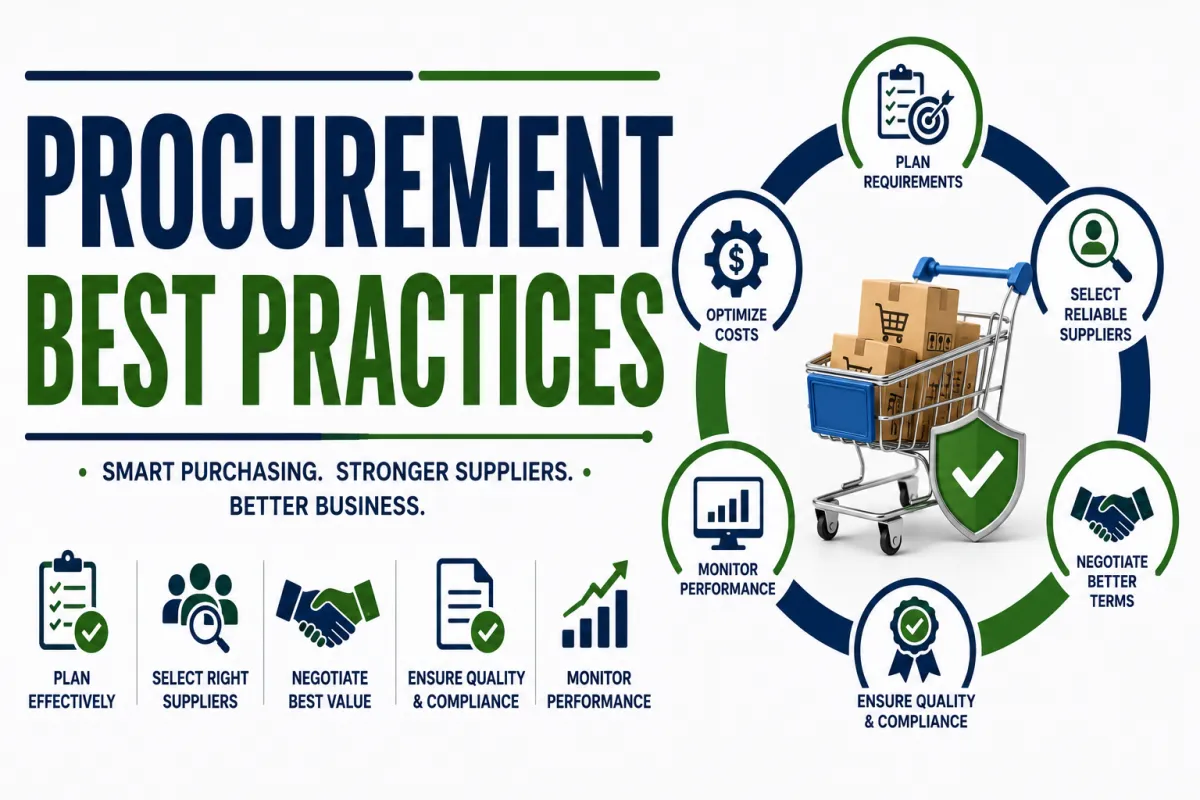
Procurement Best Practices: A Complete Guide to Smarter Purchasing and Efficient Supplier Management

Procurement Best Practices are proven strategies and procedures that help businesses purchase goods and services efficiently while controlling costs, ensuring quality, reducing risks, and maintaining strong supplier relationships. Effective procurement supports operational efficiency, financial stability, and long-term business growth.

Read More →

Blog

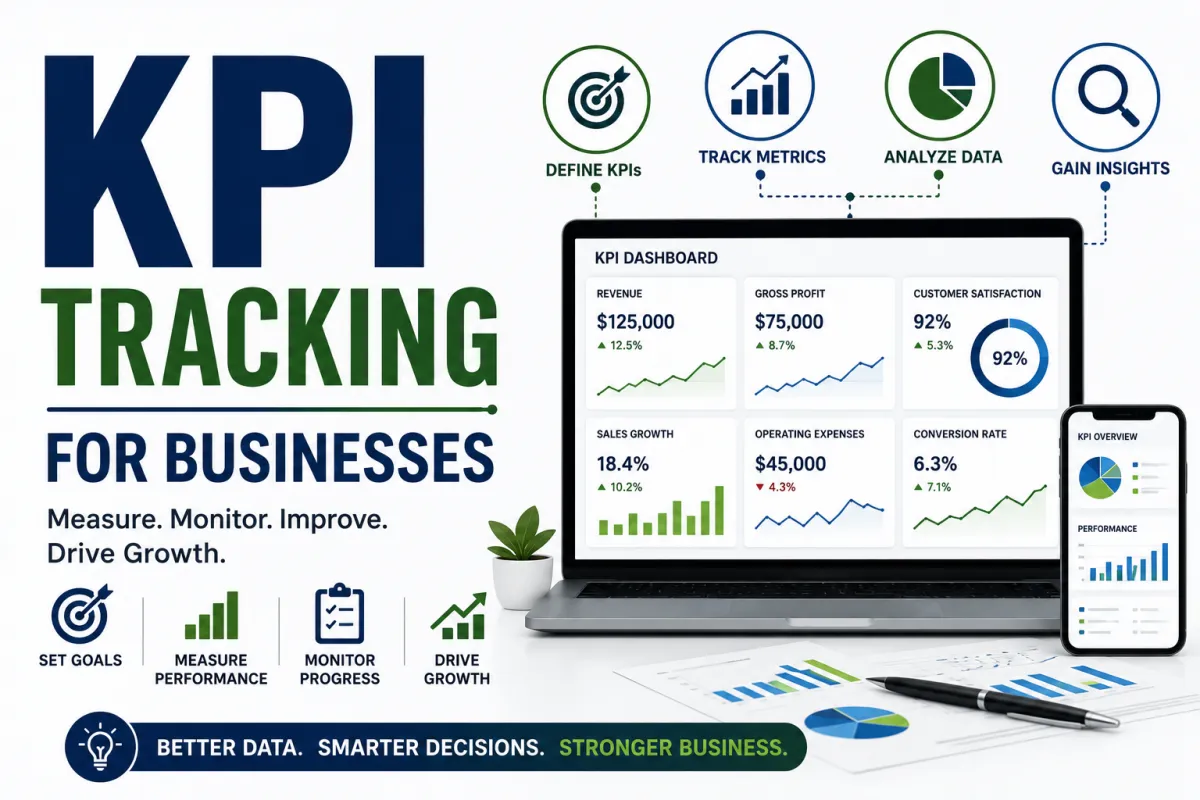
KPI Tracking for Businesses: A Complete Guide to Measuring Performance and Driving Business Growth

KPI (Key Performance Indicator) Tracking is the process of measuring and monitoring business performance using specific metrics that align with organizational goals. Effective KPI tracking helps businesses evaluate progress, improve decision-making, increase operational efficiency, and achieve long-term growth.

Read More →
Blog

Pricing Strategy: A Complete Guide to Setting Profitable and Competitive Prices for Business Growth

Pricing Strategy is the process of determining the most appropriate price for products or services to maximize profitability, attract customers, remain competitive, and support long-term business growth. A well-planned pricing strategy balances customer value, market demand, business costs, and competitive positioning.

Read More →
Blog

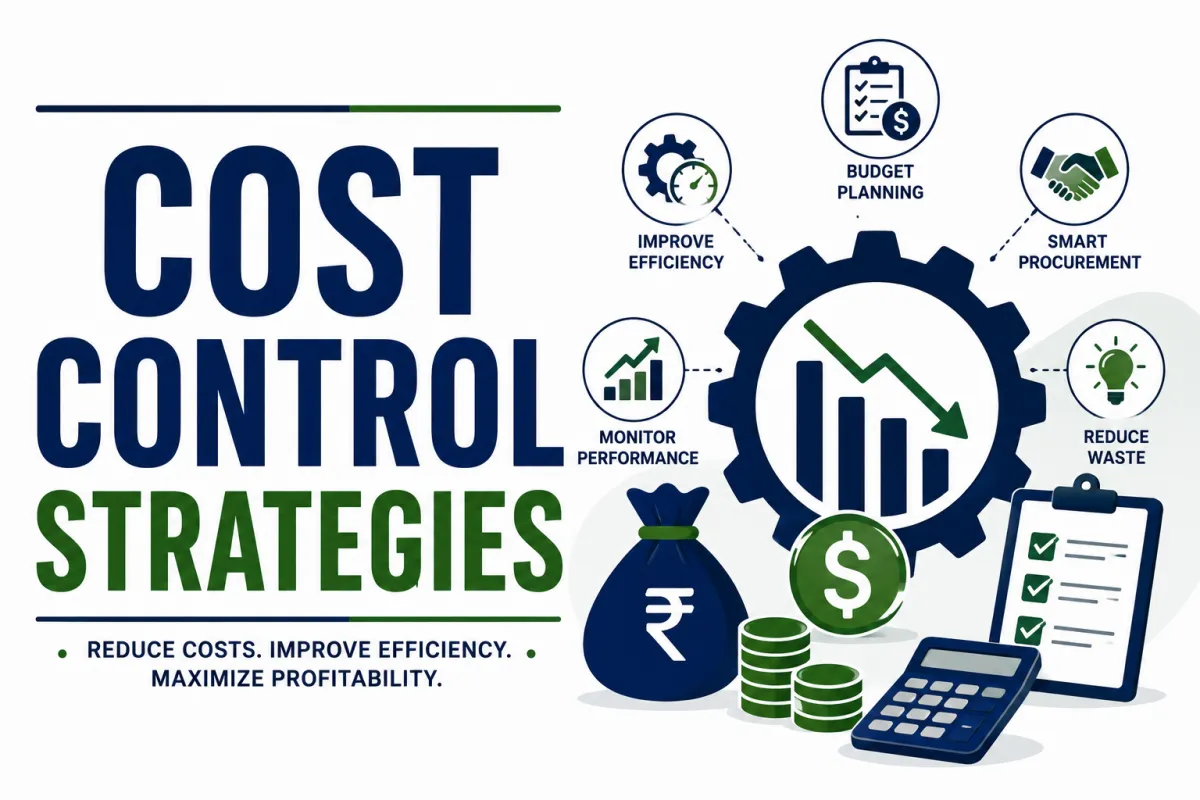
Cost Control Strategies: A Complete Guide to Reducing Expenses and Improving Business Profitability

Cost Control Strategies are systematic methods used by businesses to monitor, manage, and reduce operating expenses without compromising product quality or customer satisfaction. Effective cost control improves profitability, strengthens cash flow, enhances operational efficiency, and supports sustainable business growth.

Read More →
Blog

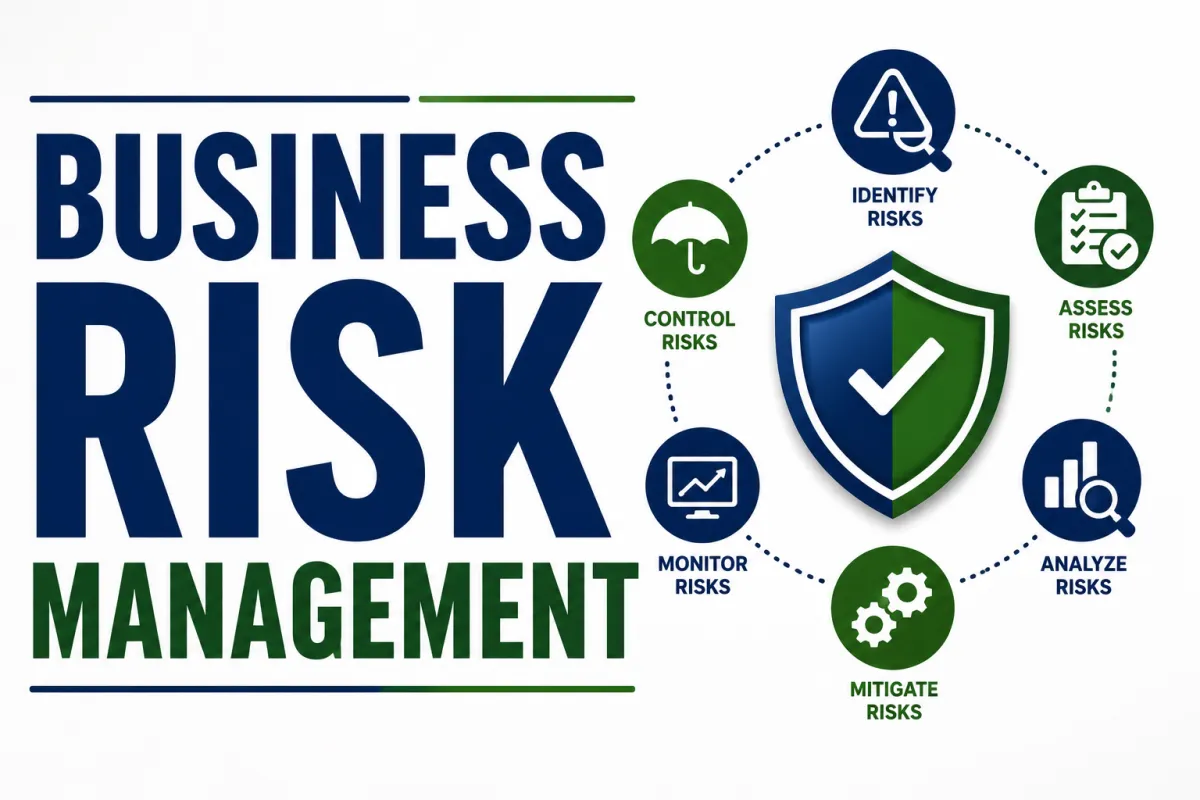
Business Risk Management: A Complete Guide to Protecting Your Business and Driving Sustainable Growth

Business Risk Management is the process of identifying, assessing, monitoring, and minimizing potential risks that may affect an organization’s operations, finances, reputation, or long-term growth. A strong risk management strategy helps businesses improve decision-making, ensure continuity, maintain compliance, and achieve sustainable success.

Read More →
Blog

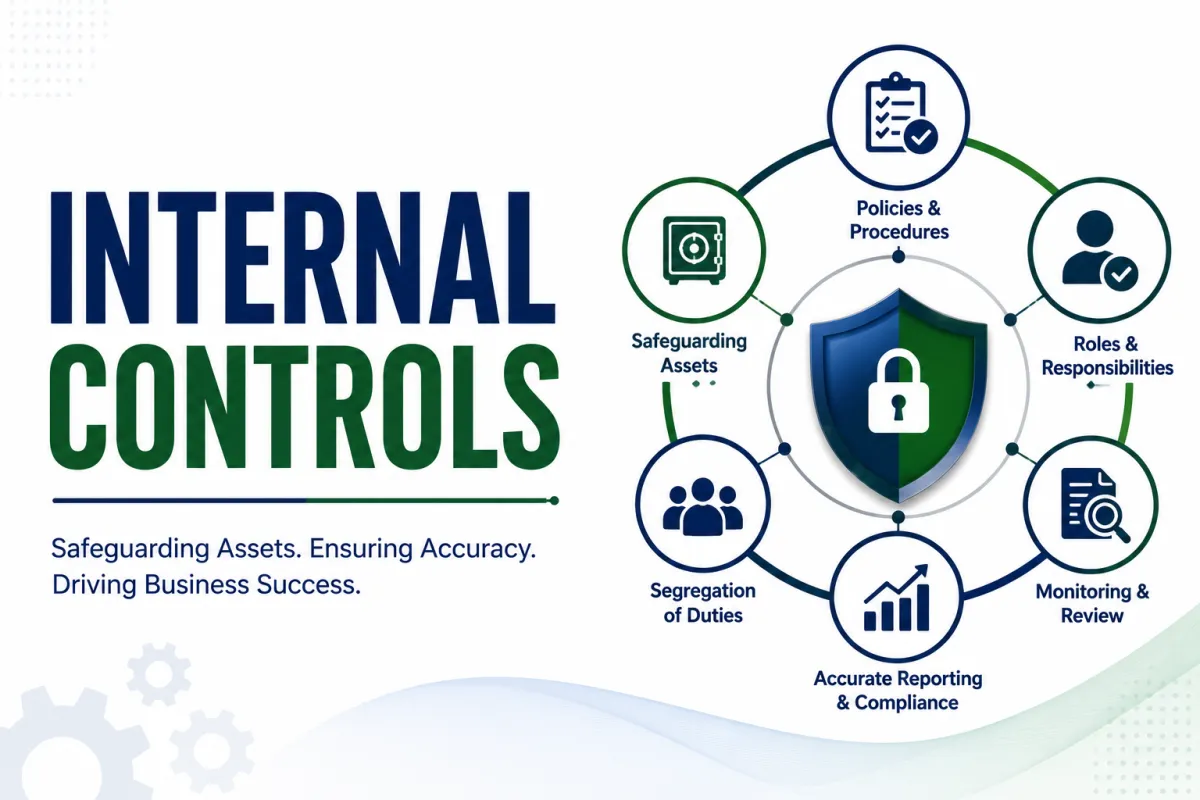
Internal Controls: A Complete Guide to Strengthening Business Security, Compliance, and Financial Accuracy

Internal Controls are the policies, procedures, and systems implemented by an organization to safeguard assets, ensure accurate financial reporting, prevent fraud, maintain regulatory compliance, and improve operational efficiency. Strong internal controls help businesses minimize risks while supporting sustainable growth and effective decision-making.

Read More →
Blog

Business Process Automation: A Complete Guide to Improving Efficiency and Driving Business Growth

Business Process Automation (BPA) is the use of technology and software to automate repetitive business tasks, improve operational efficiency, reduce manual errors, and enhance productivity. By automating routine processes, businesses can save time, lower costs, and focus on strategic growth and customer satisfaction.

Read More →
Blog

Customer Payment Collection: A Complete Guide to Faster Payments and Better Cash Flow

Customer Payment Collection is the process of ensuring timely receipt of payments from customers for goods or services provided. An effective collection process improves cash flow, reduces outstanding receivables, minimizes bad debts, and strengthens the overall financial health of a business.

Read More →
Blog

Vendor Management: A Complete Guide to Building Strong Supplier Relationships and Business Efficiency

Vendor Management is the process of selecting, evaluating, monitoring, and maintaining relationships with suppliers to ensure the timely delivery of quality goods and services. Effective vendor management helps businesses reduce costs, improve operational efficiency, minimize risks, and build strong long-term business partnerships.

Read More →
Blog

Inventory Management: A Complete Guide to Efficient Stock Control and Business Growth

Inventory Management is the process of ordering, storing, tracking, and controlling stock to ensure that businesses have the right products available at the right time. Effective inventory management reduces costs, prevents stock shortages, improves cash flow, and enhances overall business efficiency.

Read More →
Blog

Tax Saving Investments: A Complete Guide to Reducing Taxes and Building Long-Term Wealth

Tax Saving Investments help individuals reduce their taxable income while building long-term wealth and financial security. By investing in eligible tax-saving instruments under the Income-tax Act, taxpayers can enjoy tax benefits, grow their savings, and achieve important financial goals such as retirement planning, children’s education, or wealth creation.

Read More →
Blog

Debt Management: Practical Strategies to Reduce Debt and Achieve Financial Freedom

Debt Management is the process of effectively managing loans, credit cards, and other financial obligations to maintain financial stability and reduce financial stress. A well-planned debt management strategy helps individuals and businesses improve cash flow, maintain a healthy credit score, and achieve long-term financial goals.

Read More →
Blog

Insurance Planning: A Complete Guide to Protecting Your Financial Future and Loved Ones

Insurance Planning is the process of selecting suitable insurance policies to protect yourself, your family, and your assets from unexpected financial losses. A well-planned insurance strategy provides financial security, supports long-term financial goals, and ensures peace of mind during unforeseen events.

Read More →
Blog

SIP vs Lump Sum: Which Mutual Fund Investment Strategy is Right for You?

SIP (Systematic Investment Plan) and Lump Sum are two popular ways of investing in mutual funds. While SIP allows investors to invest a fixed amount regularly, Lump Sum involves investing a large amount at one time. Choosing the right method depends on your financial goals, investment horizon, market conditions, and risk tolerance.

Read More →
Blog

Mutual Fund Basics: A Beginner’s Guide to Smart Investing and Long-Term Wealth Creation

Mutual Funds are investment vehicles that pool money from multiple investors and invest it in diversified assets such as stocks, bonds, and money market instruments. They are professionally managed and help individuals build wealth, achieve financial goals, and reduce investment risk through diversification.

Read More →
Blog

Retirement Planning: A Complete Guide to Building Financial Security for Your Golden Years

Retirement Planning is the process of preparing financially for life after retirement by building savings, making smart investments, and creating a steady source of income. A well-planned retirement strategy helps individuals maintain financial independence, meet future expenses, and enjoy a comfortable lifestyle without financial stress.

Read More →
Blog

Personal Financial Planning: A Complete Guide to Building Long-Term Financial Security and Wealth

Personal Financial Planning is the process of managing your income, expenses, savings, investments, insurance, taxes, and retirement goals to achieve long-term financial security. A well-structured financial plan helps individuals make informed financial decisions, reduce financial stress, and build wealth over time.

Read More →
Blog

Credit Score Improvement: Practical Tips to Build a Strong Credit Profile and Improve Loan Eligibility

A good credit score is essential for individuals and businesses seeking loans, credit cards, and other financial facilities. Improving your credit score helps you qualify for better interest rates, higher credit limits, faster loan approvals, and stronger financial credibility.

Read More →
Blog

Emergency Fund Planning: A Complete Guide to Building Financial Security for Your Business

An Emergency Fund is a financial safety net that helps businesses and individuals manage unexpected expenses without disrupting their financial stability. Proper emergency fund planning ensures business continuity, improves cash flow management, and reduces dependence on loans during unforeseen situations.

Read More →
Blog

Budgeting Tips: Practical Strategies for Better Business Financial Planning and Growth

Budgeting is the process of planning and managing income and expenses to achieve financial stability and business growth. A well-prepared budget helps businesses control costs, improve cash flow, make informed decisions, and achieve long-term financial goals.

Read More →
Blog

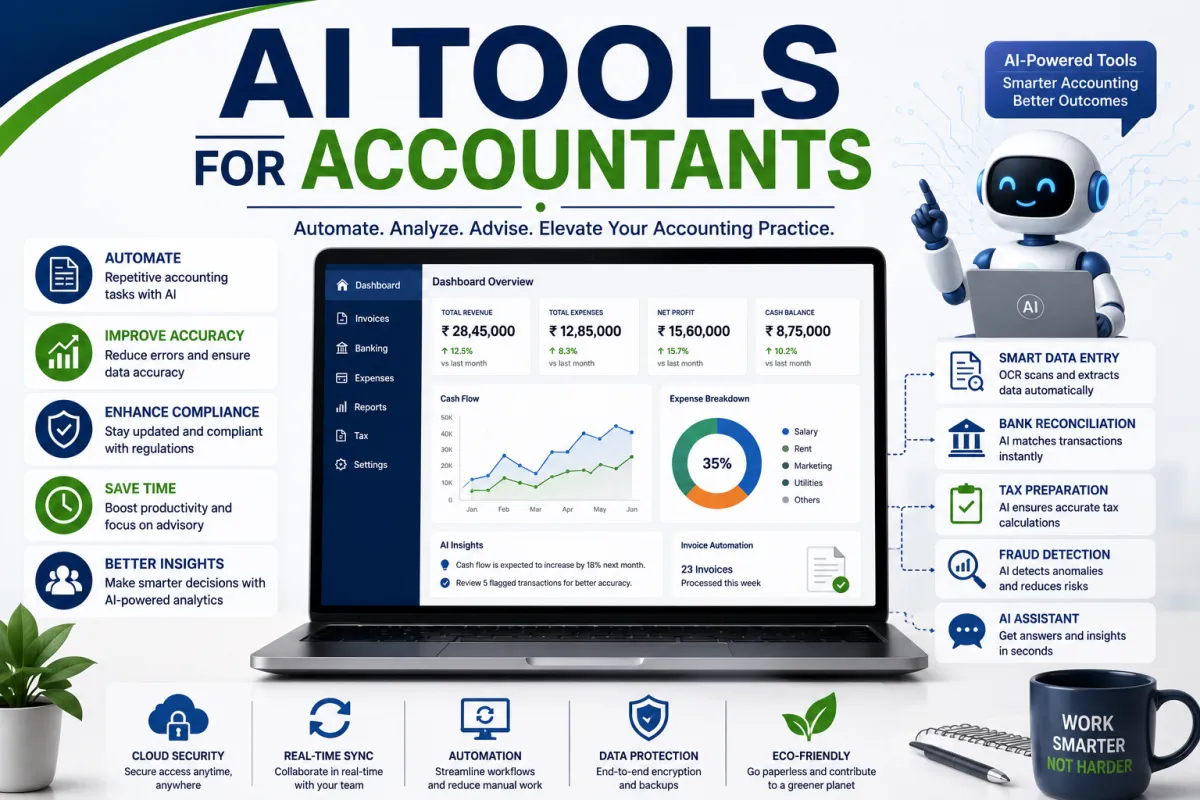
AI Tools for Accountants: How Artificial Intelligence is Transforming Modern Accounting Professionals

AI tools are transforming the accounting profession by automating repetitive tasks, improving financial accuracy, enhancing compliance, and enabling accountants to focus on strategic advisory services. From bookkeeping to tax preparation, AI-powered solutions help accountants work faster, smarter, and more efficiently.

Read More →
Blog

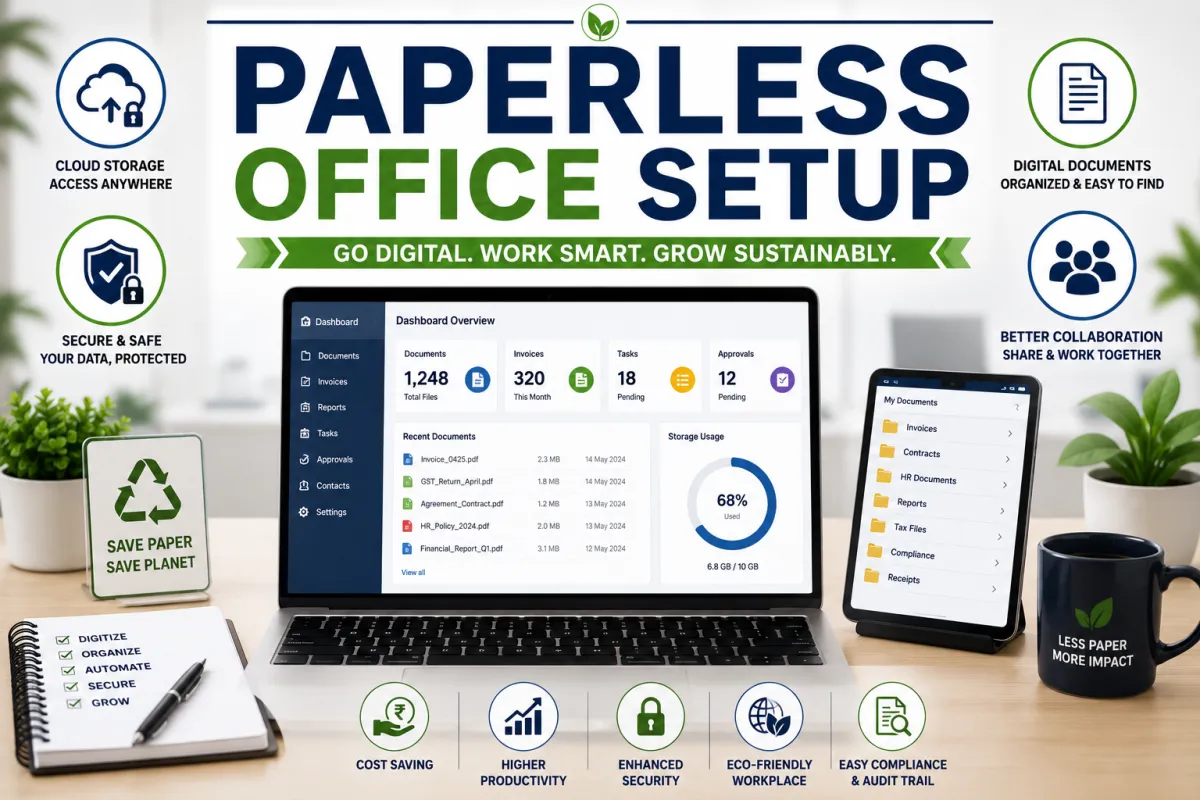
Paperless Office Setup: Complete Guide to Building a Smart and Efficient Digital Workplace

A Paperless Office Setup is a modern business approach that replaces physical paperwork with digital documents, cloud storage, and electronic workflows. It helps businesses improve efficiency, reduce costs, enhance security, and support environmentally sustainable operations.

Read More →
Blog

Accounting Data Security: Complete Guide to Protecting Financial Information and Business Records

Accounting Data Security refers to the protection of financial records, accounting systems, and sensitive business information from unauthorized access, cyber threats, data breaches, and accidental loss. Strong security practices help businesses maintain confidentiality, ensure regulatory compliance, and safeguard their financial operations.

Read More →
Blog

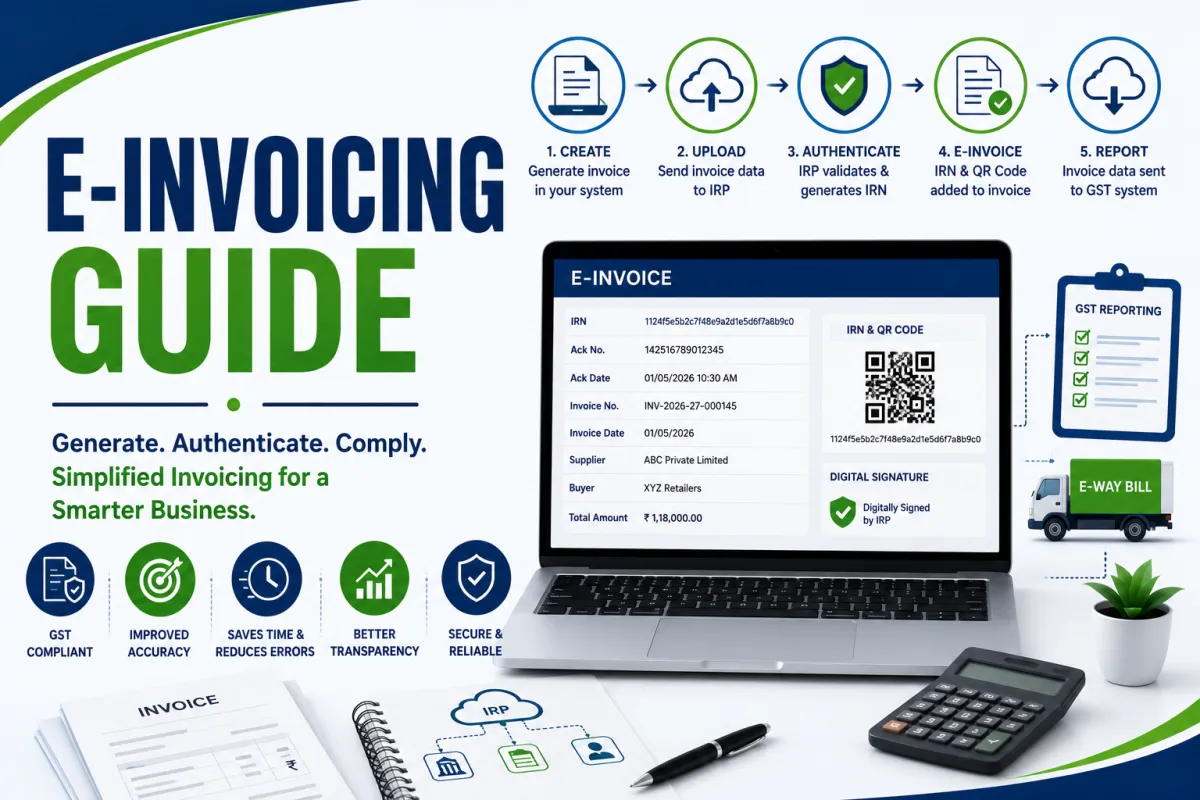
E-Invoicing Guide: Complete Guide to Electronic Invoicing Under GST in India

E-Invoicing is a digital invoicing system introduced under the GST framework in India to standardize invoice generation and improve tax compliance. It enables businesses to generate invoices electronically through the Invoice Registration Portal (IRP), ensuring authenticity, transparency, and efficient reporting.

Read More →
Blog

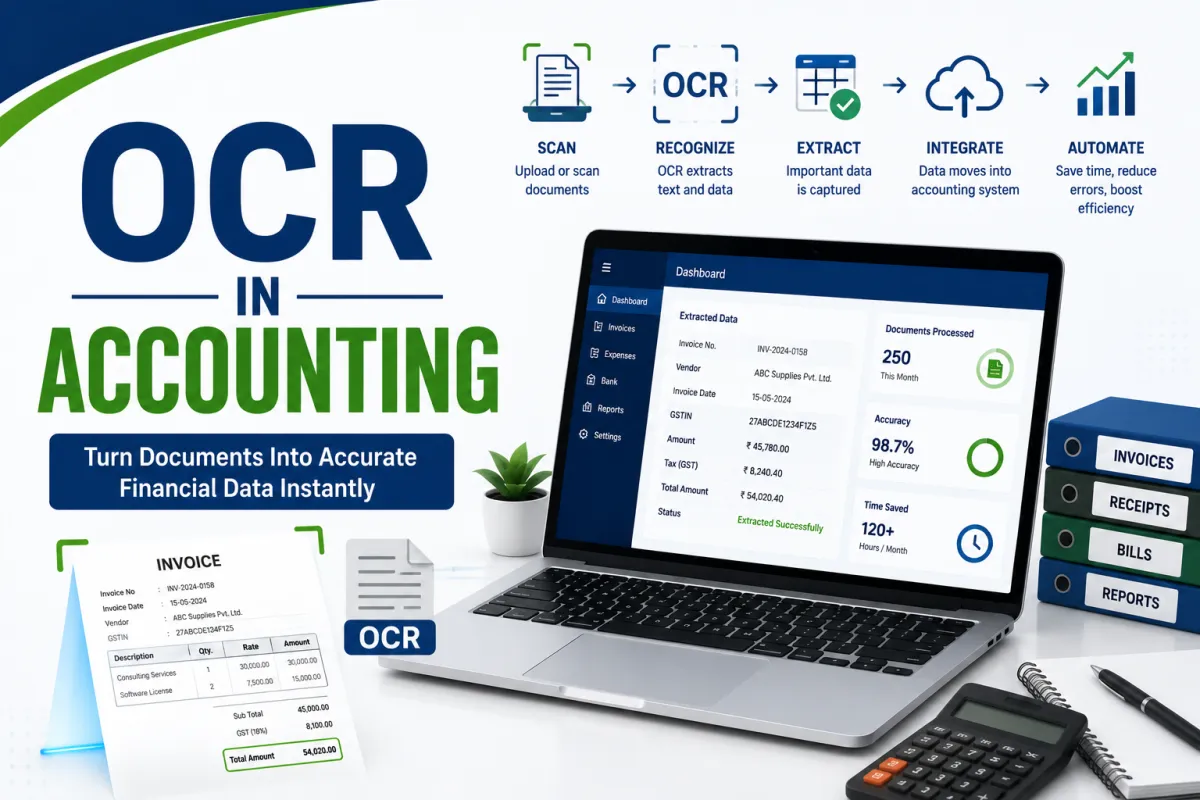
OCR in Accounting: How Optical Character Recognition is Revolutionizing Financial Data Management

Optical Character Recognition (OCR) is a technology that converts printed or handwritten documents into editable digital data. In accounting, OCR automates data entry from invoices, receipts, bills, and financial documents, improving accuracy, saving time, and enhancing overall efficiency.

Read More →
Blog

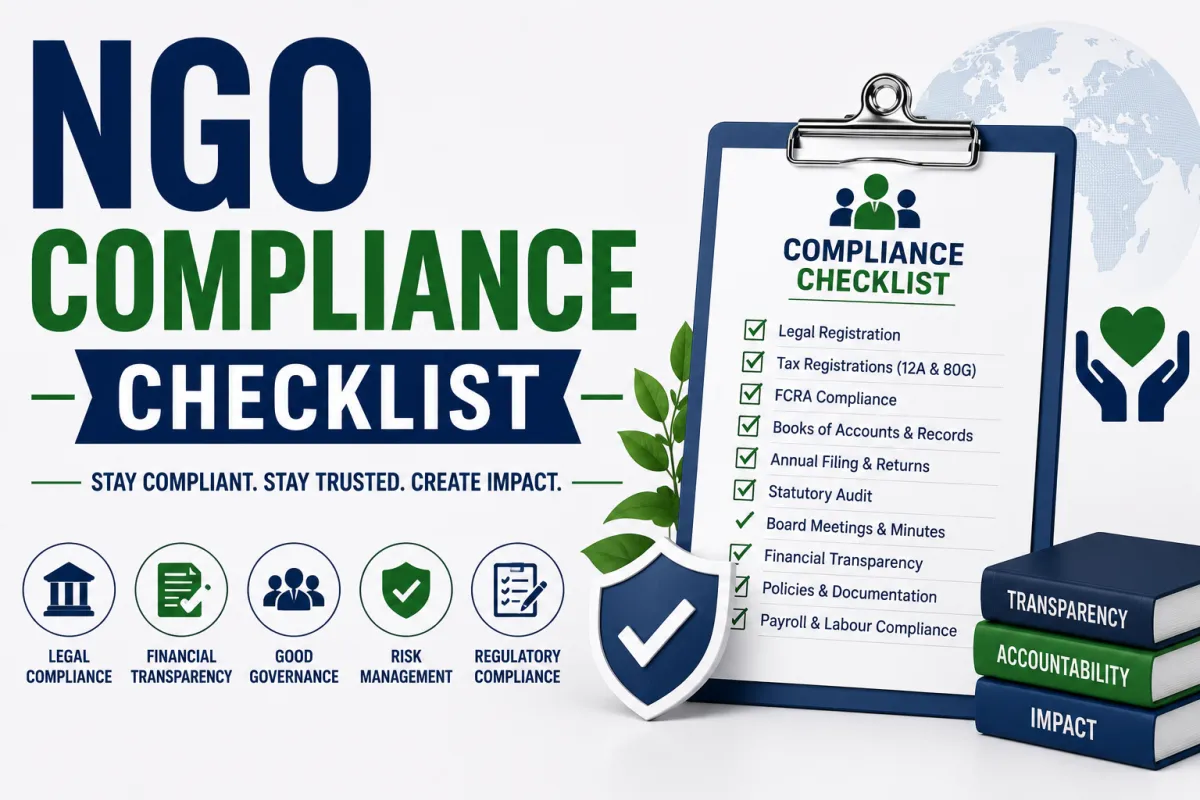
NGO Compliance Checklist: Essential Legal, Financial, and Regulatory Requirements for NGOs in India

NGO compliance involves fulfilling various legal, financial, and regulatory obligations to ensure transparency, accountability, and smooth operations. Following a proper compliance checklist helps NGOs maintain legal status, build donor confidence, and avoid penalties.

Read More →
Blog

Export GST Refund: Complete Guide to GST Refund on Exported Goods and Services in India

Export GST Refund allows exporters to claim back the GST paid on inputs or the Integrated GST (IGST) paid on exported goods and services. The refund mechanism improves cash flow, reduces the tax burden, and promotes India’s exports in the global market.

Read More →
Blog

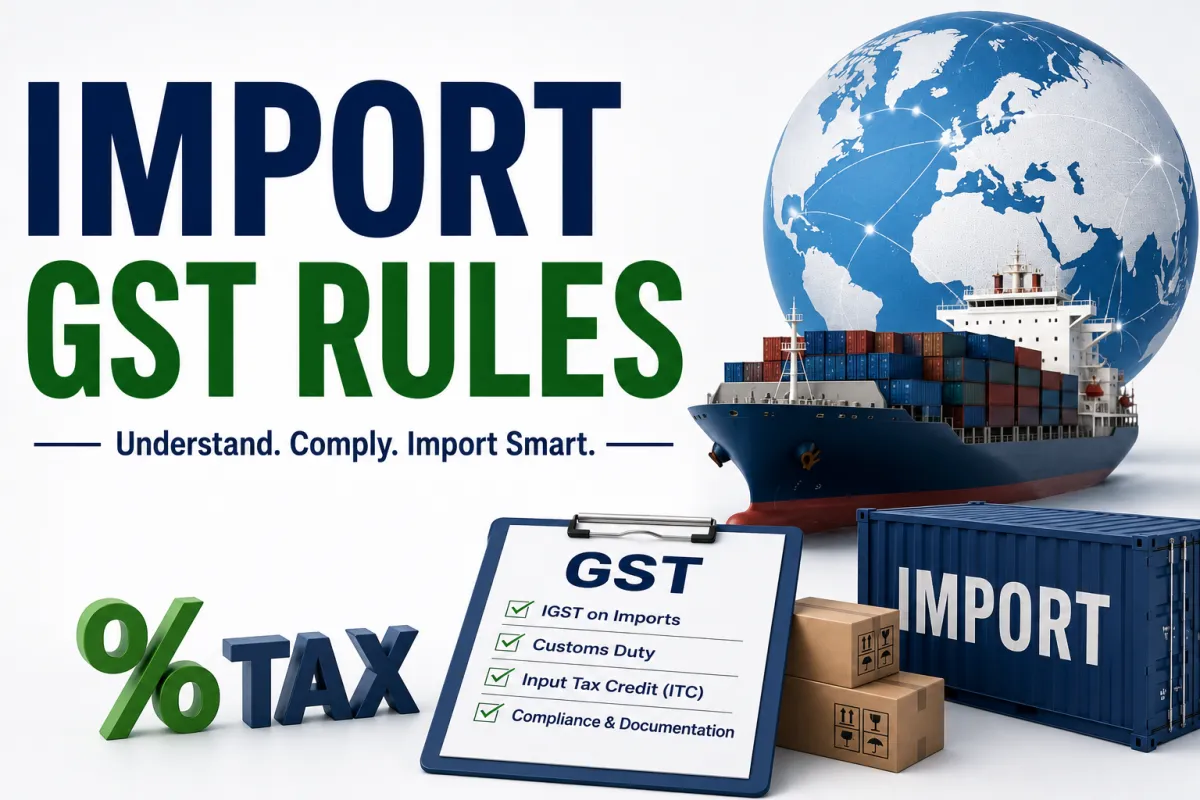
Import GST Rules: Complete Guide to GST on Imported Goods and Services in India

GST applies to the import of goods and services into India, making imports taxable under the GST regime. Understanding Import GST Rules helps businesses comply with tax laws, manage costs efficiently, and claim eligible Input Tax Credit (ITC).

Read More →
Blog

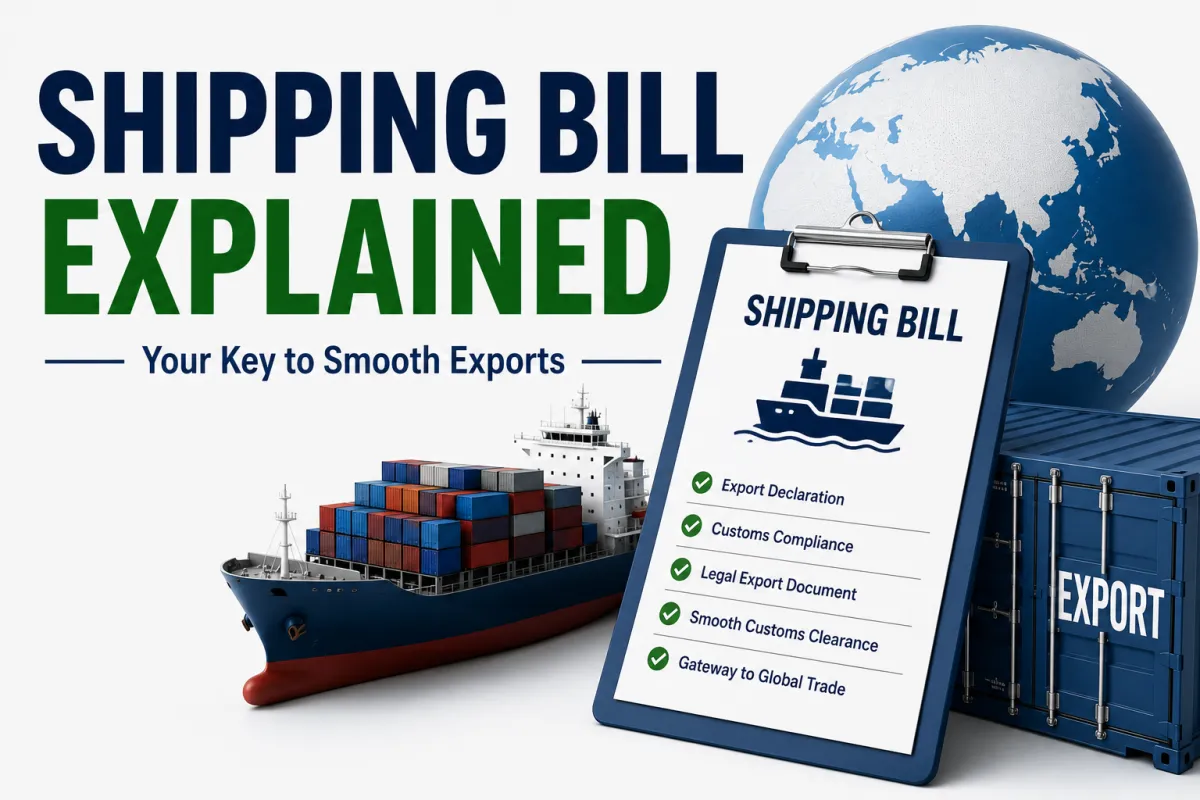
Shipping Bill Explained: Complete Guide to India’s Most Important Export Document

A Shipping Bill is one of the most important export documents required for customs clearance in India. It serves as the primary legal document for exporting goods and is essential for obtaining customs approval, export benefits, and smooth international trade operations.

Read More →
Blog

DGFT Registration: Complete Guide to Directorate General of Foreign Trade Registration in India

DGFT Registration is an essential step for businesses involved in international trade. It enables importers and exporters to access various government services, export promotion schemes, and trade-related benefits while ensuring compliance with India’s foreign trade regulations.

Read More →
Blog

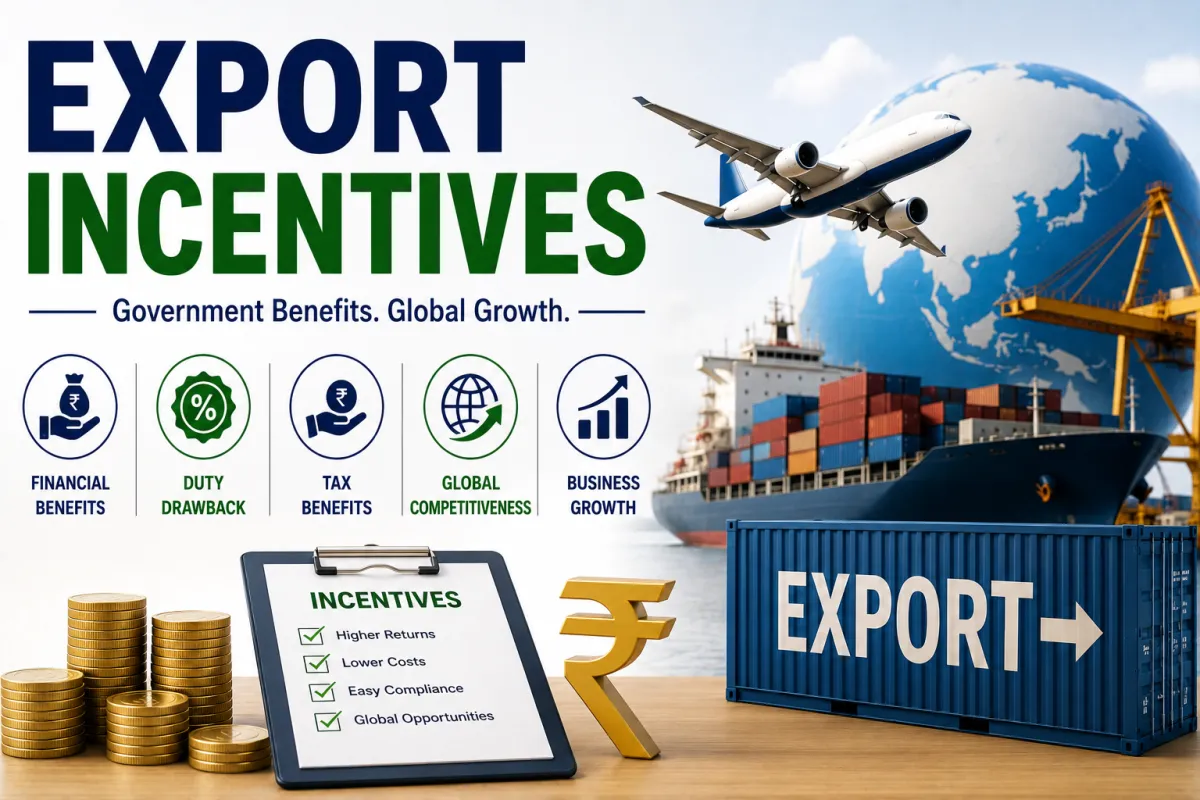
Export Incentives: A Complete Guide to Government Benefits for Indian Exporters

Export Incentives are government schemes and benefits designed to encourage Indian businesses to export goods and services. These incentives improve global competitiveness, reduce export costs, increase foreign exchange earnings, and support business expansion into international markets.

Read More →
Blog

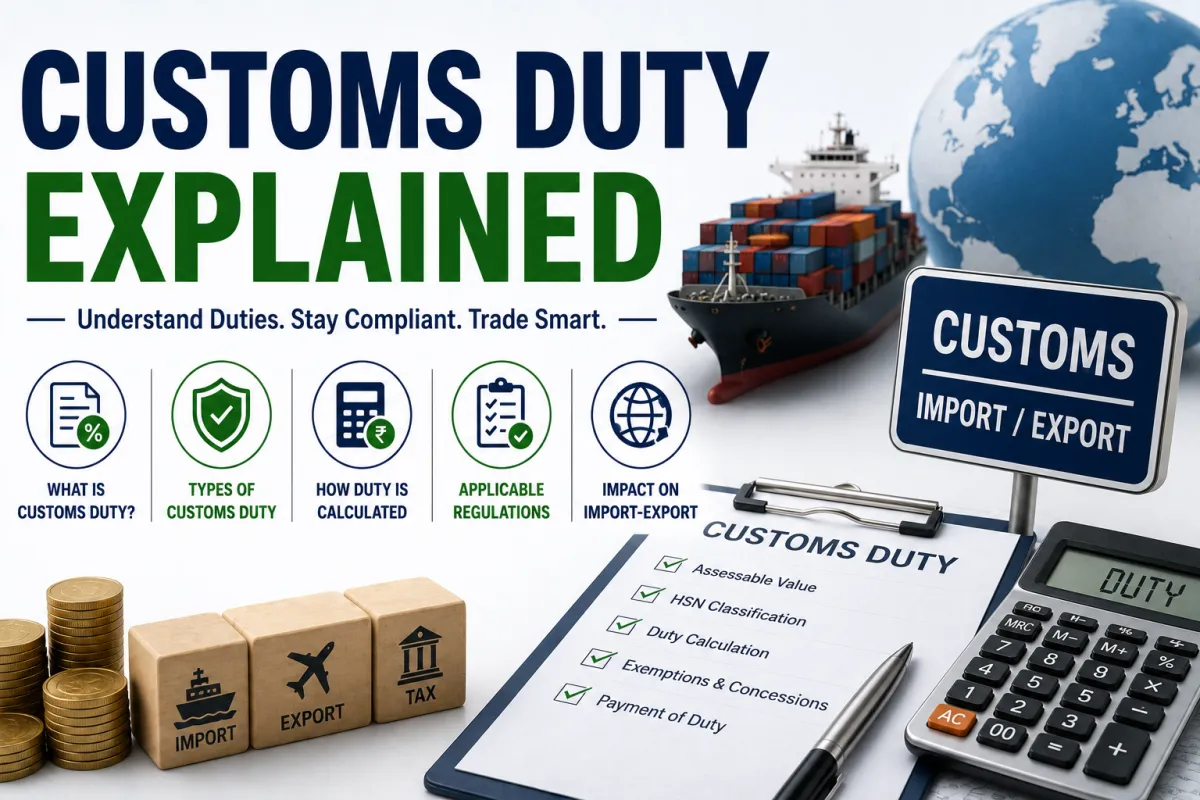
Customs Duty Explained: A Complete Guide to Import Duties, Compliance, and International Trade in India

Customs Duty is a tax imposed by the government on goods imported into or exported from a country. It regulates international trade, protects domestic industries, generates government revenue, and ensures compliance with import-export laws.

Read More →
Blog

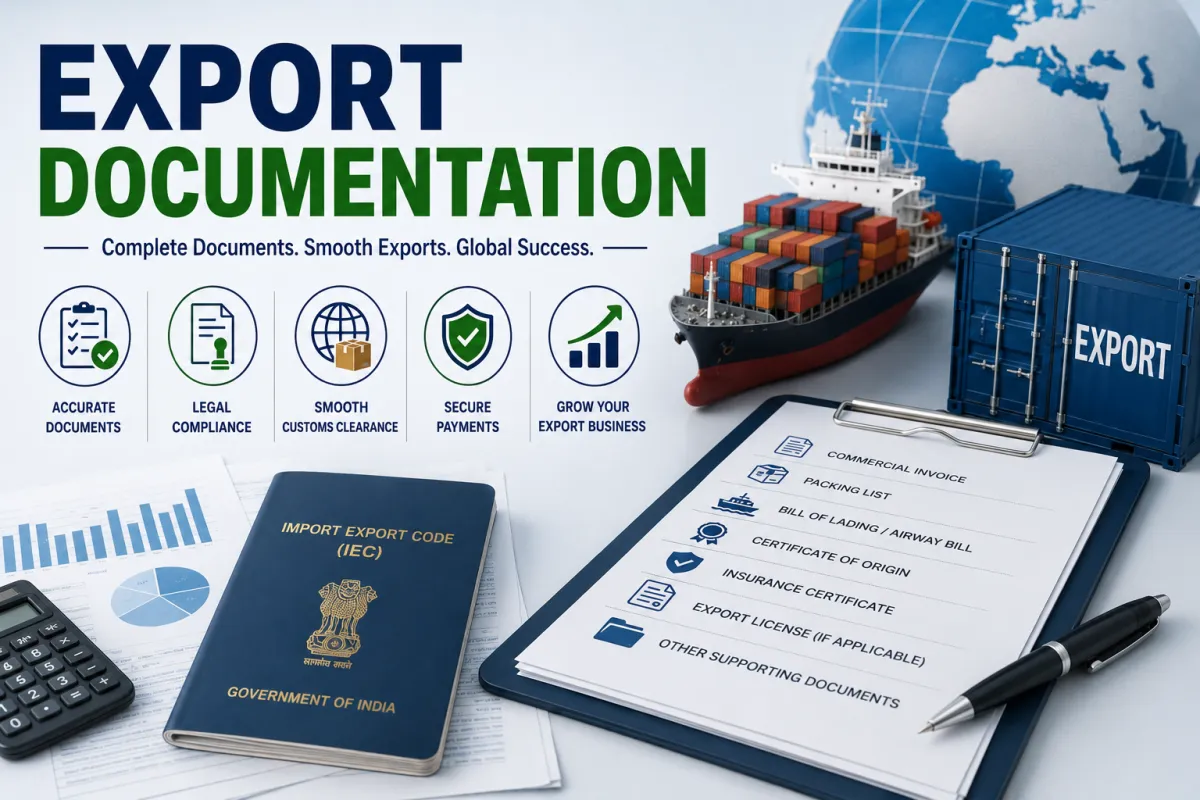
Export Documentation: Complete Guide to Essential Documents for Successful International Trade

Export documentation is an essential part of international trade that ensures smooth customs clearance, secure payments, and compliance with Indian and international trade regulations. Proper documentation helps businesses avoid delays, penalties, and disputes while facilitating successful export transactions.

Read More →
Blog

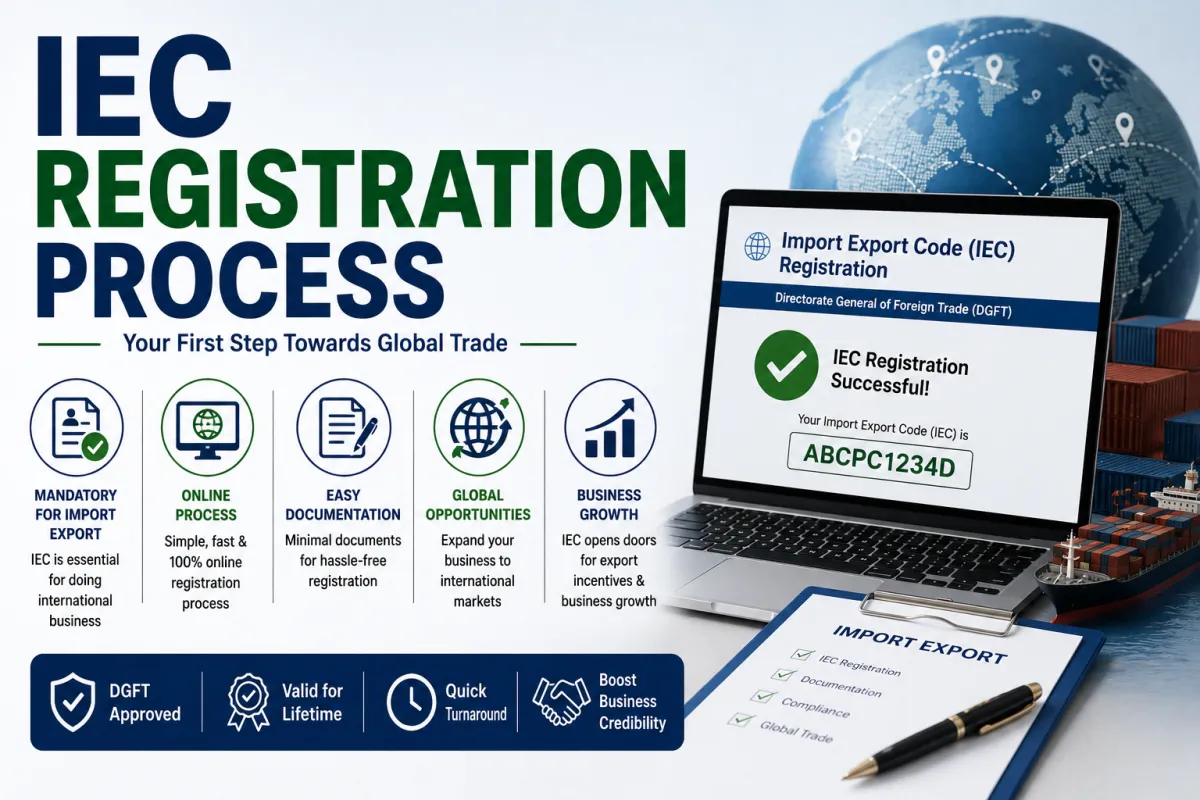
IEC Registration Process: Complete Step-by-Step Guide to Import Export Code Registration in India

An Import Export Code (IEC) is a mandatory registration for businesses involved in importing or exporting goods and services from India. Issued by the Directorate General of Foreign Trade (DGFT), the IEC enables businesses to participate in international trade and access global markets legally.

Read More →
Blog

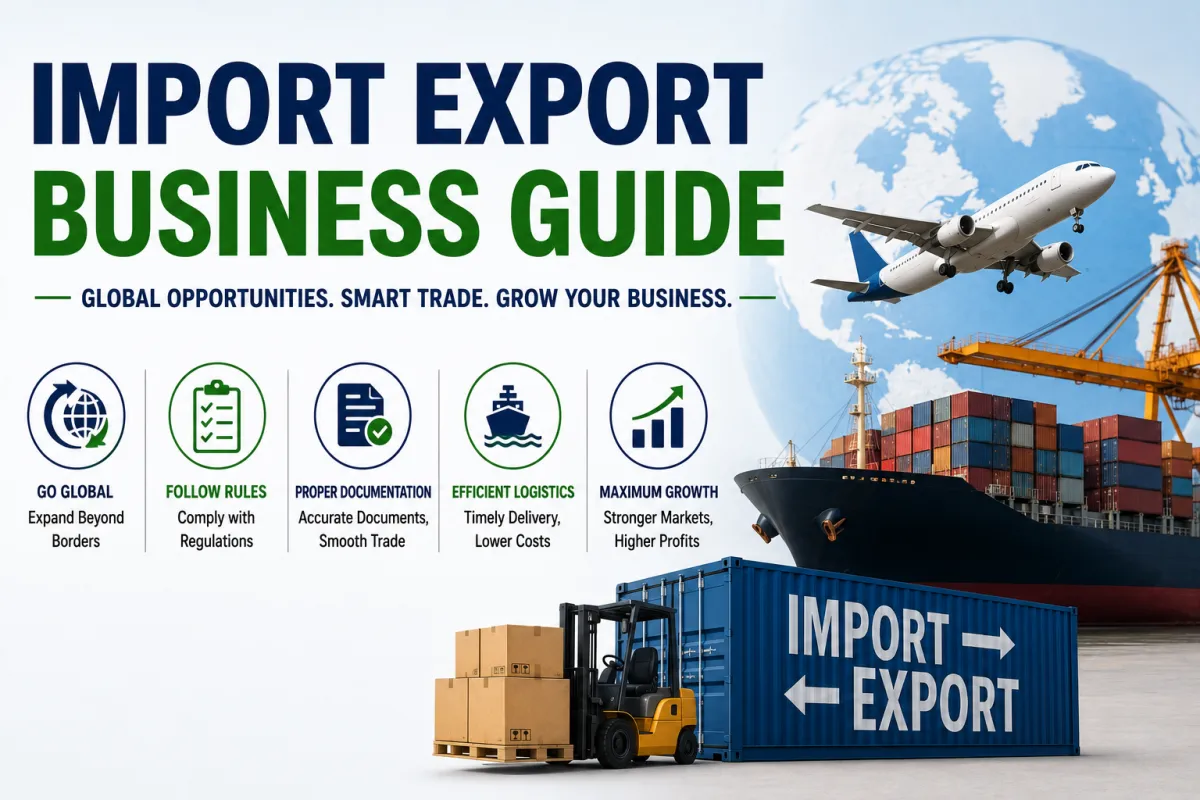
Import Export Business Guide: Complete Step-by-Step Guide to Starting an International Trade Business in India

Starting an import-export business in India offers excellent opportunities to expand into global markets. Understanding registrations, legal requirements, documentation, customs procedures, and financial management is essential for building a successful international trade business.

Read More →
Blog

Women Entrepreneur Schemes: Complete Guide to Government Support for Women-Owned Businesses in India

Women Entrepreneur Schemes are government initiatives designed to encourage women to start, manage, and expand businesses by providing financial assistance, skill development, mentorship, and business support. These schemes promote women-led enterprises and contribute to inclusive economic growth.

Read More →
Blog

Export Promotion Schemes: Complete Guide to Government Support for Indian Exporters

Export Promotion Schemes are government initiatives designed to encourage Indian businesses to expand into international markets. These schemes provide financial assistance, policy support, incentives, and infrastructure to help exporters improve global competitiveness and increase foreign trade.

Read More →
Blog

Government Grants for Startups: A Complete Guide to Funding Opportunities in India

Government grants for startups are financial assistance programs designed to encourage innovation, entrepreneurship, and business growth. These grants help eligible startups develop products, adopt new technologies, expand operations, and create employment without requiring repayment, subject to the applicable scheme guidelines.

Read More →
Blog

CGTMSE Loan Benefits: Complete Guide to Collateral-Free Loans for MSMEs in India

The Credit Guarantee Fund Trust for Micro and Small Enterprises (CGTMSE) Scheme helps eligible MSMEs obtain collateral-free loans by providing credit guarantee support to lending institutions. It encourages entrepreneurship by improving access to finance for new and existing micro and small businesses.

Read More →
Blog

CSR Compliance Explained: A Complete Guide to Corporate Social Responsibility in India

Corporate Social Responsibility (CSR) is a statutory obligation for eligible companies under the Companies Act, 2013. CSR compliance encourages businesses to contribute towards social, environmental, and community development while ensuring transparency, accountability, and responsible corporate governance.

Read More →
Blog

Dormant Company Rules: Complete Guide to Maintaining Dormant Company Status in India

A dormant company is a company that has been registered but is not carrying on significant business activities or operations. The Companies Act, 2013 provides a legal framework for companies to obtain dormant status while maintaining limited compliance until they are ready to resume business.

Read More →
Blog

Company Strike Off Procedure: A Complete Guide to Closing a Company in India

Company strike off is the legal process of removing a company’s name from the Register of Companies when it is no longer carrying on business. Following the prescribed procedure under the Companies Act, 2013, helps ensure proper closure of the company while maintaining regulatory compliance.

Read More →
Blog

Registered Office Change Process: A Complete Guide for Companies in India

Changing a company’s registered office is an important corporate compliance procedure governed by the Companies Act, 2013. Businesses must follow the prescribed legal process, obtain the necessary approvals, and update the Registrar of Companies (ROC) to ensure that official records remain accurate and compliant.

Read More →
Blog

AGM & EGM Compliance: Complete Guide to Shareholder Meetings Under the Companies Act, 2013

Annual General Meetings (AGMs) and Extraordinary General Meetings (EGMs) are important corporate governance requirements under the Companies Act, 2013. Conducting these meetings in accordance with legal provisions ensures transparency, shareholder participation, and regulatory compliance while supporting effective business decision-making.

Read More →
Blog

Board Meetings & Minutes: A Complete Guide to Corporate Governance and Compliance

Board meetings are essential for effective corporate governance and strategic decision-making. Properly conducting board meetings and maintaining accurate minutes help companies comply with the Companies Act, 2013, improve transparency, and maintain official records of important business decisions.

Read More →
Blog

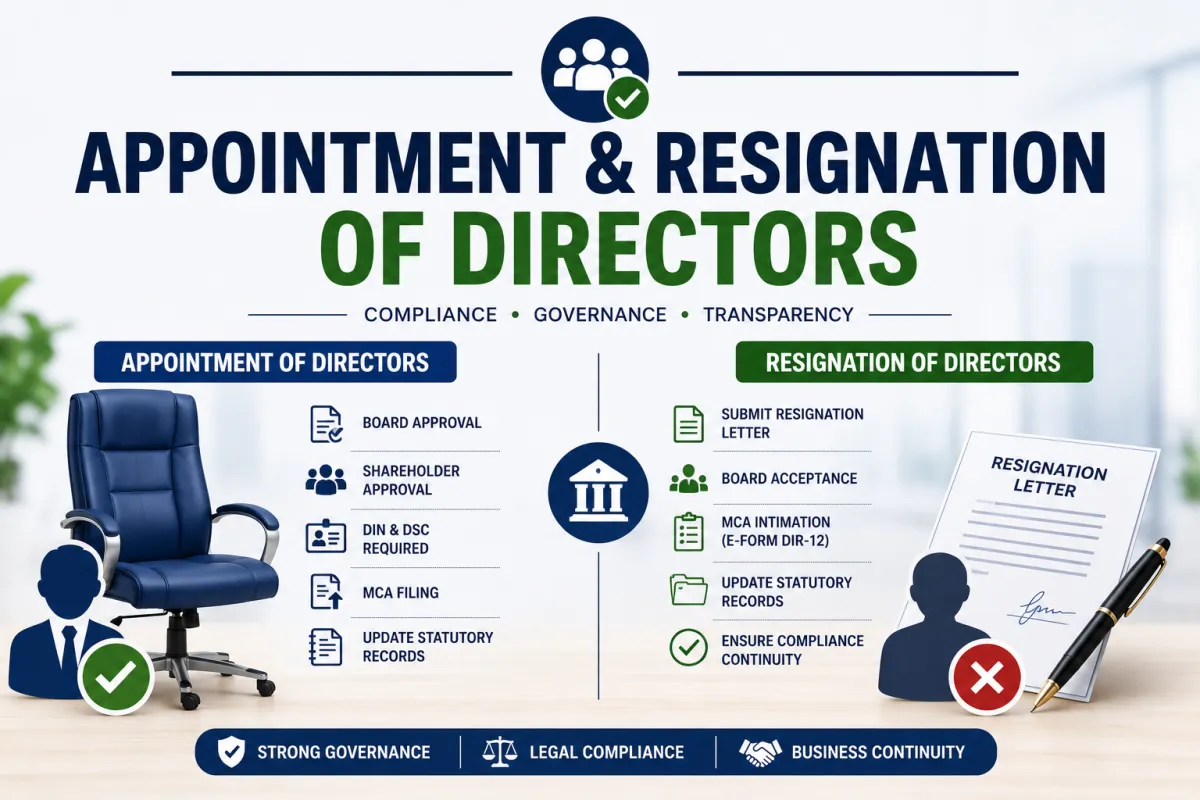
Appointment & Resignation of Directors: A Complete Guide to Corporate Compliance in India

The appointment and resignation of directors are important corporate governance processes governed by the Companies Act, 2013. Following the prescribed legal procedures ensures transparency, regulatory compliance, and the smooth management of a company’s affairs.

Read More →
Blog

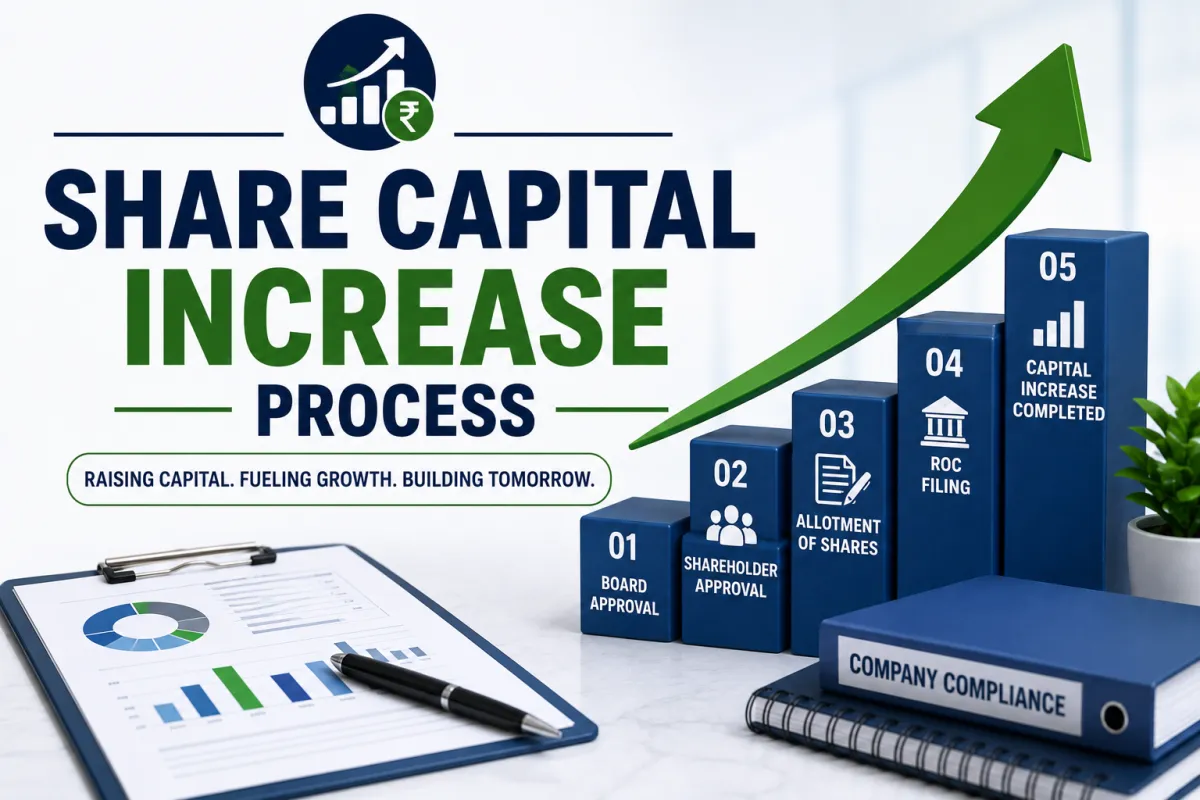
Share Capital Increase Process: A Complete Guide for Companies in India

Increasing share capital is an important corporate action that allows companies to raise additional funds for expansion, business growth, debt reduction, or new investments. The process must be carried out in accordance with the Companies Act, 2013, and applicable regulatory requirements to ensure legal compliance.

Read More →
Blog

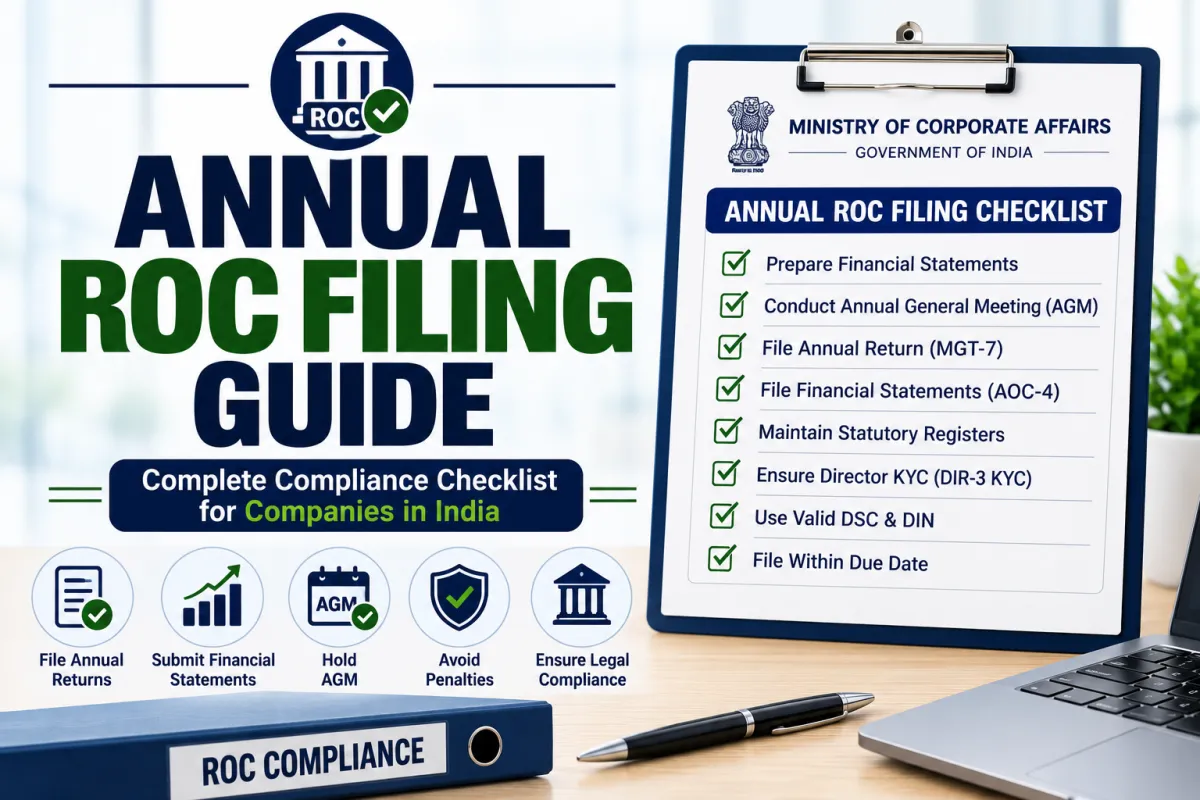
Annual ROC Filing Guide: Complete Compliance Checklist for Companies in India

Annual ROC filing is a mandatory compliance requirement for companies registered in India. Filing annual returns and financial statements with the Registrar of Companies (ROC) on time ensures legal compliance, avoids penalties, and strengthens corporate transparency and governance.

Read More →
Blog

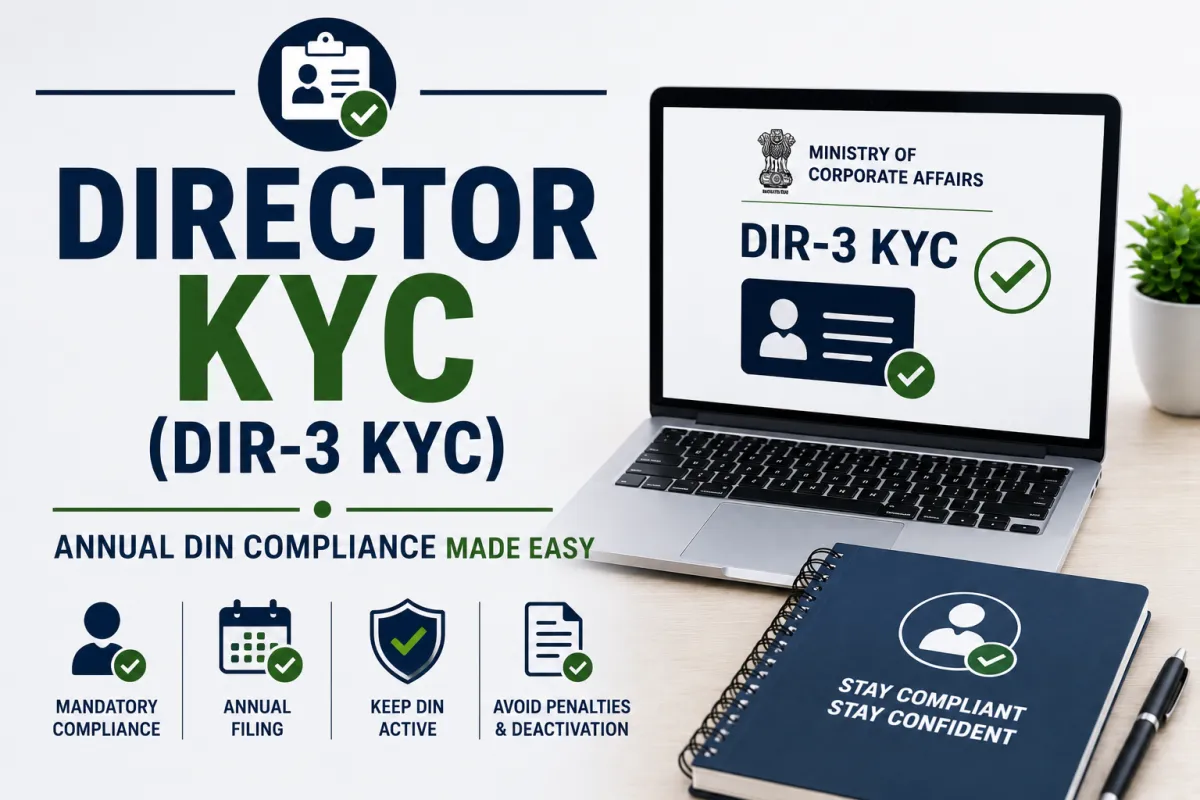
Director KYC (DIR-3 KYC): Complete Guide to Annual DIN Compliance in India

DIR-3 KYC is a mandatory annual compliance requirement for directors holding a Director Identification Number (DIN) in India. Filing DIR-3 KYC on time helps keep the DIN active, ensures compliance with the Ministry of Corporate Affairs (MCA), and helps avoid penalties and deactivation of the DIN.

Read More →
Blog

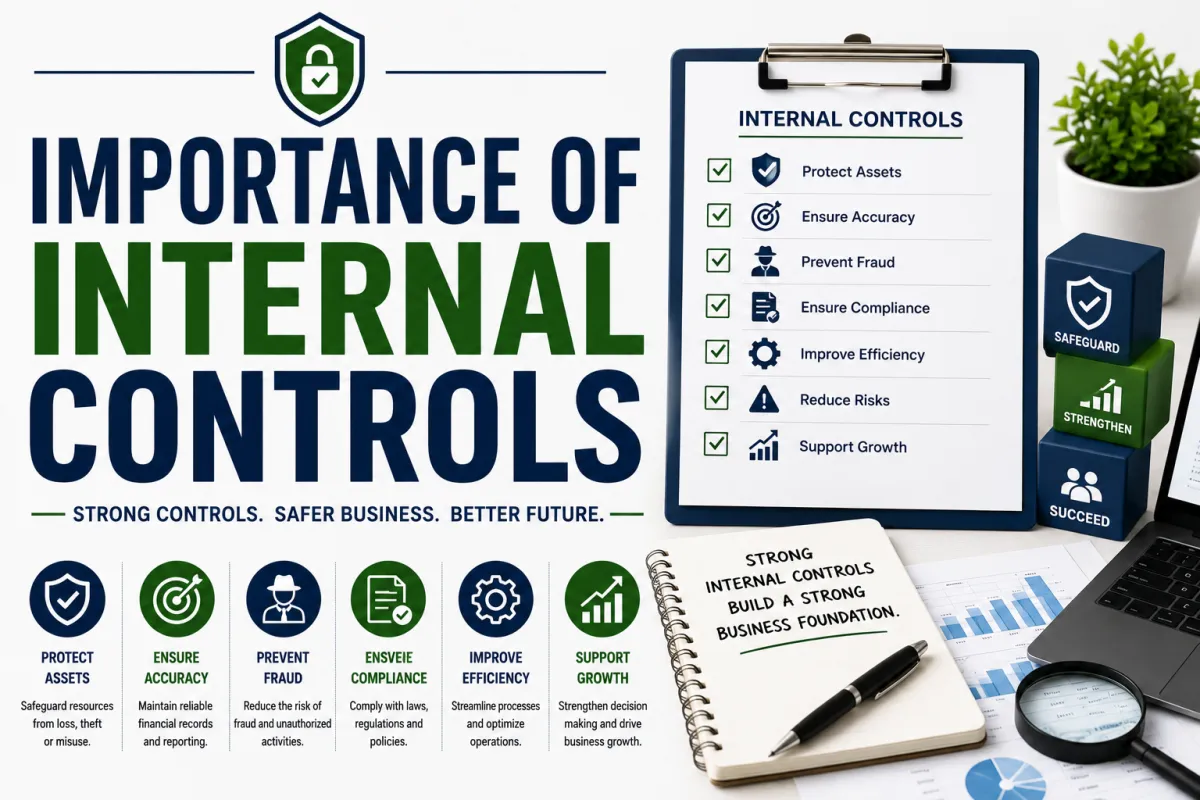
Importance of Internal Controls: Why Every Business Needs a Strong Control System

Internal controls are the policies, procedures, and systems that help businesses safeguard assets, ensure accurate financial reporting, prevent fraud, and comply with legal requirements. Strong internal controls are essential for improving operational efficiency and maintaining long-term business stability.

Read More →
Blog

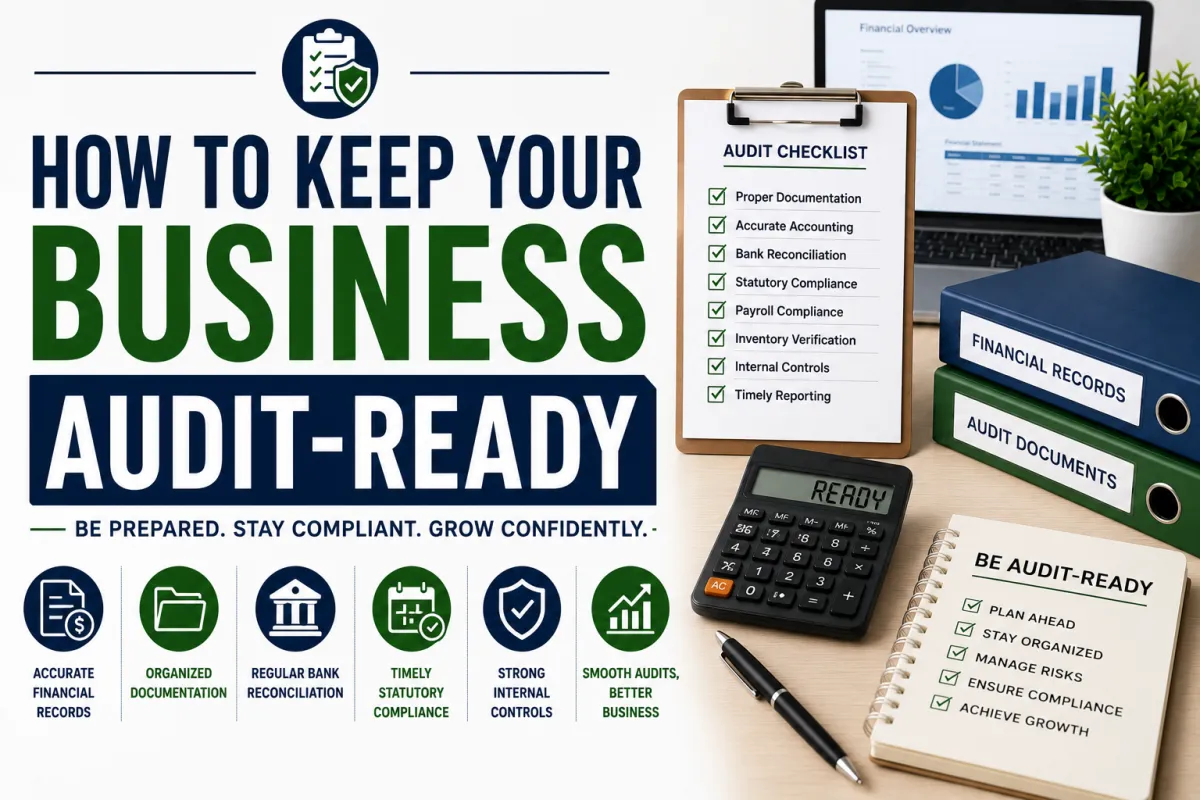
How to Keep Your Business Audit-Ready: A Complete Guide for Better Compliance and Financial Management

Being audit-ready means maintaining accurate financial records, complying with legal requirements, and keeping essential documents organized throughout the year. A proactive approach to audit preparedness helps businesses avoid last-minute stress, improve compliance, and ensure smooth audit processes.

Read More →
Blog

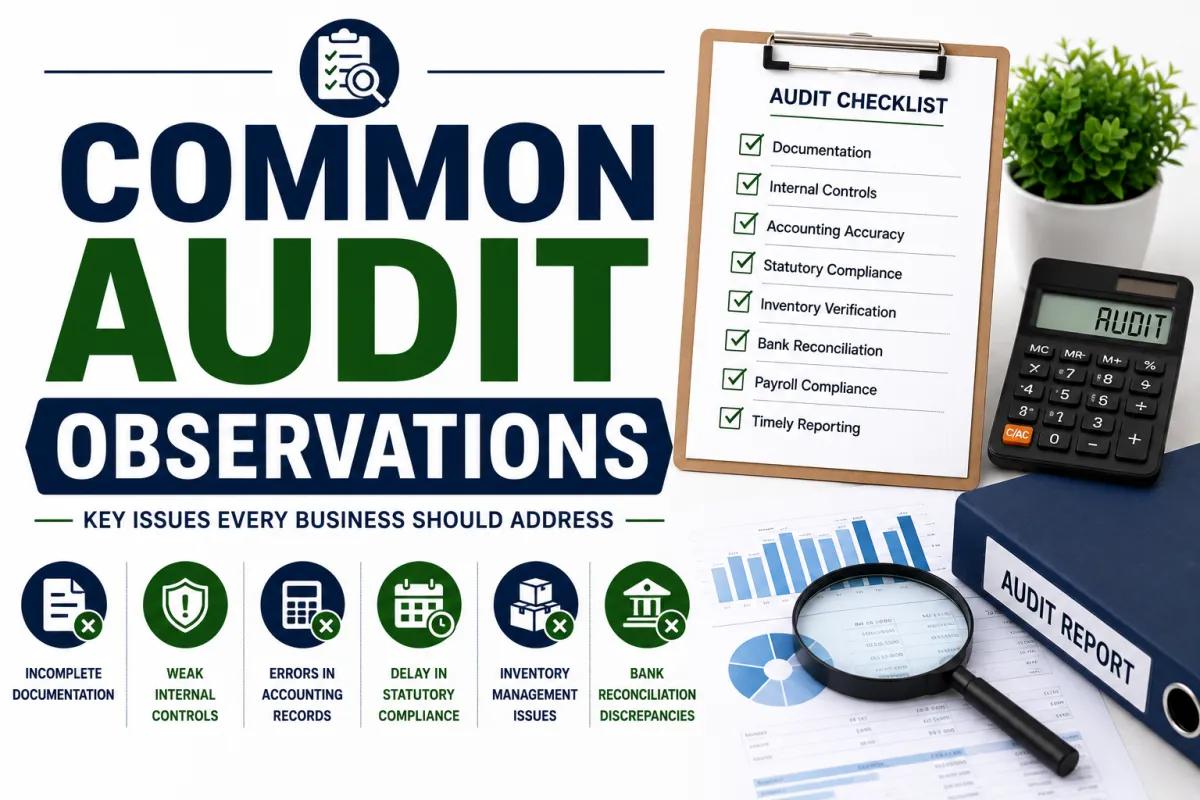
Common Audit Observations: Key Issues Every Business Should Address

Audits help organizations identify weaknesses in financial records, internal controls, and compliance processes. Understanding common audit observations enables businesses to strengthen internal systems, improve compliance, and reduce financial and operational risks.

Read More →
Blog

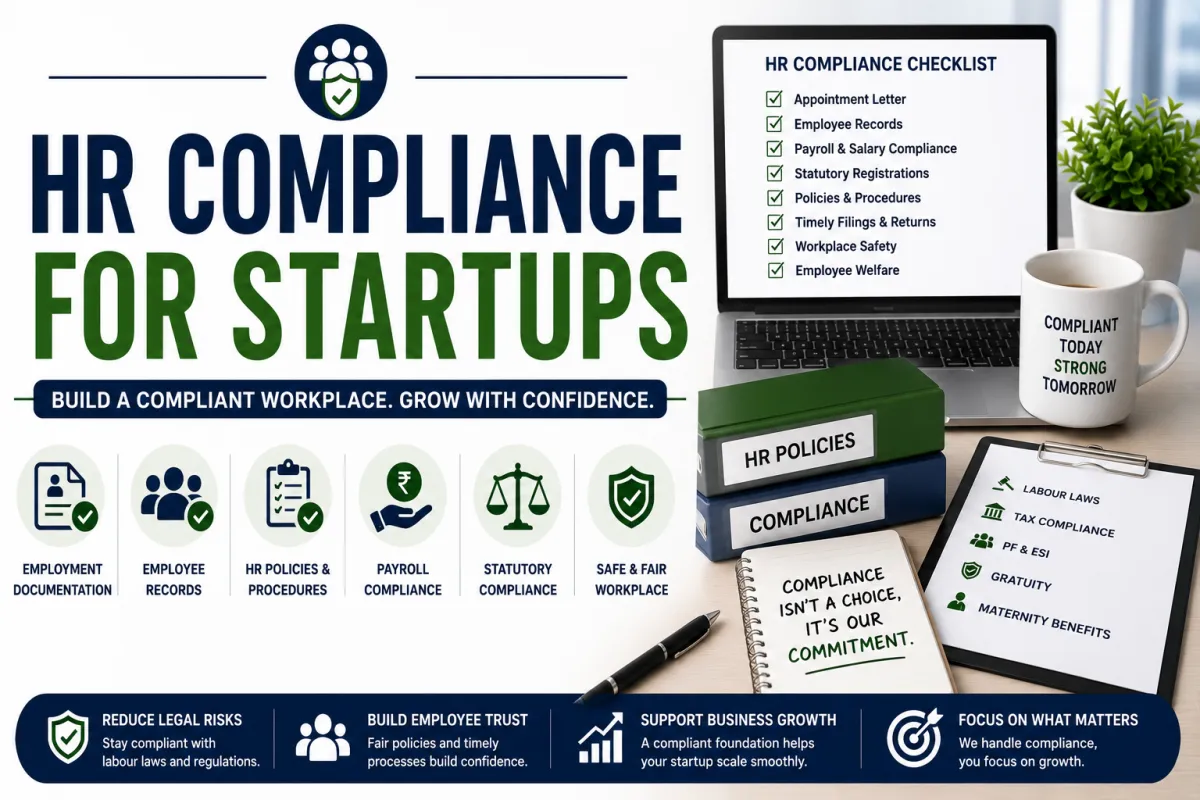
HR Compliance for Startups: Essential Legal Requirements Every New Business Should Follow

HR compliance is essential for every startup to ensure smooth business operations, protect employee rights, and meet legal obligations. Establishing proper HR policies and complying with labour laws from the beginning helps startups avoid penalties, build a positive workplace culture, and support sustainable growth.

Read More →
Blog

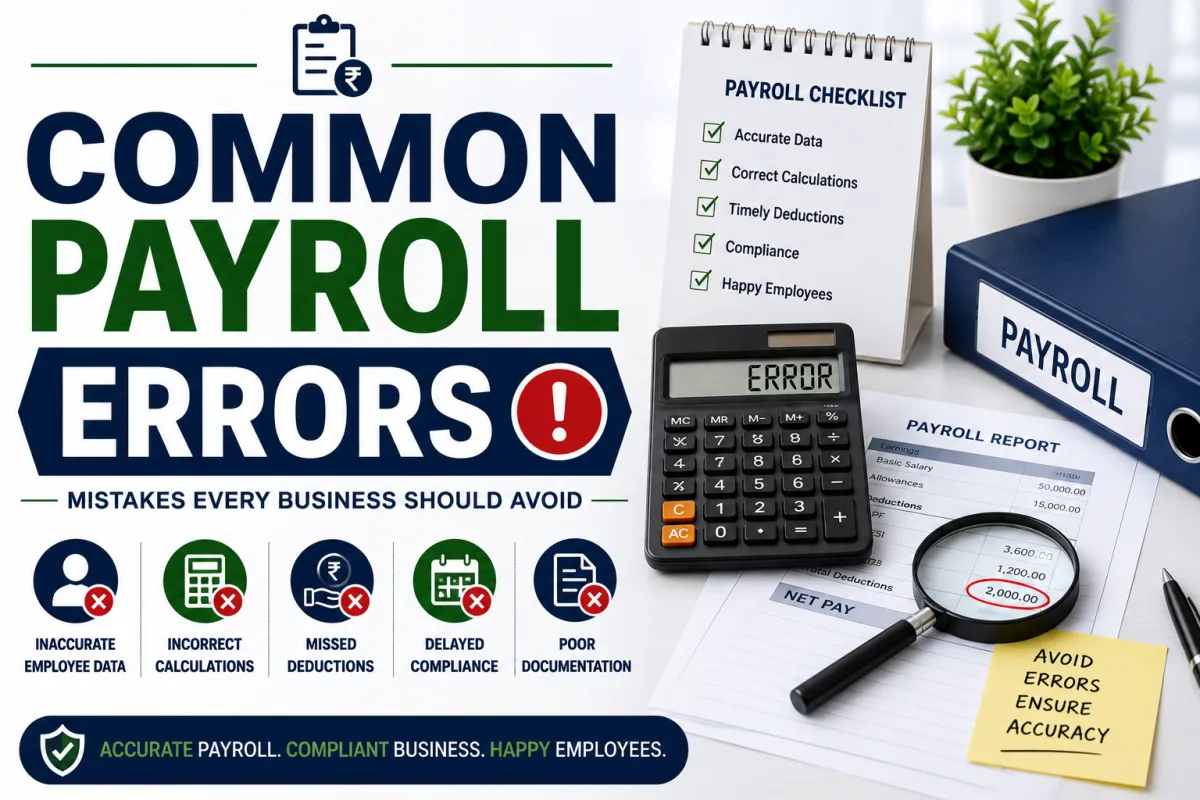
Common Payroll Errors: Mistakes Every Business Should Avoid

Payroll errors can lead to employee dissatisfaction, compliance issues, financial losses, and legal penalties. Understanding the most common payroll mistakes helps businesses improve payroll accuracy, maintain statutory compliance, and build employee trust.

Read More →
Blog

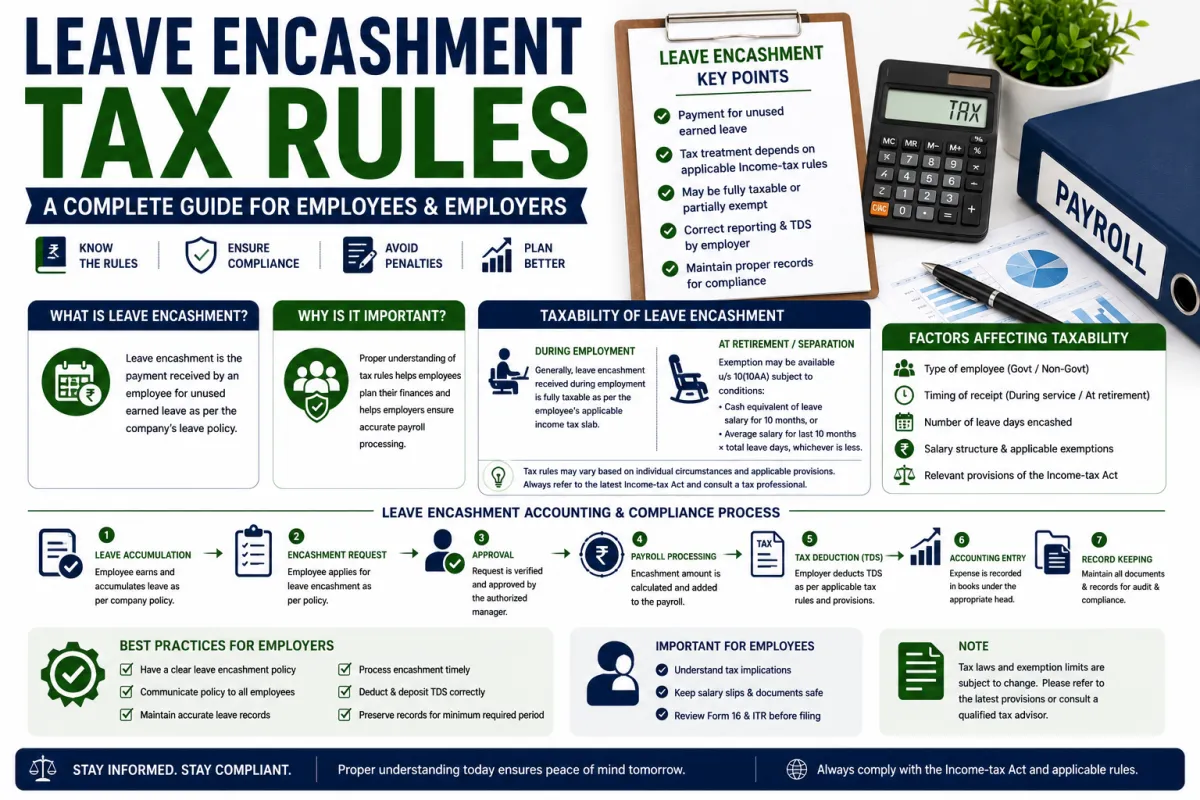
Leave Encashment Tax Rules: Everything Employees and Employers Should Know

Leave encashment is a valuable employee benefit that allows employees to receive payment for their unused earned leave. However, its tax treatment depends on various factors, including the timing of the payment and the applicable provisions of the Income-tax Act. Understanding these rules helps both employers and employees ensure proper tax compliance and payroll accuracy.

Read More →
Blog

Leave Encashment Tax Rules: A Complete Guide for Employees and Employers

Leave encashment is the payment an employee receives for unused earned leave. The tax treatment of leave encashment depends on various factors, including the type of employee and the applicable provisions of the Income-tax Act. Understanding these rules helps employees and employers ensure accurate tax compliance.

Read More →
Blog

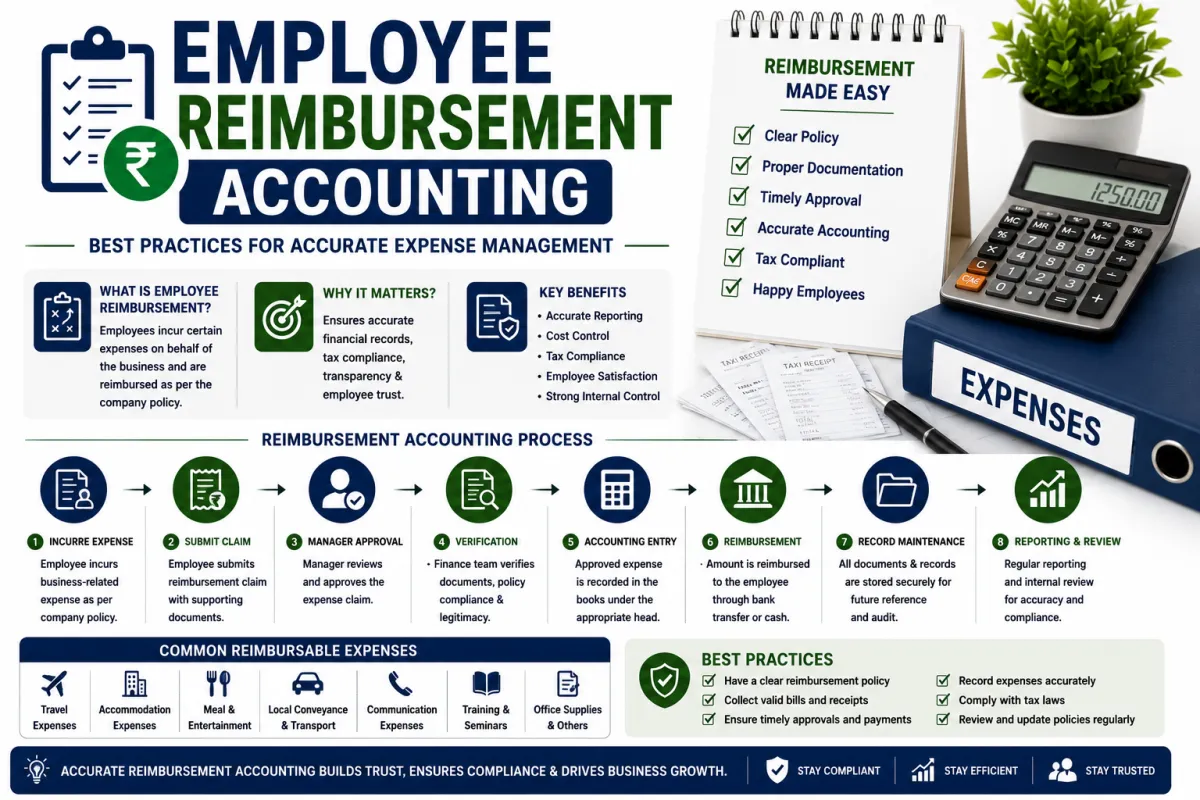
Employee Reimbursement Accounting: Best Practices for Accurate Expense Management

Employee reimbursement accounting is the process of recording and managing expenses incurred by employees on behalf of the business. A well-structured reimbursement system ensures accurate financial records, timely payments, tax compliance, and greater transparency within the organization.

Read More →
Blog

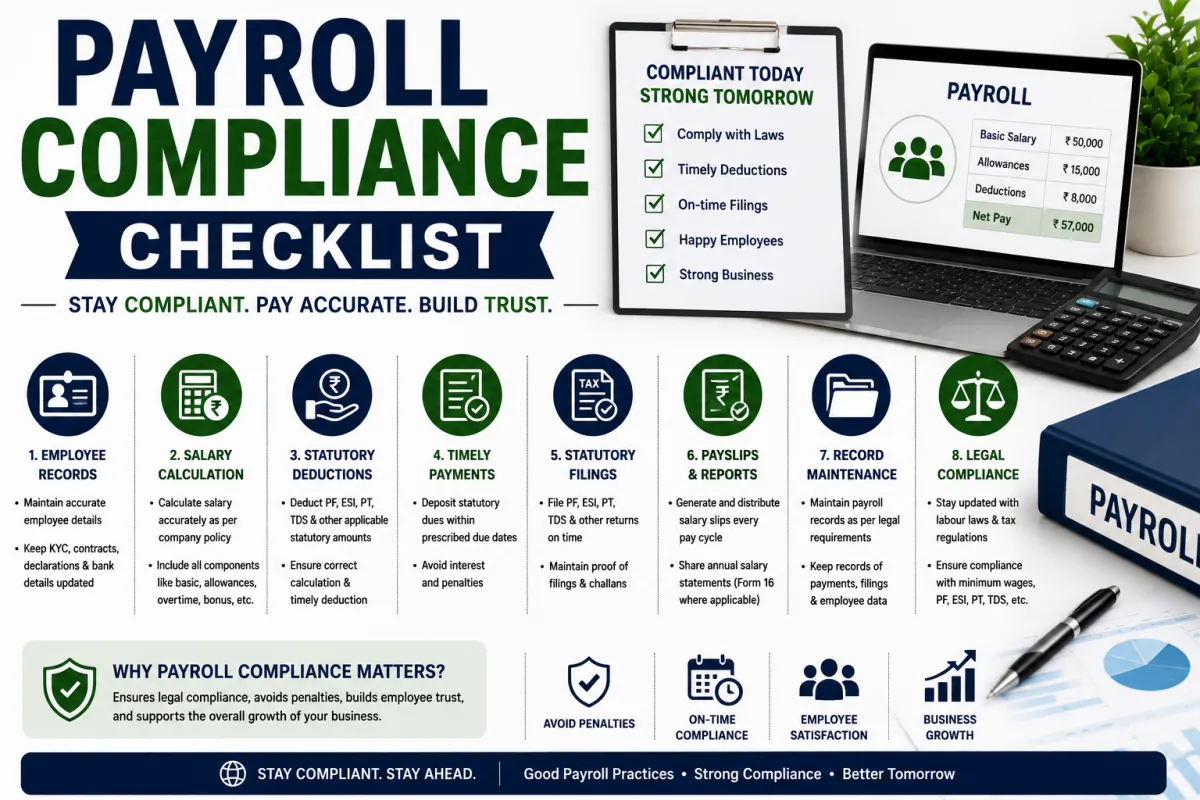
Payroll Compliance Checklist: Essential Requirements Every Employer Should Follow

Payroll compliance is a crucial responsibility for every employer in India. Ensuring accurate salary processing, statutory deductions, timely filings, and proper employee records helps businesses remain legally compliant, avoid penalties, and maintain employee trust.

Read More →
Blog

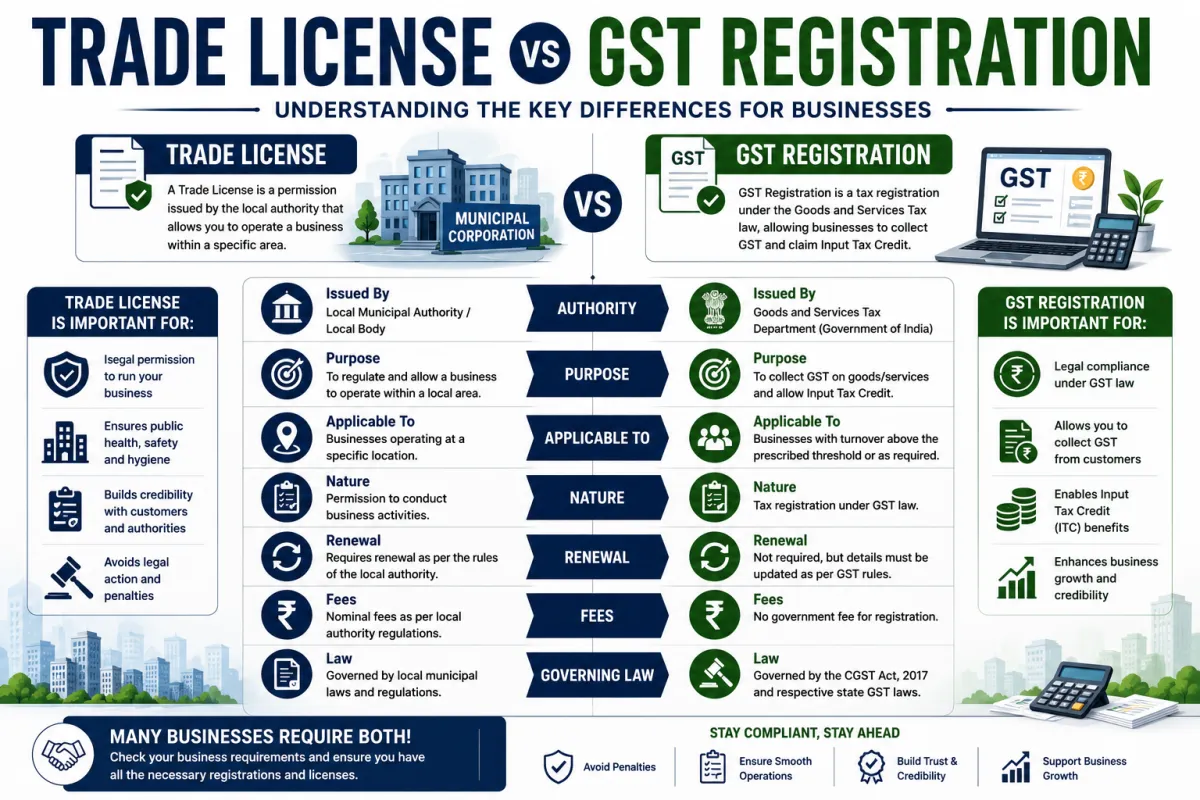
Trade License vs GST Registration: Understanding the Key Differences for Businesses

A Trade License and GST Registration are two different legal requirements for businesses in India. While a Trade License grants permission to carry on a specific business activity within a local jurisdiction, GST Registration is a tax registration required under the Goods and Services Tax law. Understanding the difference helps businesses comply with the appropriate regulations.

Read More →
Blog

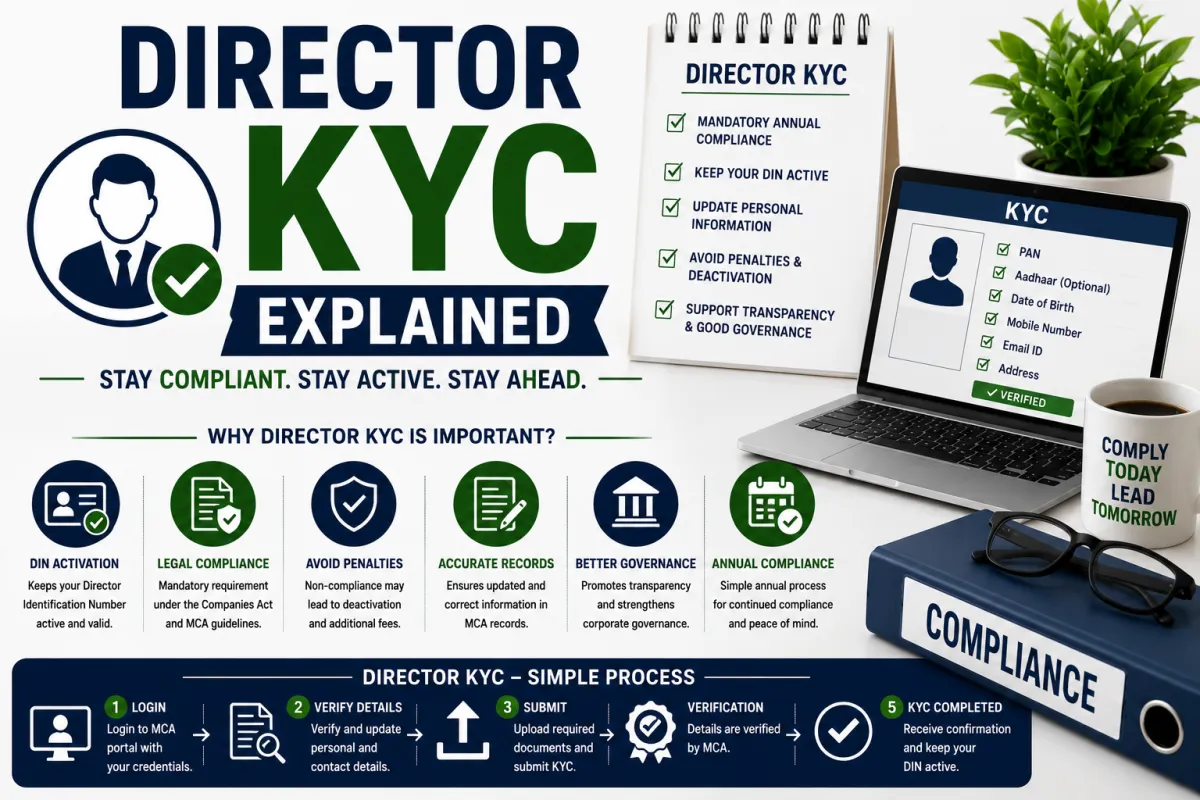
Director KYC Explained: Everything Company Directors Need to Know

Director KYC is a mandatory annual compliance requirement for company directors in India. Completing Director KYC within the prescribed timeline helps maintain an active Director Identification Number (DIN), ensures regulatory compliance, and prevents deactivation or penalties.

Read More →
Blog

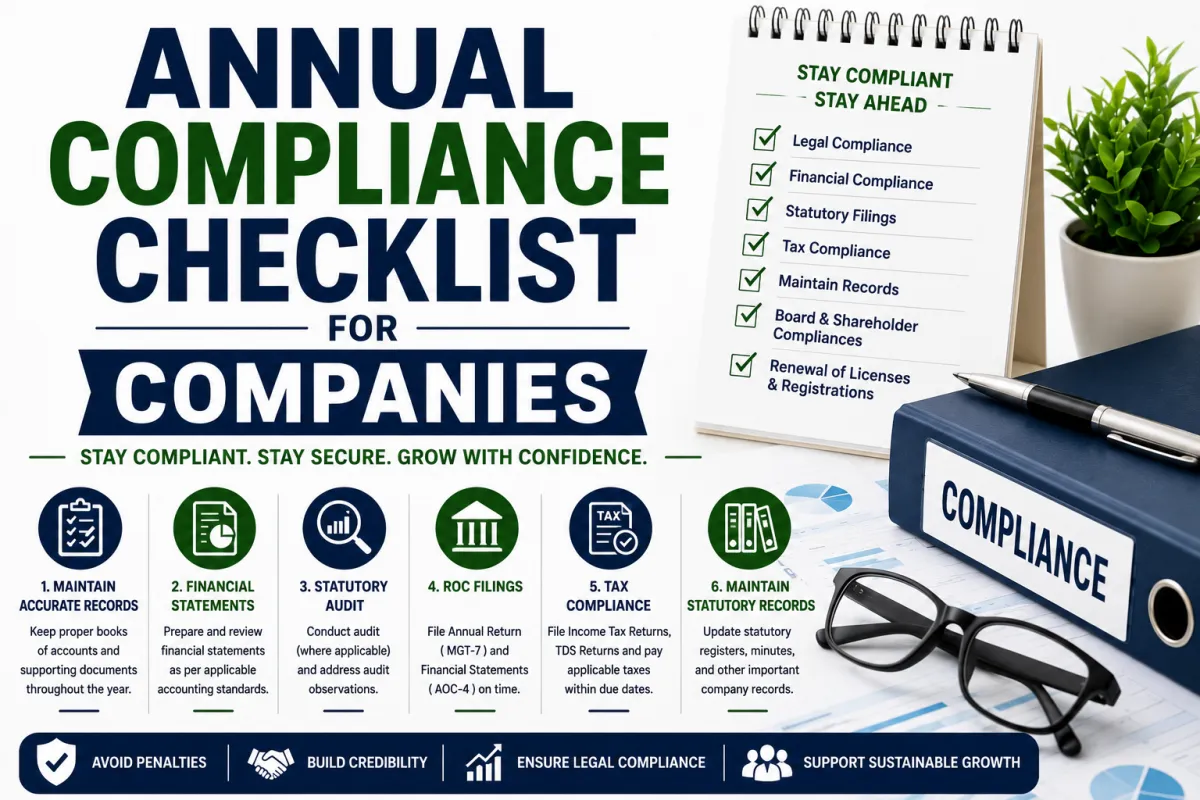
Annual Compliance Checklist for Companies: Essential Requirements Every Business Should Follow

Annual compliance is an essential responsibility for every company registered in India. Completing statutory filings and maintaining proper records on time helps companies avoid penalties, ensure legal compliance, and build credibility with regulators, investors, and stakeholders.

Read More →
Blog

How to Register a New Business in India: A Step-by-Step Guide for Entrepreneurs

Registering a new business is one of the first and most important steps toward building a legally recognized enterprise in India. Choosing the right business structure, obtaining the necessary registrations, and complying with legal requirements lay a strong foundation for long-term business success.

Read More →
Blog

Tax Deductions Every Taxpayer Should Know: A Complete Guide to Saving Tax Legally

Tax deductions help reduce taxable income, allowing taxpayers to legally lower their Income Tax liability. Understanding the most common tax deductions can help individuals and businesses save taxes while remaining fully compliant with the provisions of the Income-tax Act.

Read More →
Blog

Advance Tax: Who Should Pay? A Complete Guide for Taxpayers

Advance Tax is the system of paying Income Tax in installments during the financial year instead of paying the entire tax amount at once. Understanding who is required to pay Advance Tax helps taxpayers remain compliant, avoid interest charges, and manage their tax liabilities efficiently.

Read More →
Blog

Benefits of Filing Income Tax Returns on Time: Why Every Taxpayer Should File Before the Due Date

Filing your Income Tax Return (ITR) on time is more than just a legal obligation. Timely filing helps avoid penalties, ensures faster tax refunds, improves financial credibility, and keeps taxpayers compliant with Income Tax laws while supporting better financial planning.

Read More →
Blog

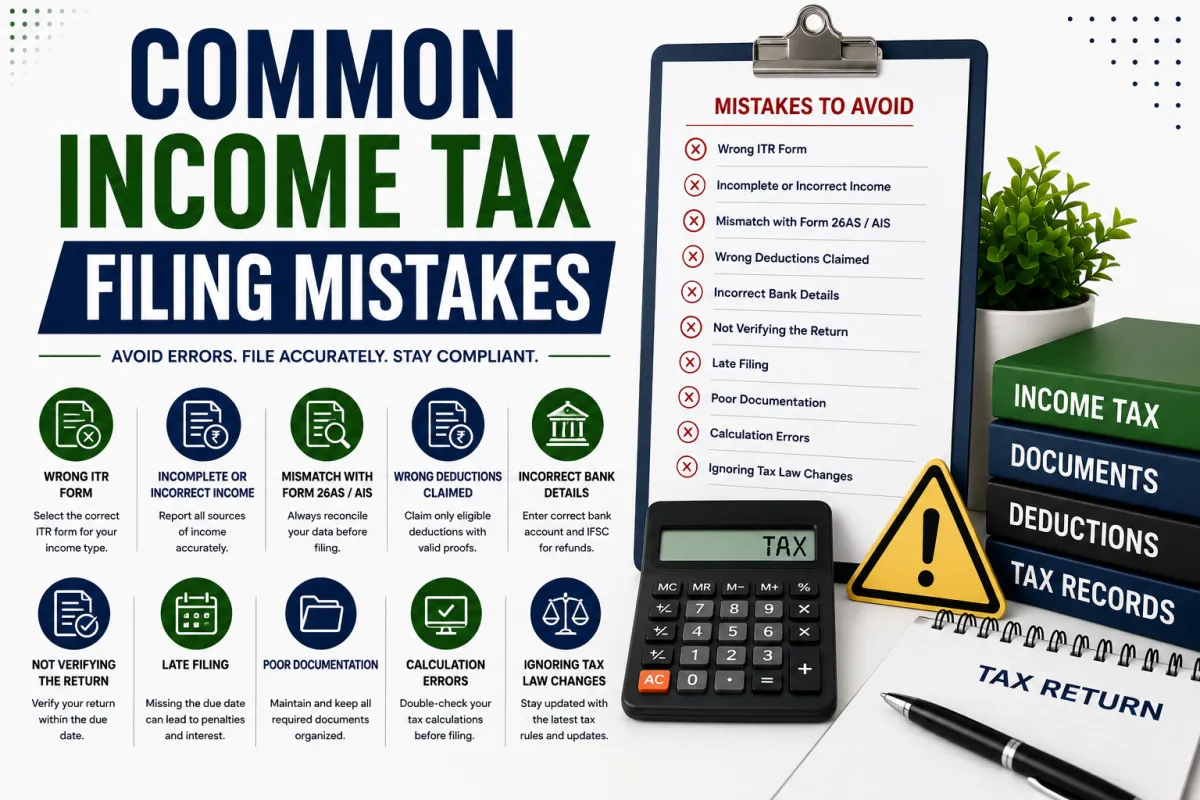
Common Income Tax Filing Mistakes: Errors Every Taxpayer Should Avoid

Filing an Income Tax Return (ITR) accurately is essential for every taxpayer. Even small mistakes can lead to notices, delays in refund processing, penalties, or additional tax liabilities. Understanding the most common filing errors helps individuals and businesses ensure smooth and compliant tax filing.

Read More →
Blog

Documents Required for Income Tax Return Filing: A Complete Checklist for Taxpayers

Filing an Income Tax Return (ITR) becomes much easier when all the necessary documents are organized beforehand. Keeping the required financial and tax-related documents ready helps ensure accurate return filing, reduces errors, and enables taxpayers to claim eligible deductions and refunds.

Read More →
Blog

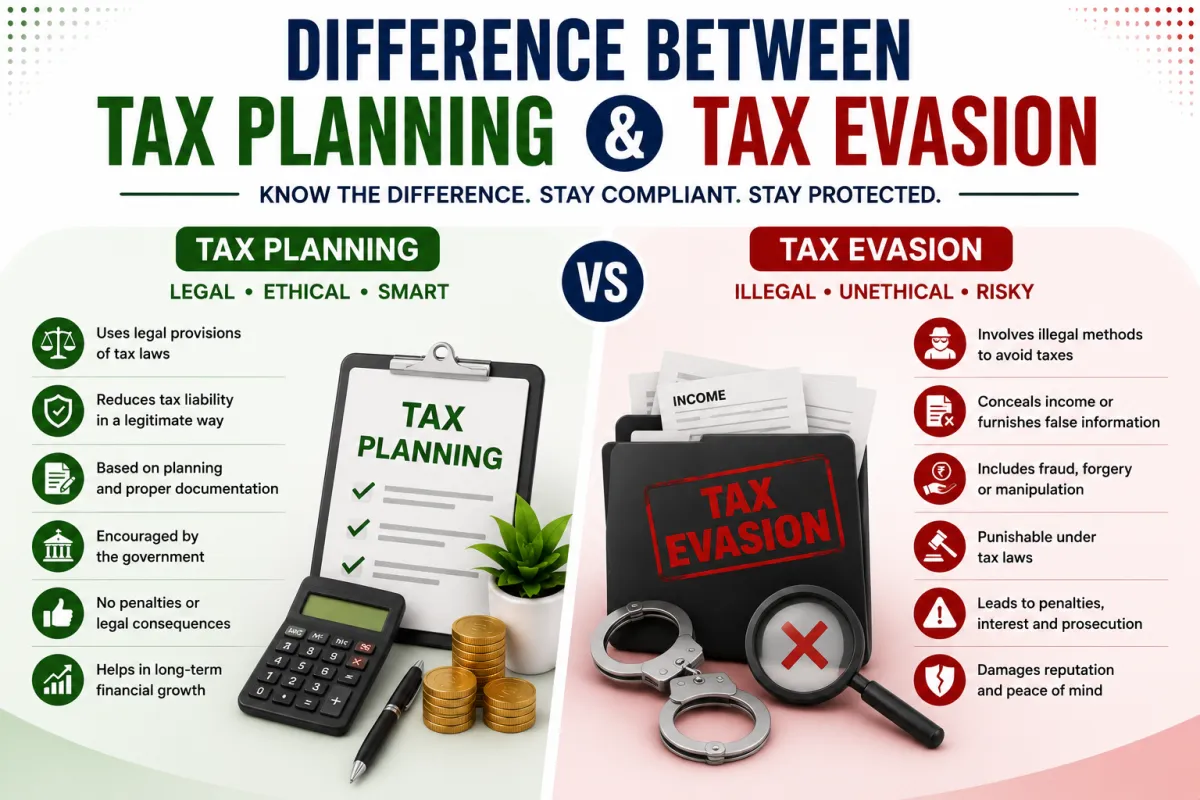
Difference Between Tax Planning and Tax Evasion: A Complete Guide for Taxpayers

Tax planning and tax evasion are often misunderstood, but they are fundamentally different. Tax planning is a legal process of reducing tax liability by using provisions available under the law, whereas tax evasion is the illegal act of deliberately avoiding taxes through fraudulent means.

Read More →
Blog

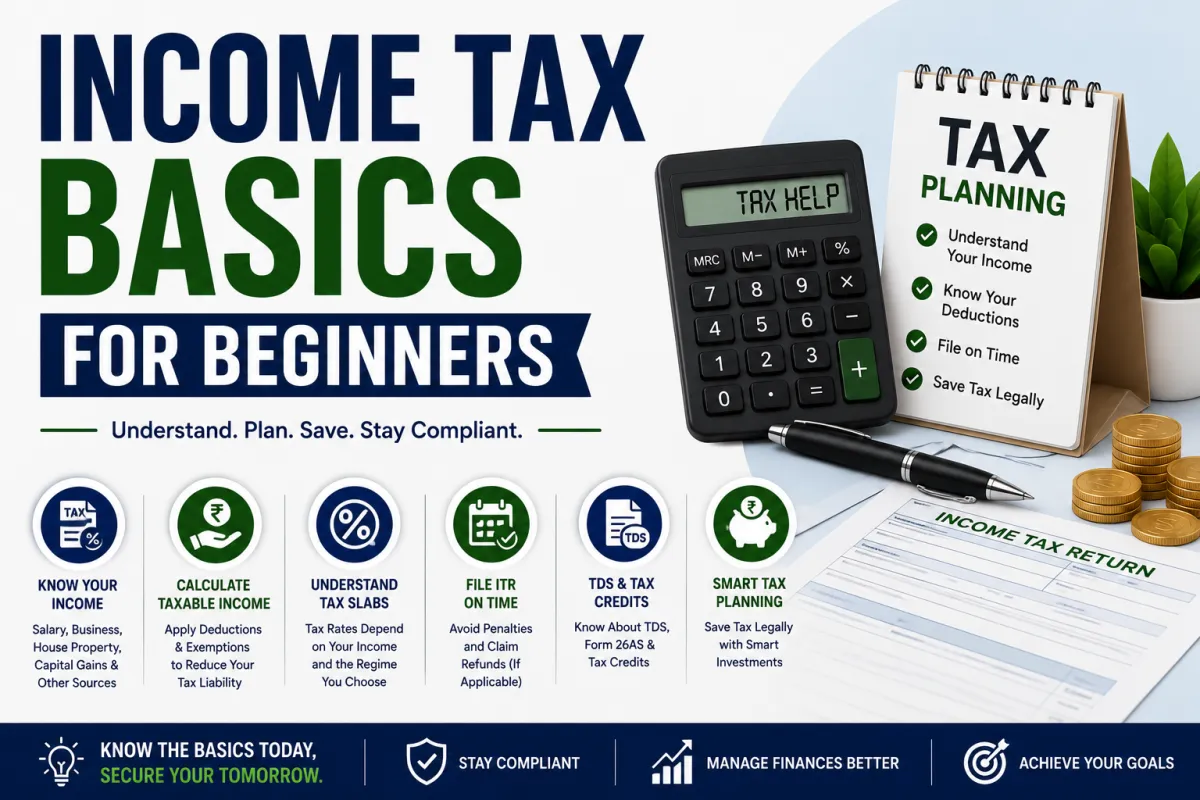
Income Tax Basics for Beginners: Everything You Need to Know

Income Tax is one of the most important direct taxes in India. Understanding the basics of Income Tax helps individuals and businesses comply with legal requirements, file tax returns correctly, and manage their finances more effectively.

Read More →
Blog

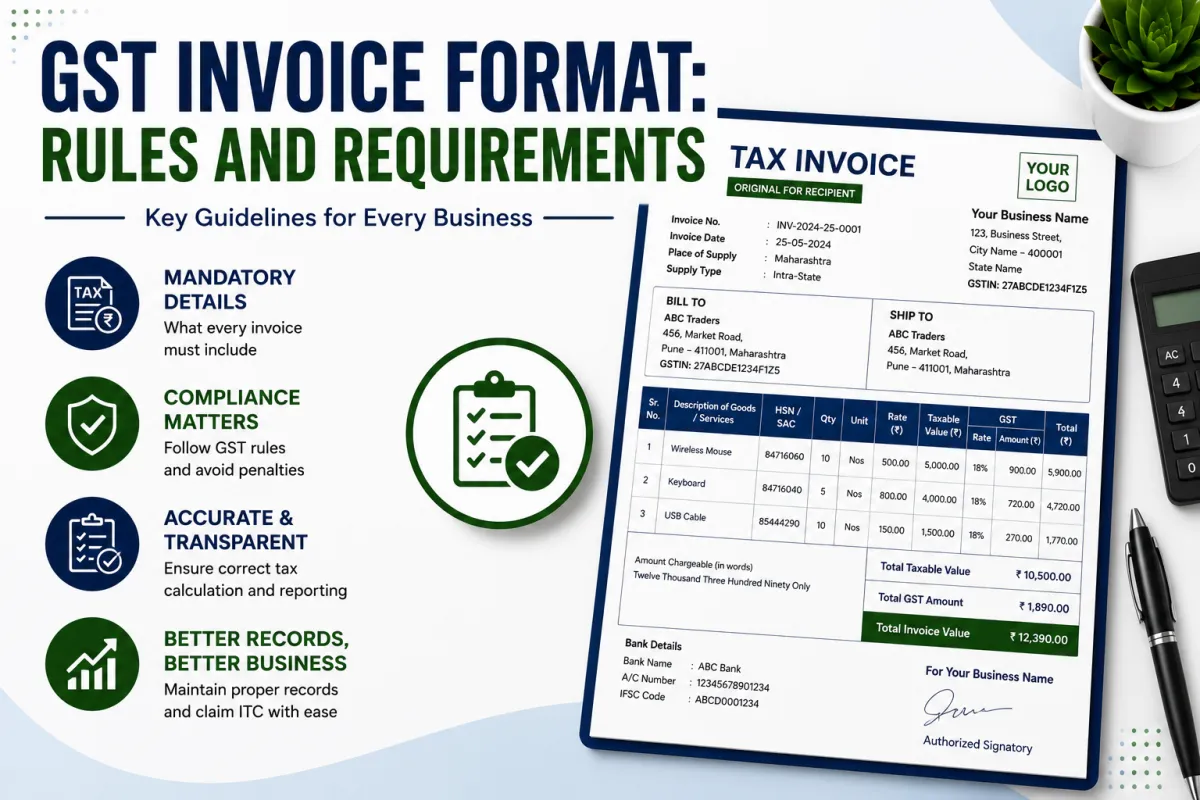
GST Invoice Format: Rules and Requirements Every Business Must Follow

A GST invoice is a legally required document that records the supply of goods or services by a GST-registered business. Preparing invoices in the prescribed format ensures compliance with GST laws, supports Input Tax Credit (ITC) claims, and helps maintain accurate financial records.

Read More →
Blog

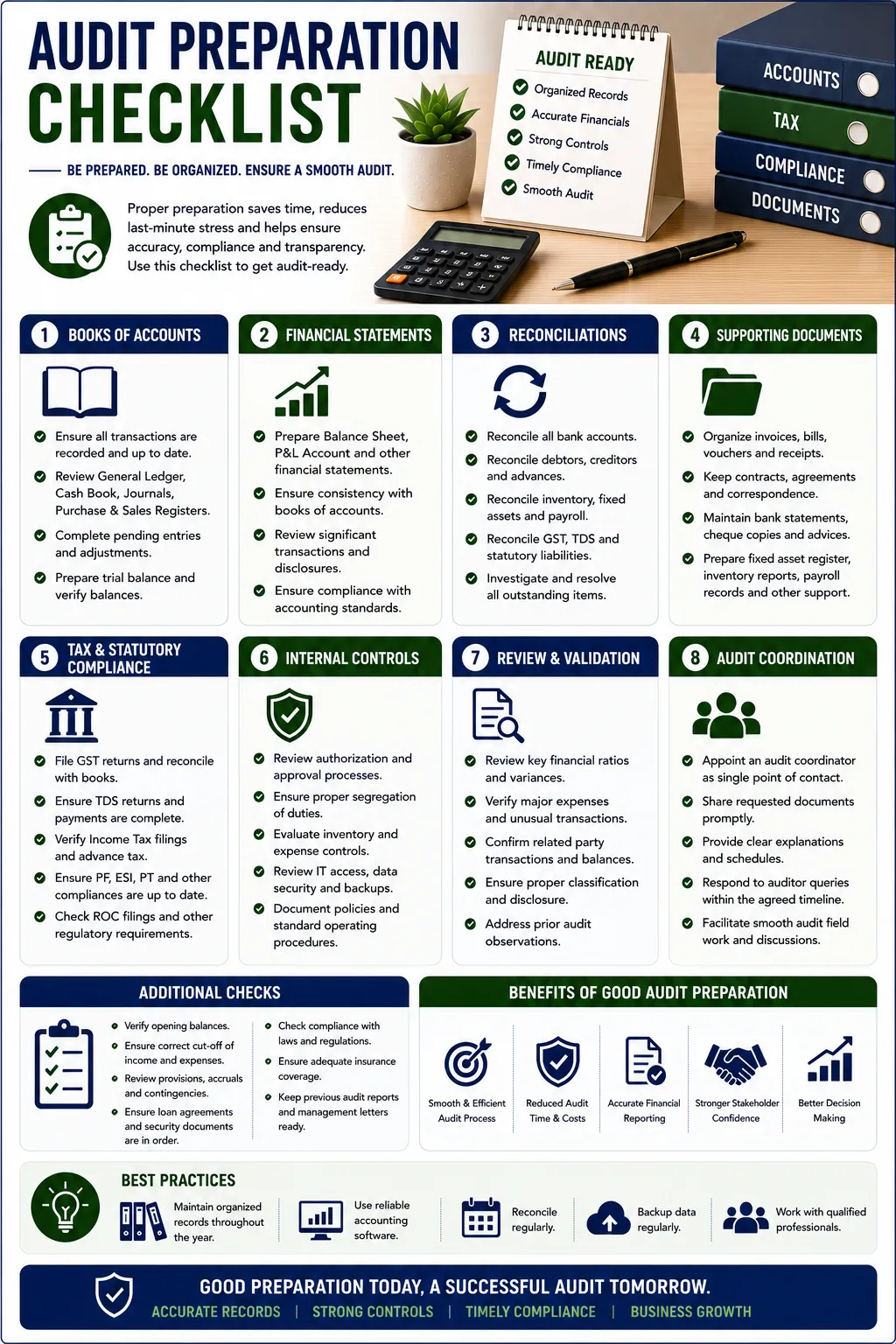
Audit Preparation Checklist: Essential Steps Every Business Should Follow Before an Audit

Proper audit preparation helps businesses complete audits efficiently while ensuring compliance with financial and statutory requirements. Maintaining organized records, reviewing financial statements, and strengthening internal controls can significantly reduce audit delays and improve the overall audit process.

Read More →
Blog

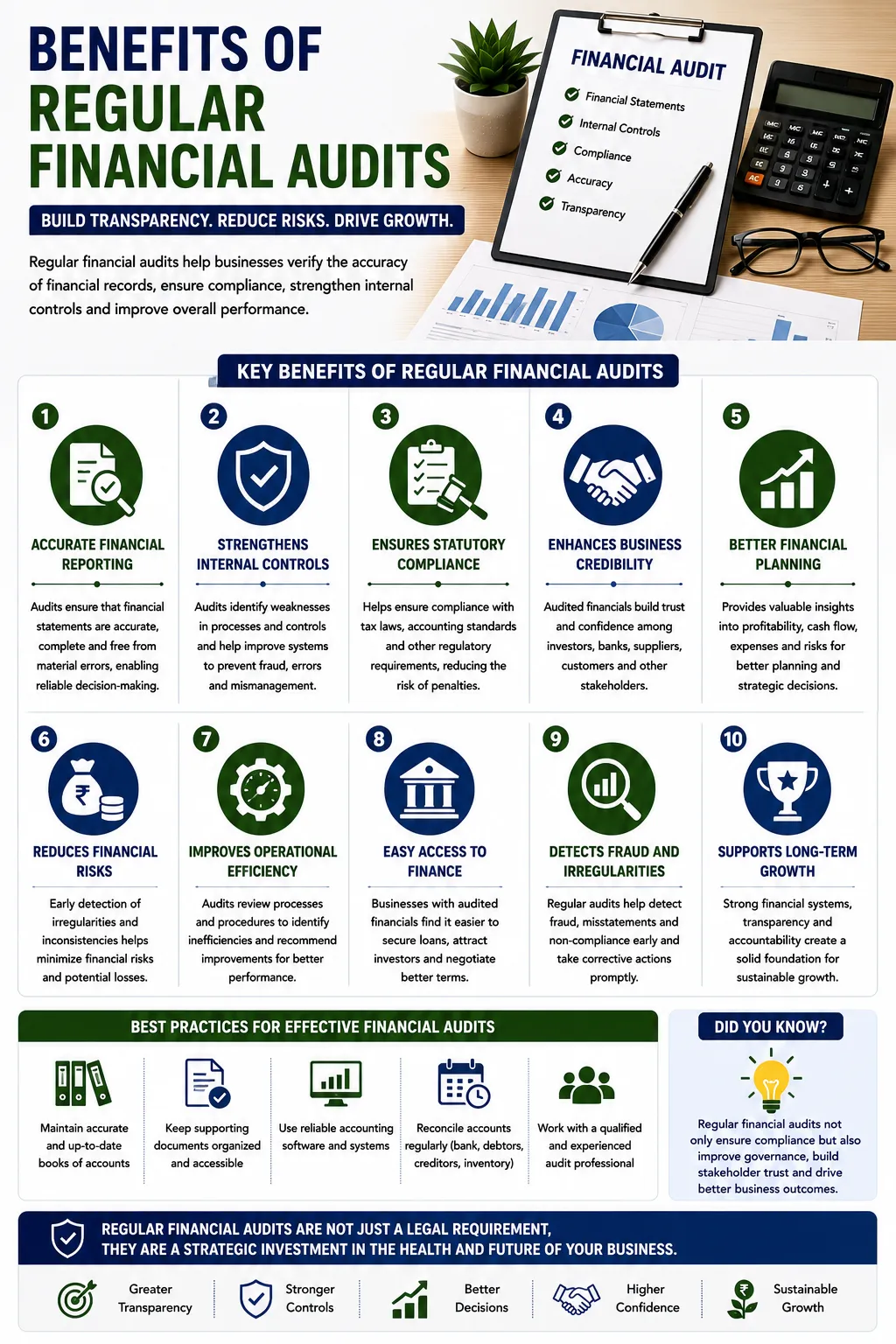
Benefits of Regular Financial Audits: Why Every Business Should Conduct Them

Regular financial audits help businesses verify the accuracy of their financial records, strengthen internal controls, and ensure compliance with applicable laws. They improve transparency, build stakeholder confidence, and support better financial decision-making for long-term business growth.

Read More →
Blog

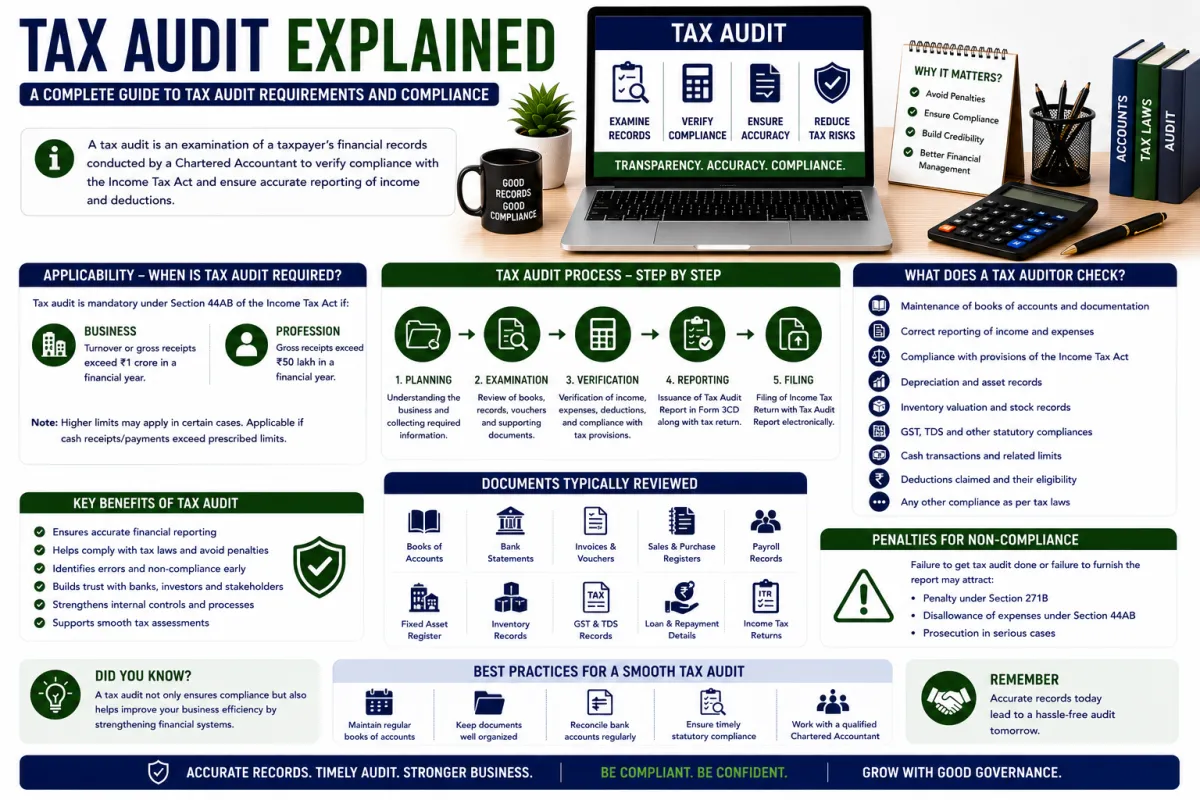
Tax Audit Explained: A Complete Guide to Tax Audit Requirements and Compliance in India

A tax audit is an examination of a taxpayer’s financial records conducted to verify whether income, expenses, and tax-related information have been maintained accurately and comply with the applicable provisions of the Income Tax Act. It helps businesses ensure transparency, improve tax compliance, and minimize the risk of penalties.

Read More →
Blog

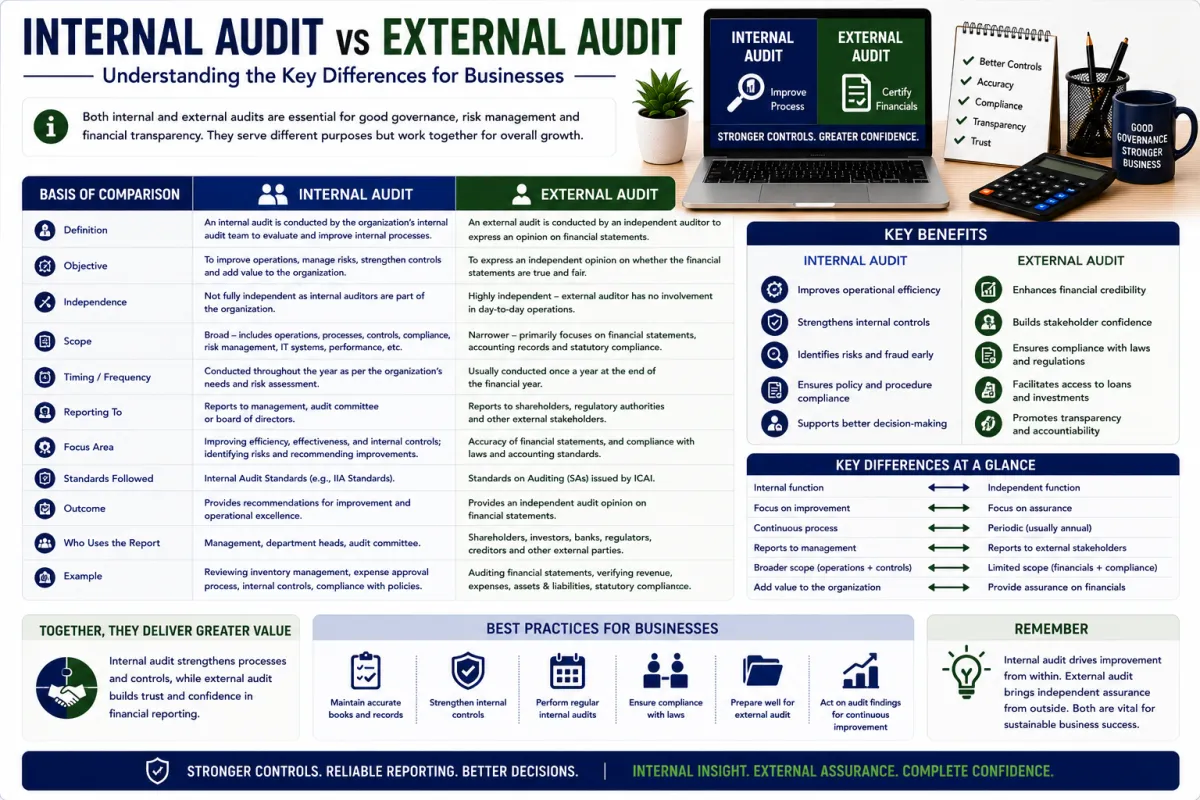
Internal Audit vs External Audit: Understanding the Key Differences for Businesses

Internal and external audits both play important roles in strengthening a business’s financial management and governance. While an internal audit focuses on improving internal processes and risk management, an external audit independently verifies the accuracy of financial statements and compliance with applicable laws.

Read More →
Blog

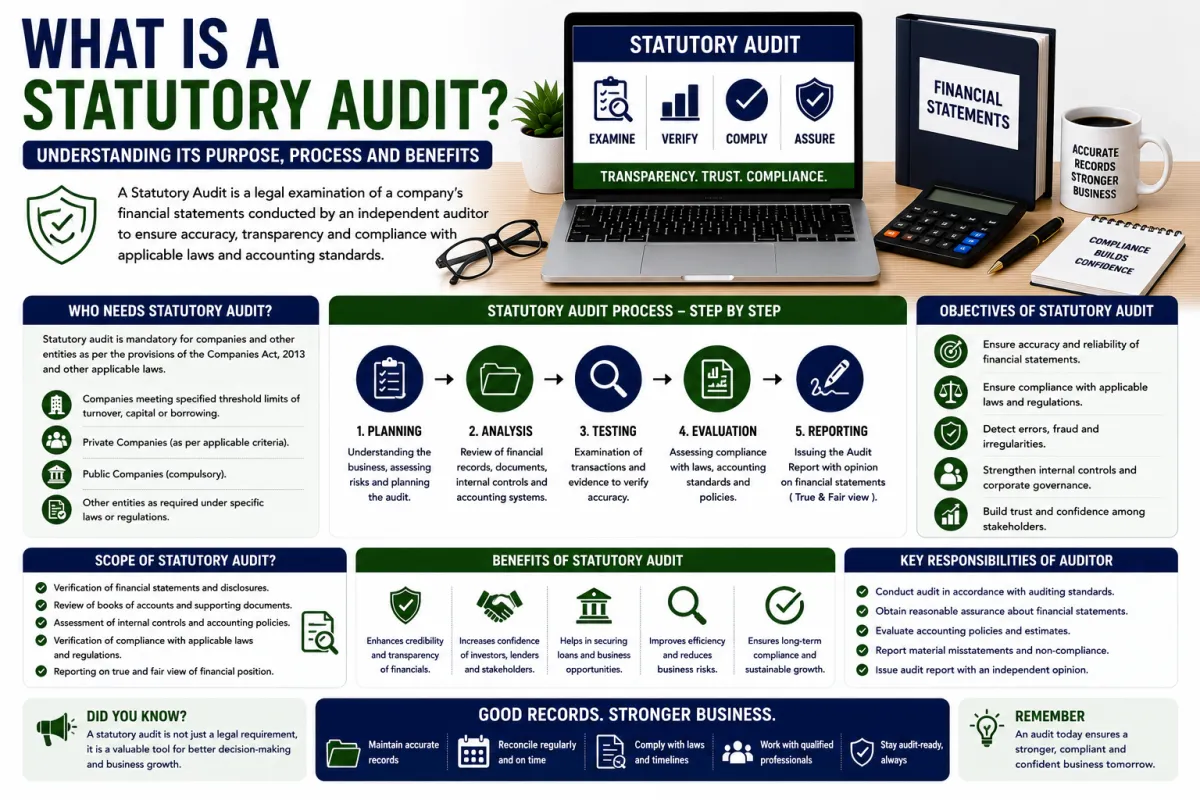
What is a Statutory Audit? A Complete Guide for Businesses in India

A statutory audit is a legally required examination of a company’s financial records conducted by an independent auditor to verify their accuracy and compliance with applicable laws and accounting standards. It promotes transparency, strengthens financial credibility, and helps businesses meet regulatory requirements.

Read More →
Blog

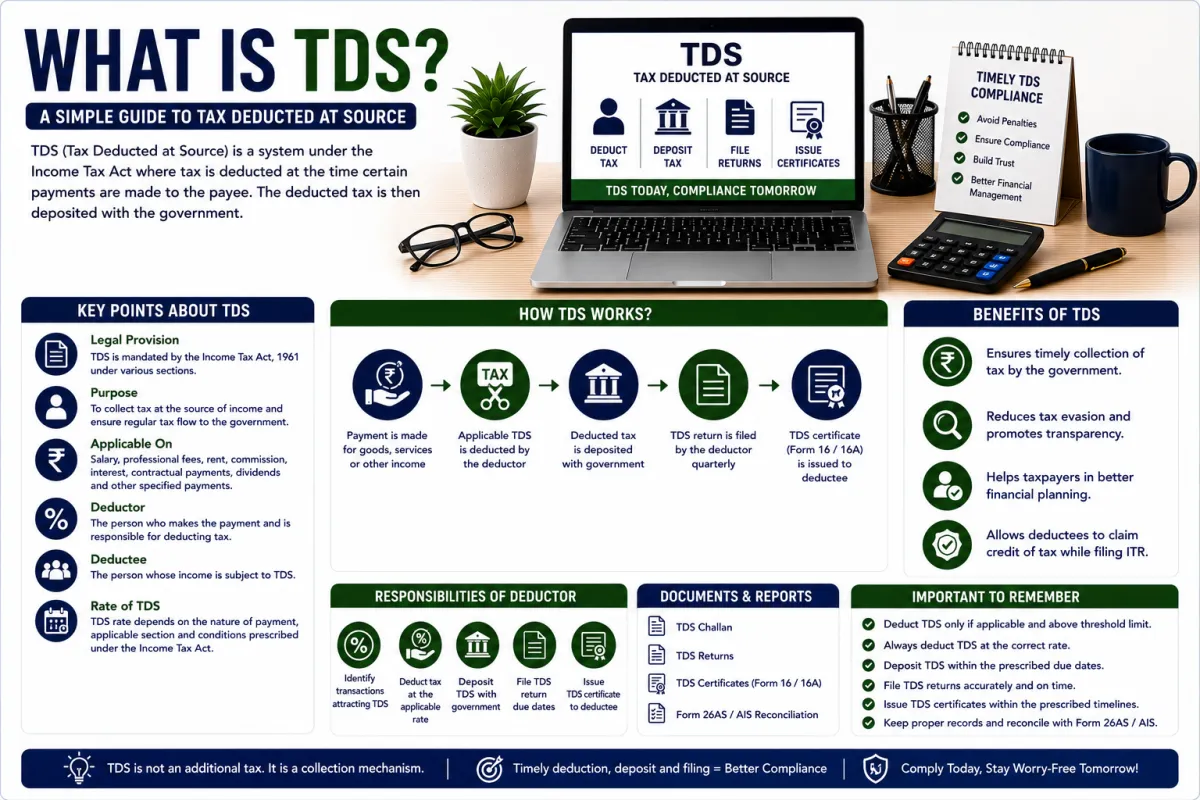
What is TDS? A Complete Beginner’s Guide to Tax Deducted at Source in India

Tax Deducted at Source (TDS) is a system under the Income Tax Act where tax is deducted at the time certain payments are made instead of being collected later. It helps the government collect taxes regularly while ensuring better tax compliance among taxpayers and businesses.

Read More →
Blog

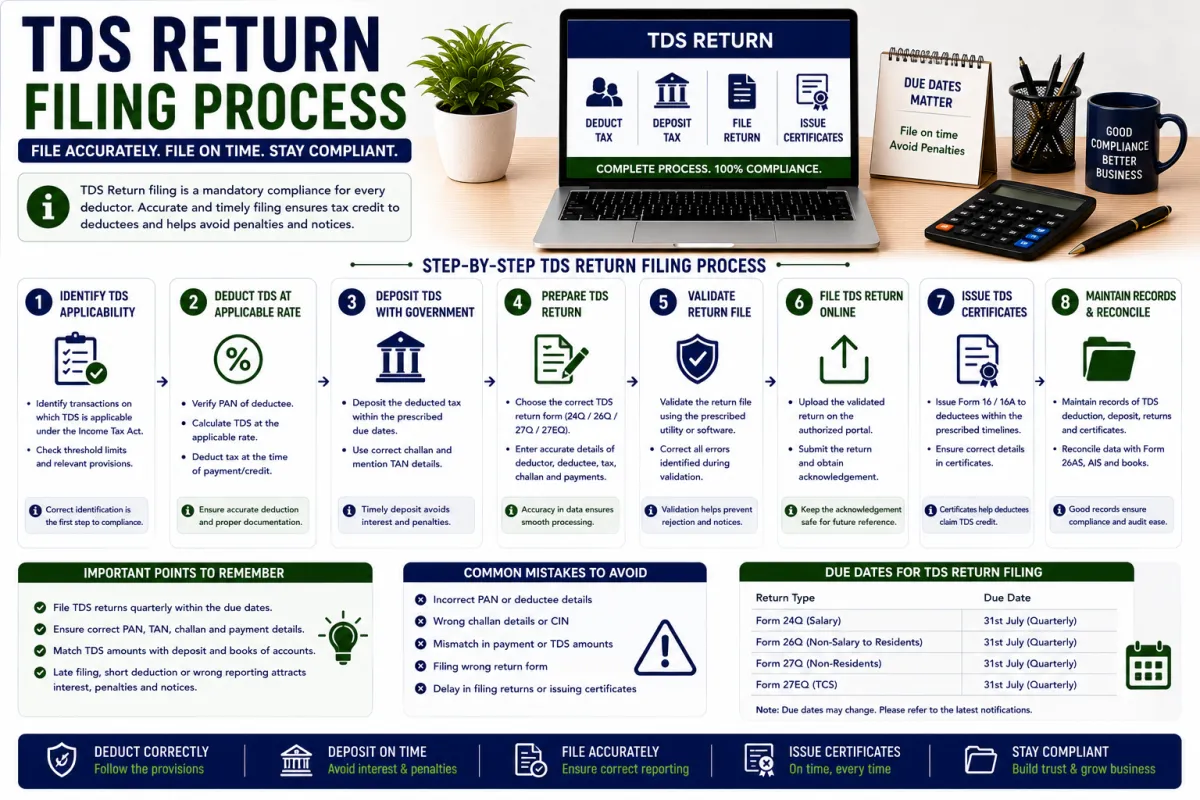
TDS Return Filing Process: A Complete Step-by-Step Guide for Businesses

TDS return filing is a mandatory compliance requirement for deductors who deduct tax at source under the Income Tax Act. Filing accurate TDS returns on time helps businesses avoid penalties, ensures proper tax credit to deductees, and maintains smooth tax compliance.

Read More →
Blog

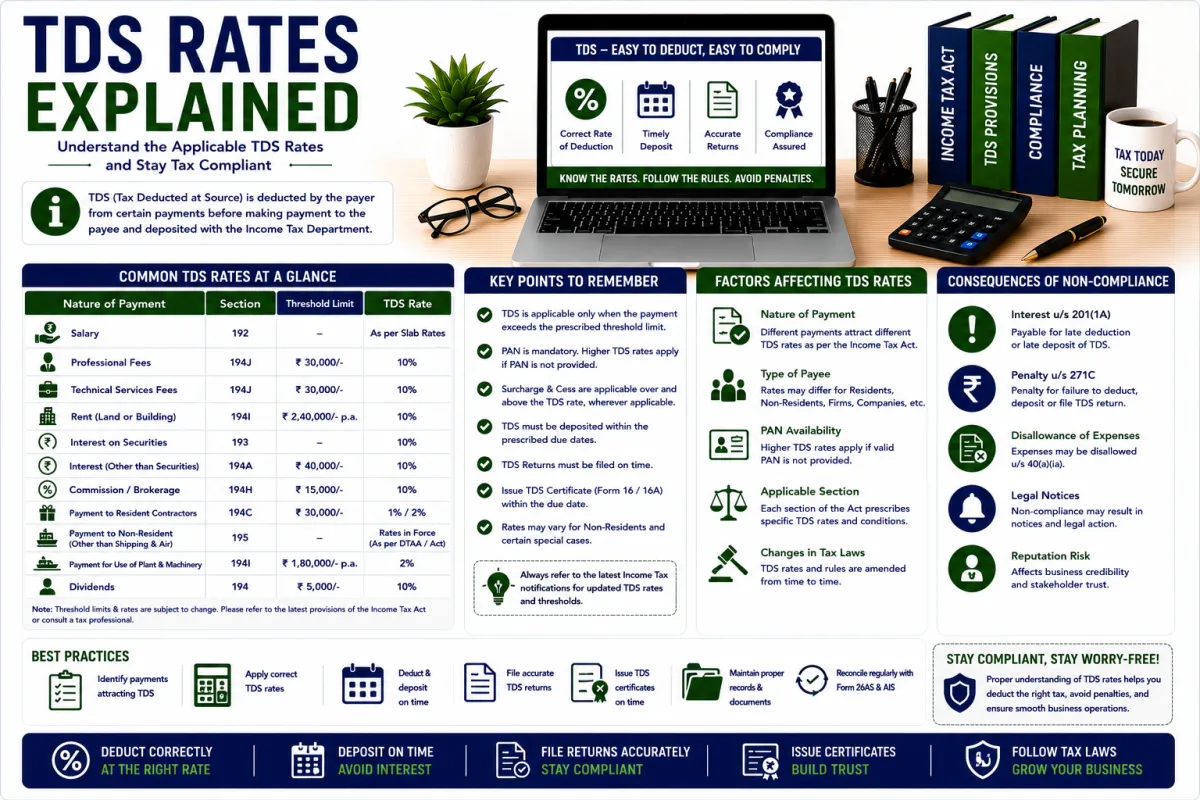
TDS Rates Explained: A Complete Guide to Understanding Tax Deduction at Source in India

Tax Deducted at Source (TDS) rates vary depending on the nature of the payment and the applicable provisions of the Income Tax Act. Understanding how TDS rates work helps businesses, employers, and taxpayers ensure accurate tax deductions, maintain compliance, and avoid penalties.

Read More →
Blog

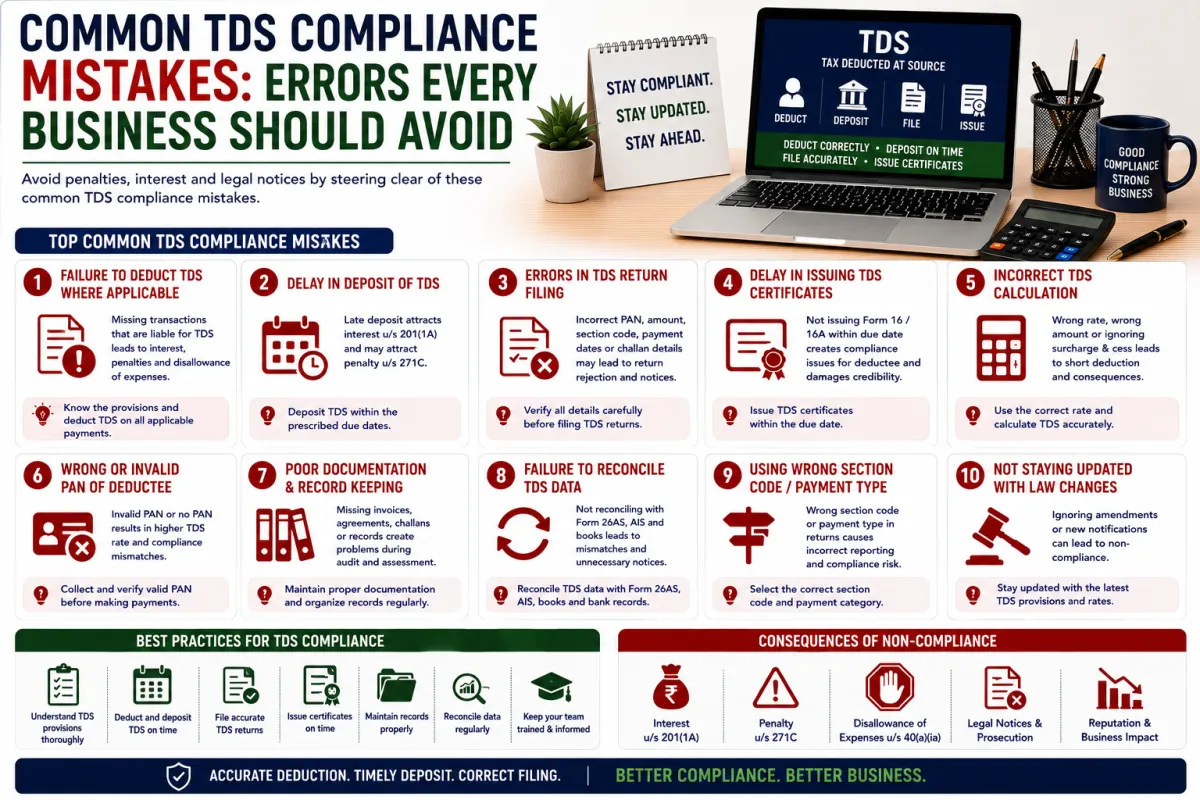
Common TDS Compliance Mistakes: Errors Every Business Should Avoid

TDS compliance is an essential responsibility for businesses, employers, and other deductors. Even small errors in deduction, deposit, return filing, or documentation can lead to interest, penalties, and legal notices. Understanding common TDS compliance mistakes helps organizations maintain accurate tax compliance and avoid unnecessary financial risks.

Read More →
Blog

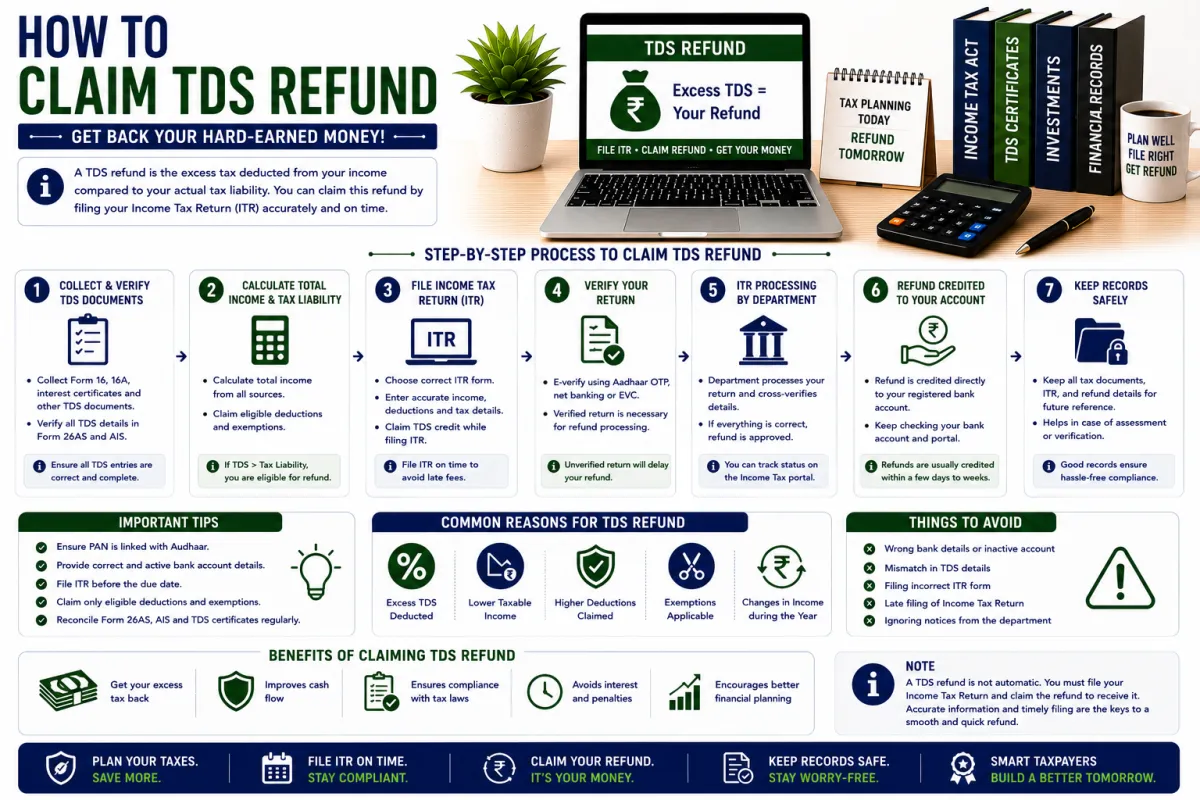
How to Claim TDS Refund: A Step-by-Step Guide for Taxpayers in India

A TDS refund can be claimed when the tax deducted at source exceeds your actual income tax liability. Understanding the refund process helps taxpayers file accurate Income Tax Returns, claim eligible refunds, and receive them without unnecessary delays.

Read More →
Blog

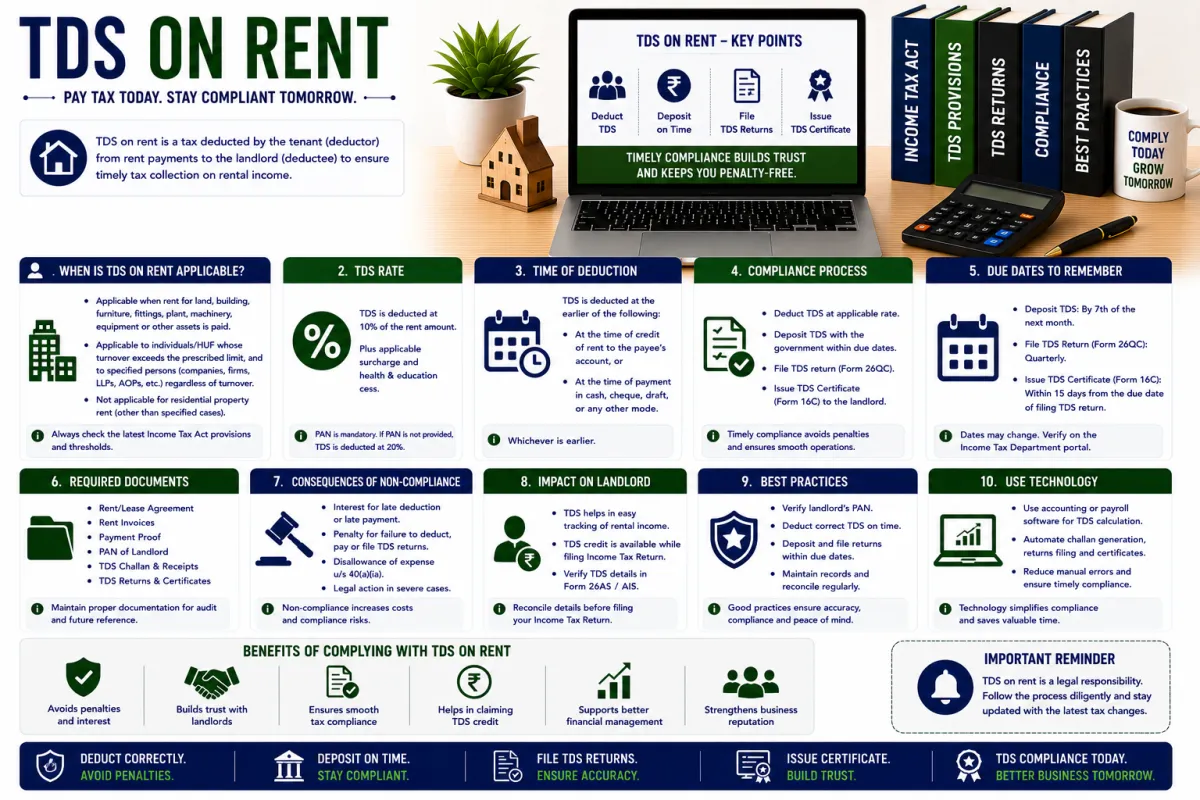
TDS on Rent: A Complete Guide to Tax Deduction, Compliance, and Filing in India

TDS on rent is a statutory requirement under the Income Tax Act for specified persons making eligible rental payments. Understanding when TDS applies, how it is deducted, and the related compliance requirements helps both tenants and property owners avoid penalties and ensure smooth tax compliance.

Read More →
Blog

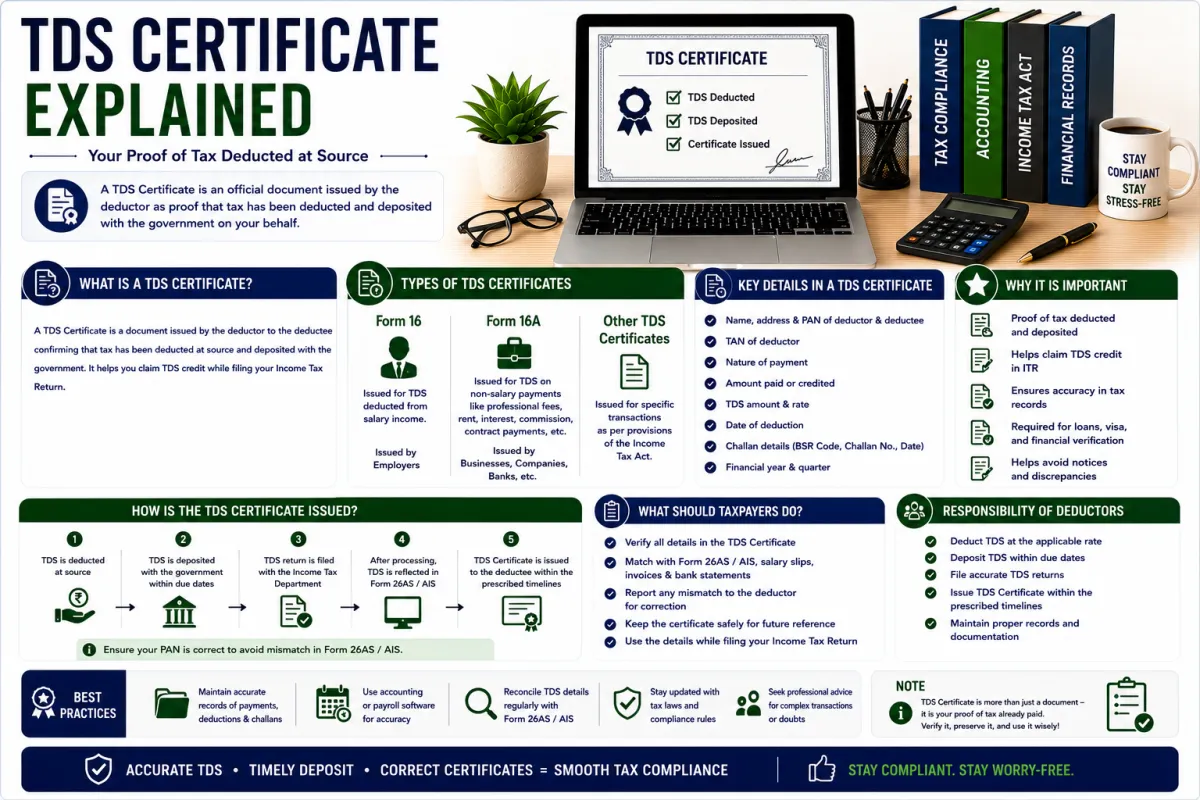
TDS Certificate Explained: Everything You Need to Know About Forms, Purpose, and Tax Compliance

A TDS Certificate is an official document issued by the deductor as proof that Tax Deducted at Source (TDS) has been deducted and deposited with the government. It helps taxpayers claim TDS credit and file accurate Income Tax Returns.

Read More →
Blog

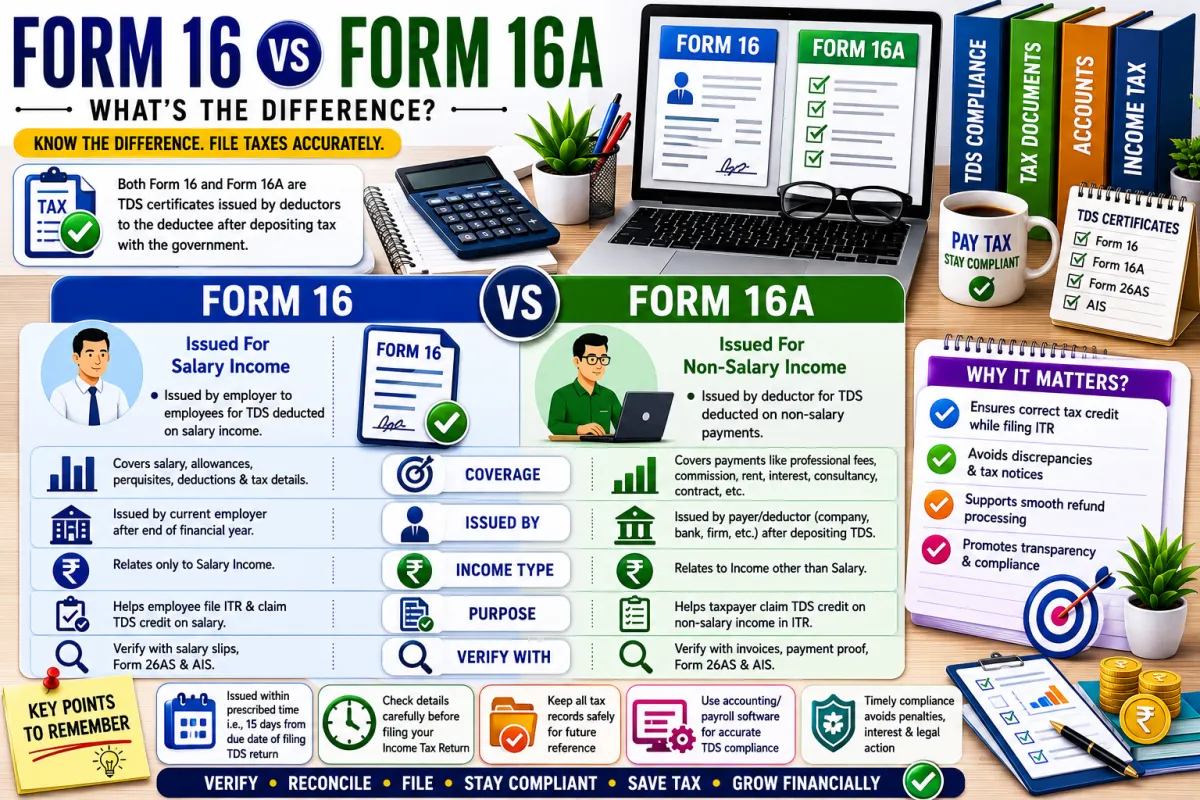
Form 16 vs Form 16A: Understanding the Key Differences and Their Importance in Tax Filing

Form 16 and Form 16A are important TDS certificates issued under the Income Tax Act, but they serve different purposes. Understanding the difference between these forms helps taxpayers verify TDS deductions, claim tax credits correctly, and file accurate Income Tax Returns.

Read More →
Blog

Consequences of Late TDS Payment: Why Timely TDS Compliance Matters for Every Business

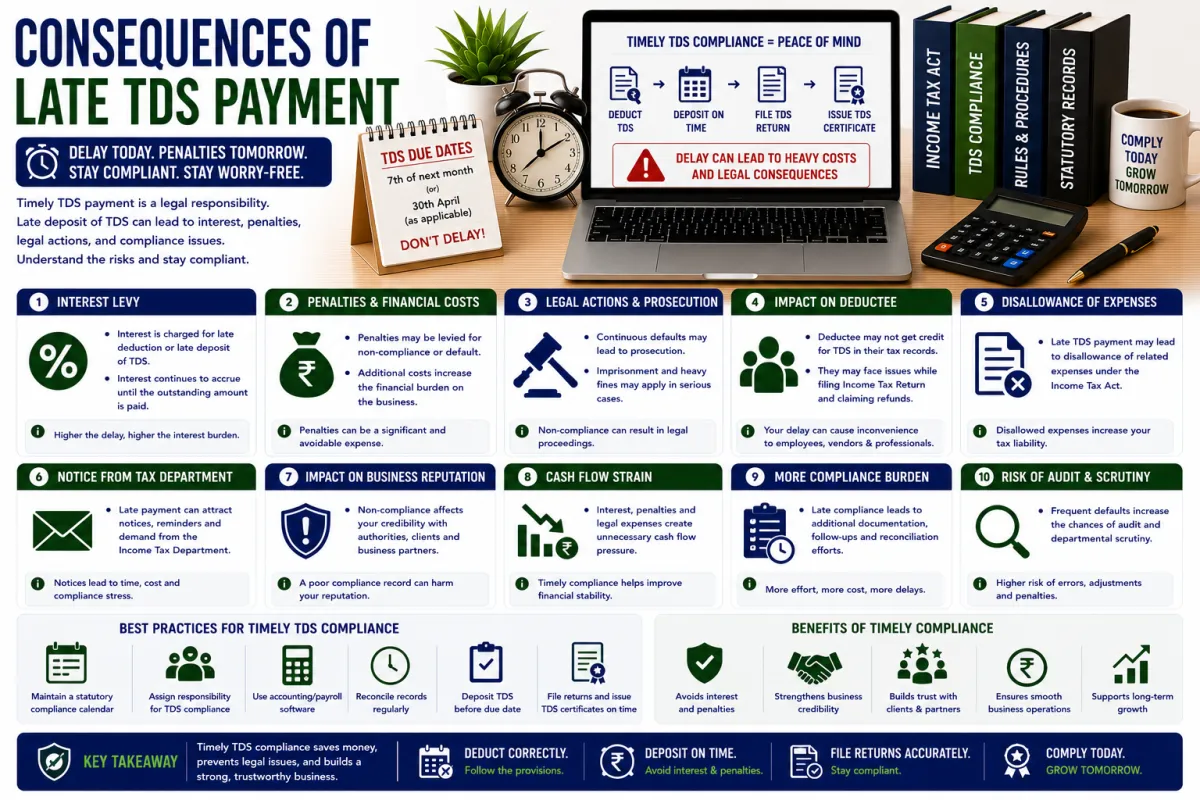
Timely payment of Tax Deducted at Source (TDS) is a statutory responsibility for every deductor in India. Delays in depositing TDS can lead to interest, penalties, legal consequences, and compliance issues, making timely payment essential for businesses and employers.

Read More →
Blog

TDS on Professional Services: A Complete Guide for Businesses and Professionals in India

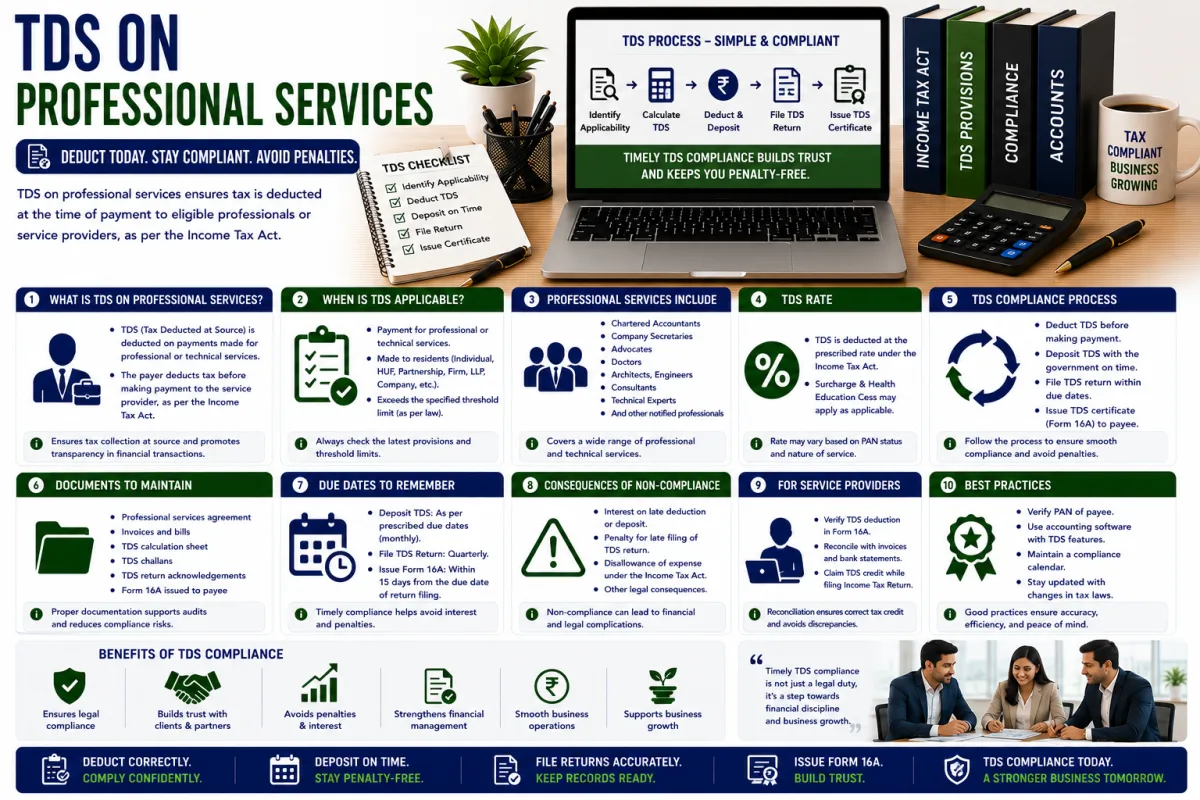
TDS on professional services is a tax deduction mechanism under the Income Tax Act where the payer deducts tax before making payment to certain professionals or service providers, as applicable. Understanding these provisions helps businesses and professionals ensure timely compliance and avoid penalties.

Read More →
Blog

TDS on Salary Explained: A Complete Guide for Employees and Employers in India

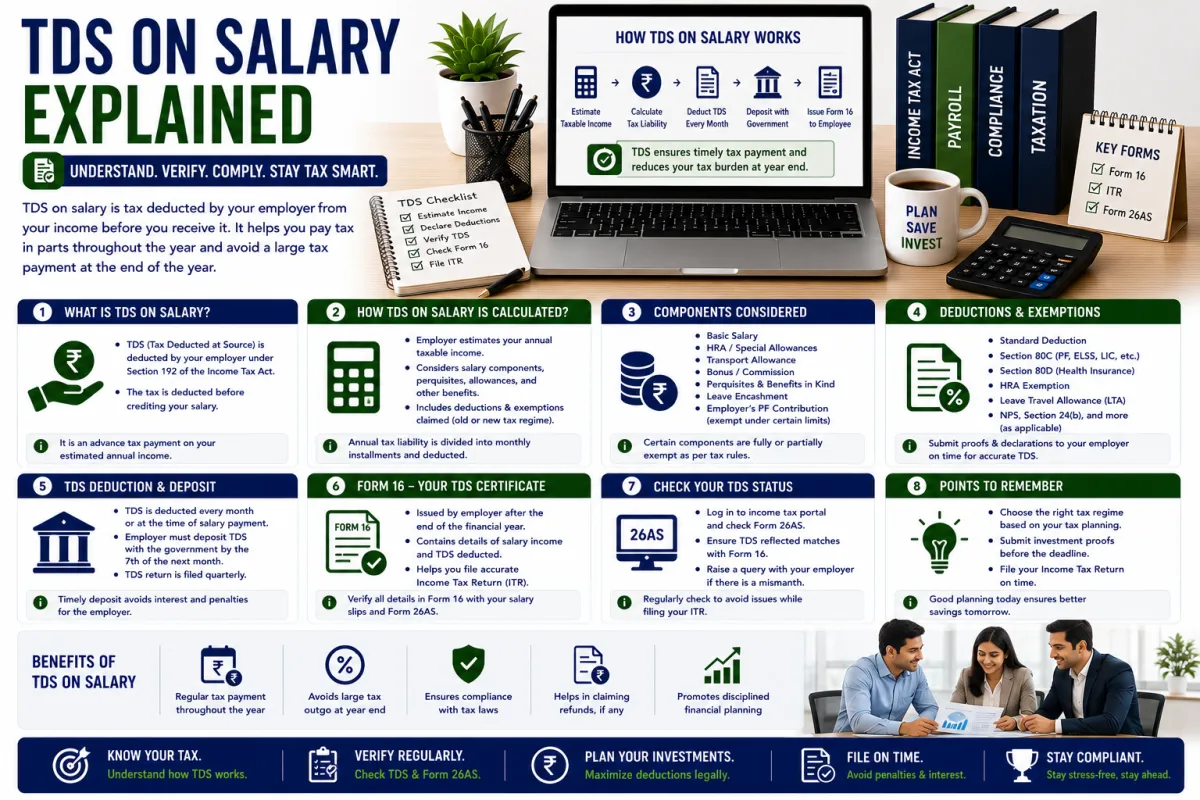
Tax Deducted at Source (TDS) on salary is a system where employers deduct income tax from an employee’s salary before making the payment. Understanding how salary TDS works helps employees manage tax liability, verify deductions, and file accurate Income Tax Returns.

Read More →
Blog

Business Loan Documentation Checklist: Essential Documents You Need for Faster Loan Approval

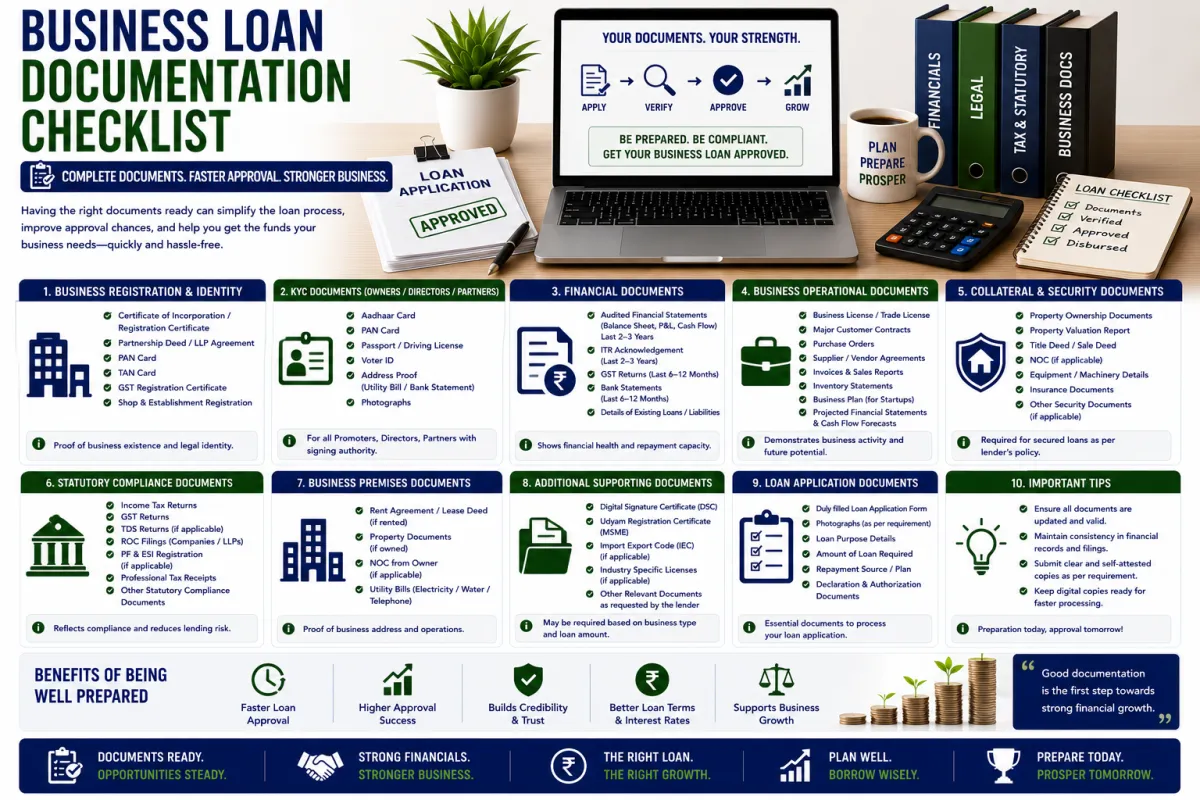
Preparing the right documents is one of the most important steps in securing a business loan. A complete and well-organized documentation checklist improves approval chances, speeds up the loan process, and demonstrates the financial credibility of your business.

Read More →
Blog

How to Raise Funds for Your Startup: A Complete Guide to Startup Funding in India

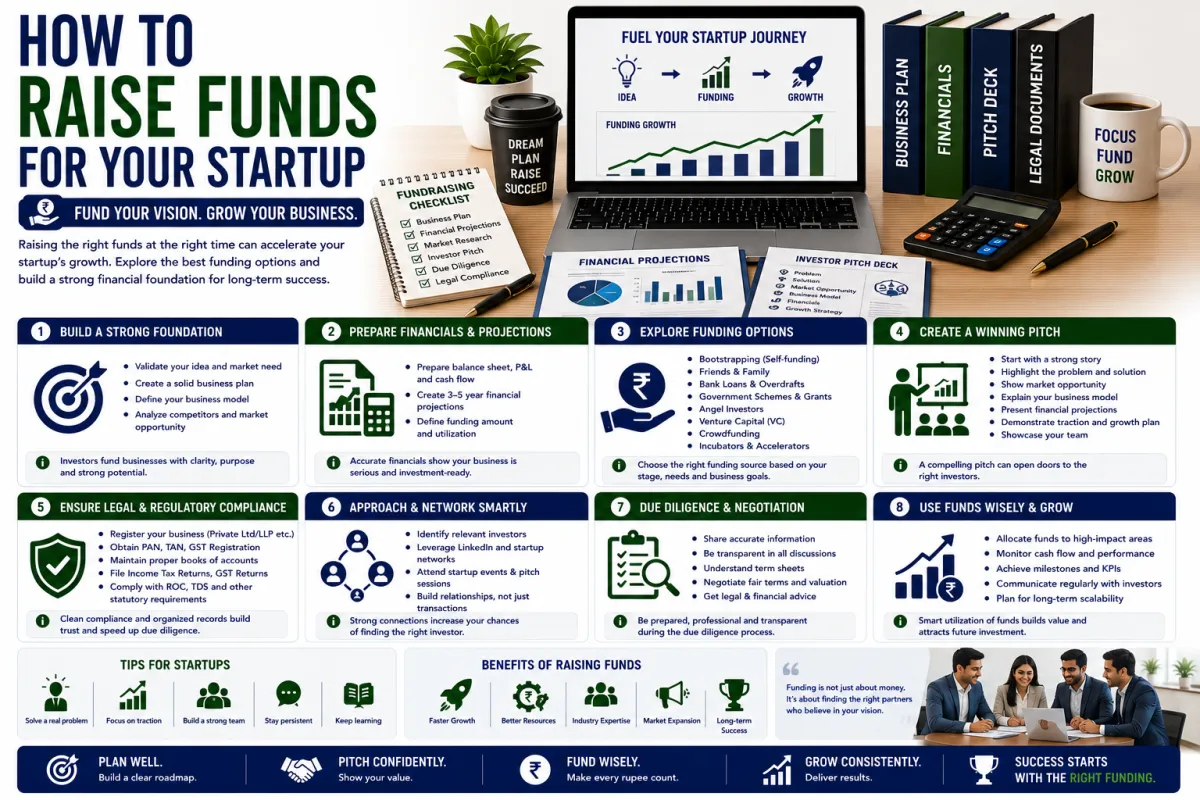
Raising funds is one of the biggest challenges for startups, especially during the early stages of business growth. Understanding the available funding options and preparing a strong financial strategy can help entrepreneurs secure the capital needed to scale their business successfully.

Read More →
Blog

Legal Checklist Before Starting a Business: Essential Compliance Guide for Entrepreneurs

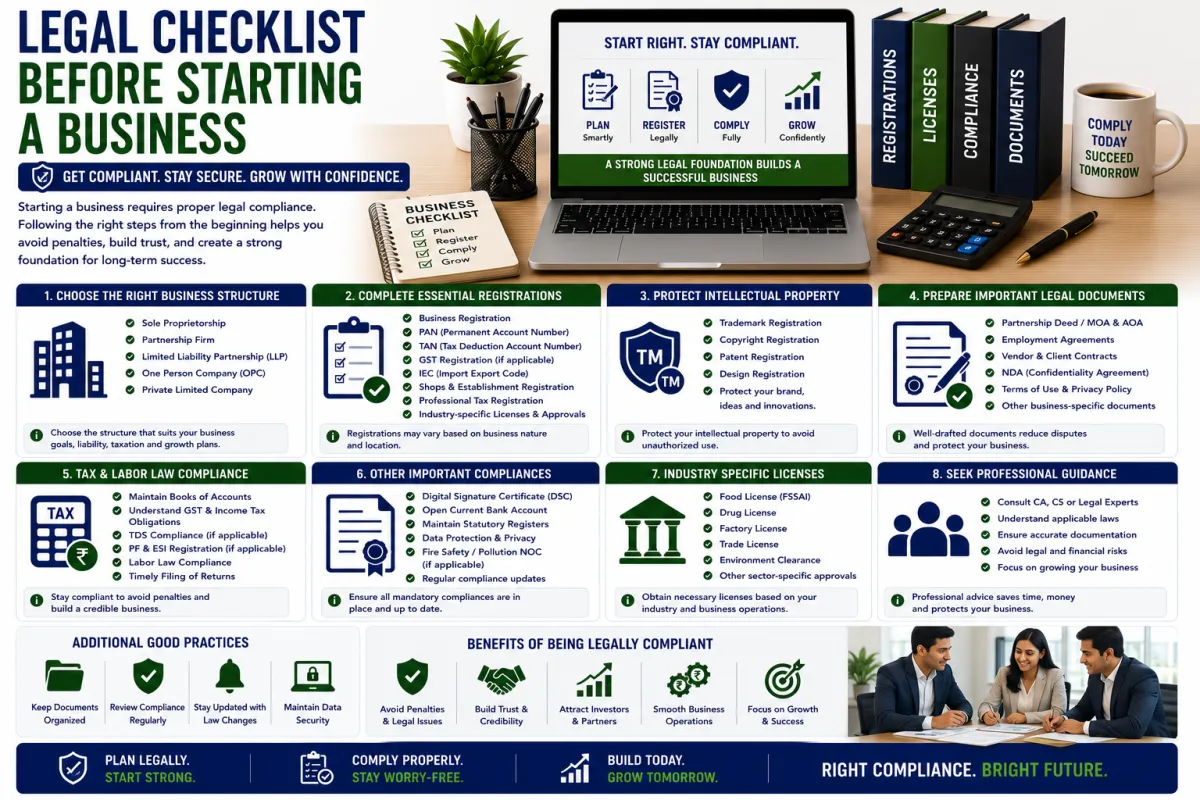
Starting a business involves more than just a great idea—it also requires legal compliance. Completing the necessary registrations, licenses, and statutory requirements helps businesses operate smoothly, avoid legal issues, and build a strong foundation for long-term success.

Read More →
Blog

Business Budget Planning: A Complete Guide to Managing Business Finances Effectively

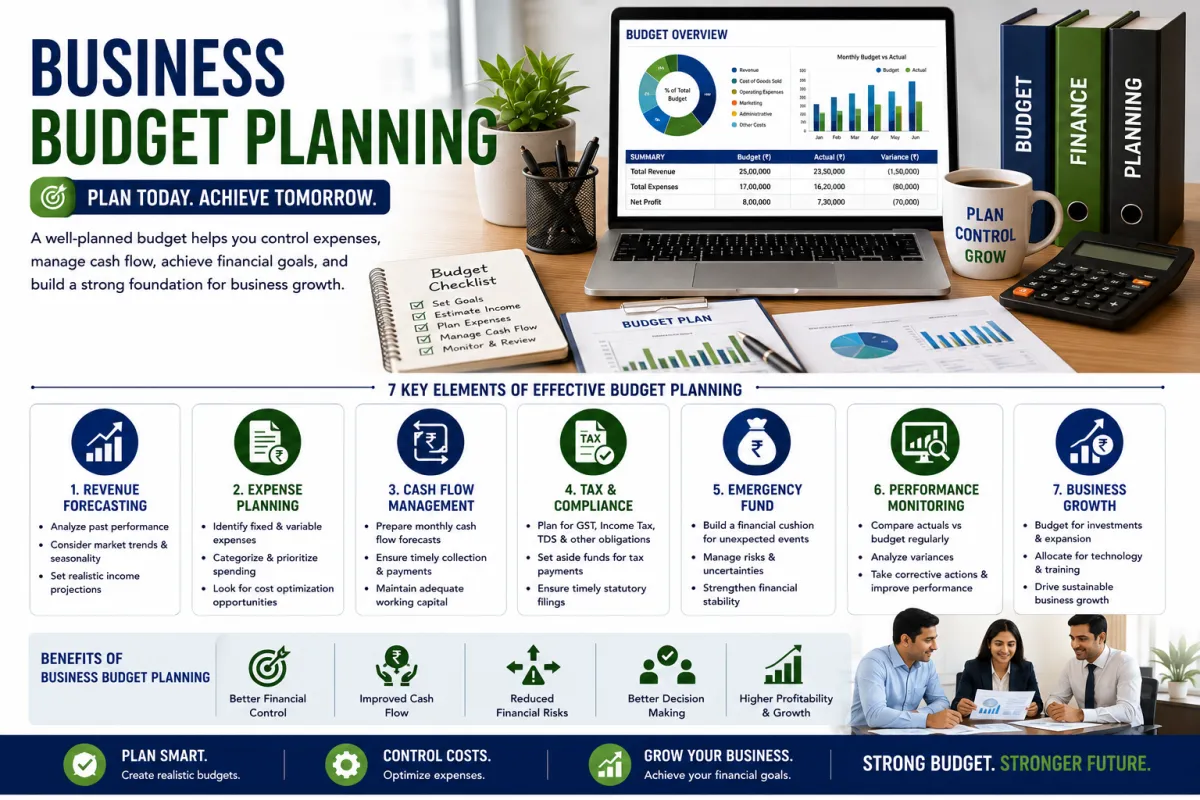
A well-planned business budget helps organizations control expenses, manage cash flow, and achieve financial goals efficiently. Effective budgeting enables businesses to make informed decisions, improve profitability, and prepare for future growth.

Read More →
Blog

Startup Tax Benefits: A Complete Guide to Saving Taxes and Growing Your Business

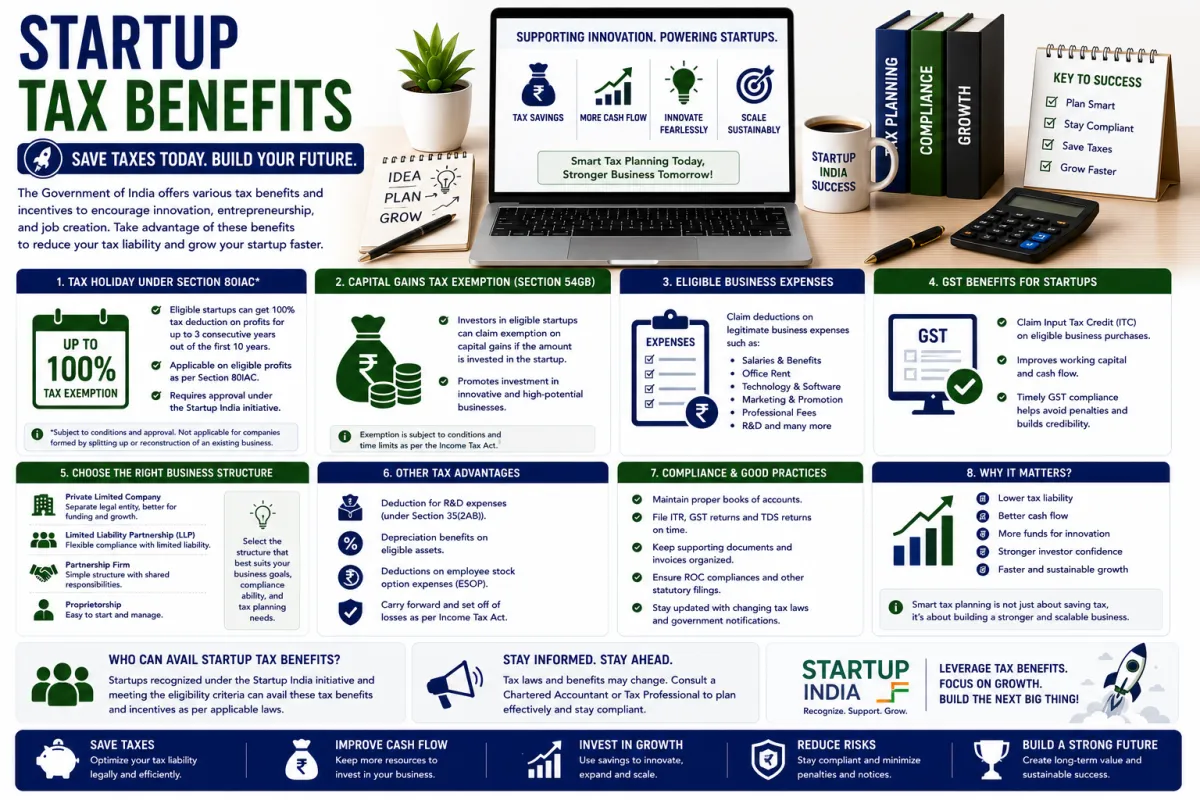
Tax benefits play a significant role in reducing the financial burden on startups during their early growth stages. Understanding the available tax incentives and compliance requirements helps startups optimize costs, improve cash flow, and focus on long-term business expansion.

Read More →
Blog

How to Scale Your Business Financially: Smart Strategies for Sustainable Business Growth

Financial growth is the foundation of every successful business expansion. By managing cash flow, controlling costs, planning investments, and maintaining strong financial discipline, businesses can scale sustainably while minimizing financial risks.

Read More →
Blog

Salary Structure and Tax Implications: A Complete Guide for Employees in India

A well-designed salary structure helps employees maximize their take-home salary while ensuring compliance with income tax regulations. Understanding the components of a salary package and their tax implications enables better financial planning and informed tax-saving decisions.

Read More →
Blog

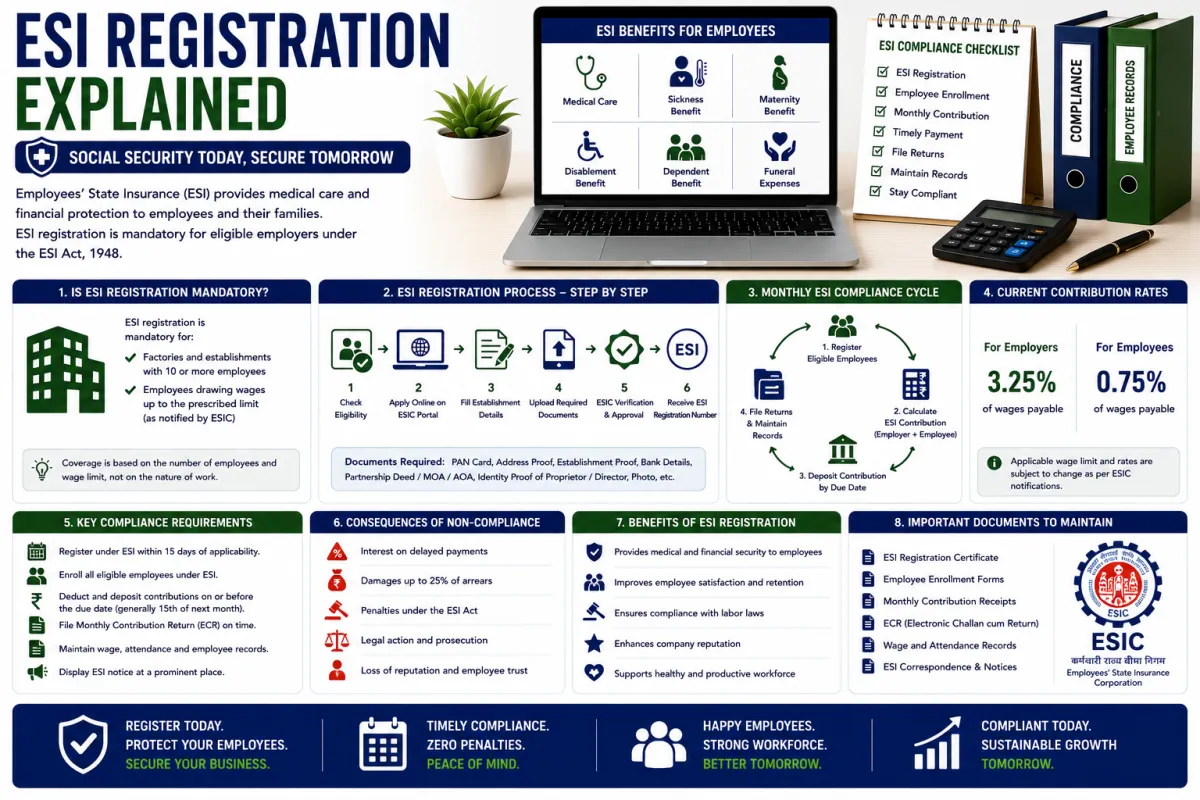
ESI Registration Explained: A Complete Guide for Employers and Businesses in India

Employees' State Insurance (ESI) Registration is a mandatory social security requirement for eligible employers in India. It provides employees with medical, maternity, disability, and other benefits while helping businesses comply with statutory labor laws.

Read More →
Blog

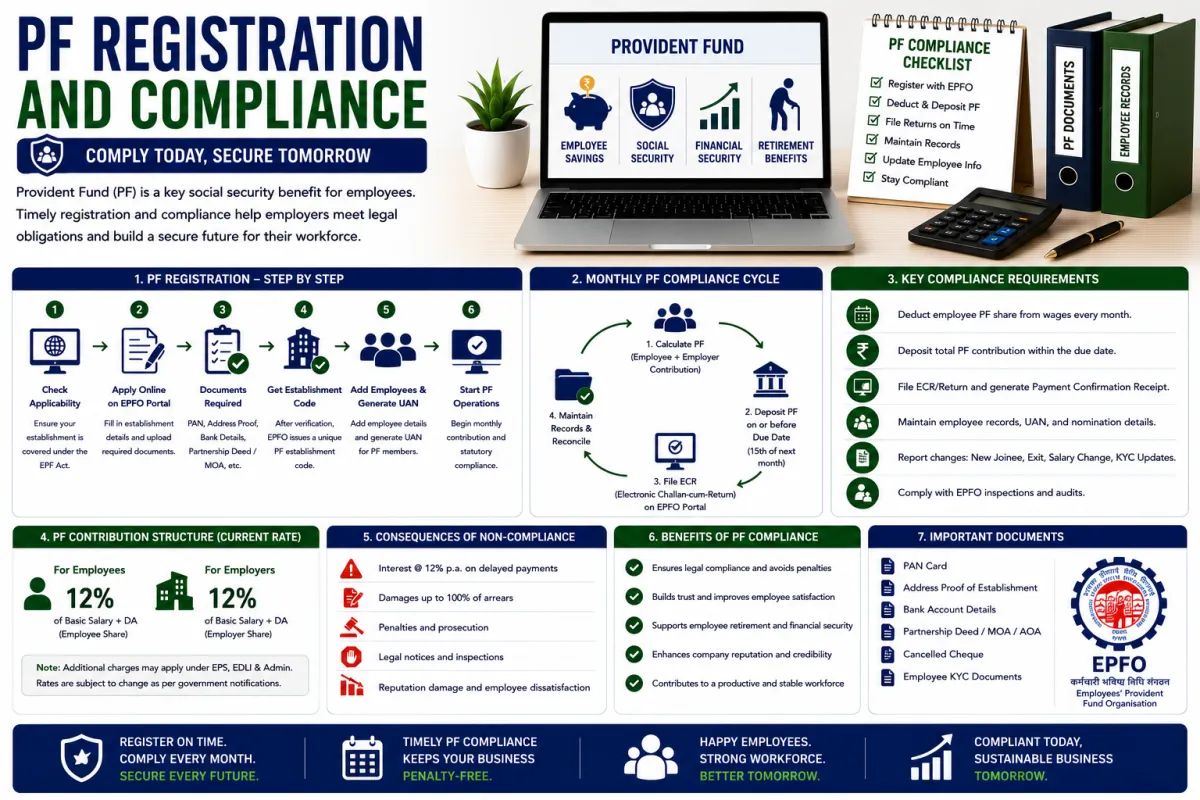
PF Registration and Compliance: A Complete Guide for Employers in India

Provident Fund (PF) registration and compliance are essential responsibilities for eligible employers in India. Proper PF management helps businesses meet statutory obligations while ensuring employees receive valuable retirement and social security benefits.

Read More →
Blog

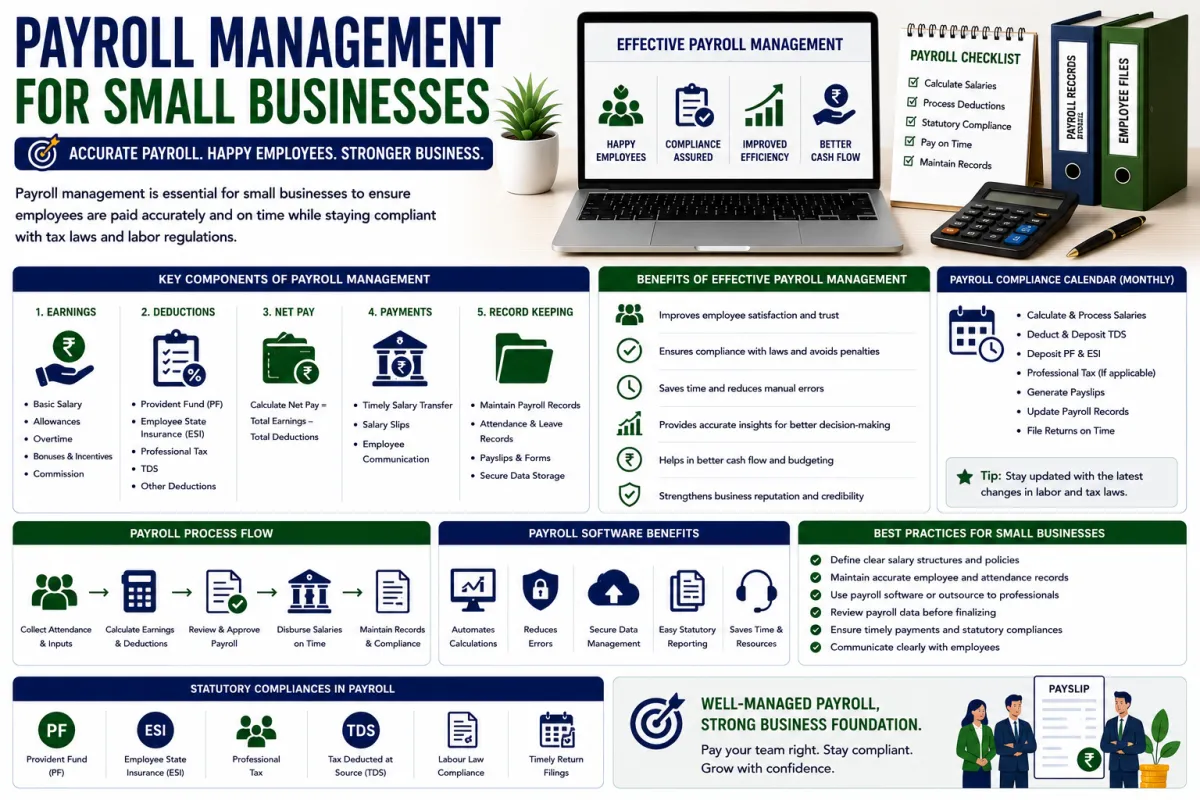
Payroll Management for Small Businesses: A Complete Guide to Accurate and Compliant Payroll Processing

Payroll management is a critical business function that ensures employees are paid accurately and on time. Effective payroll management helps small businesses maintain compliance, improve employee satisfaction, and streamline financial operations.

Read More →
Blog

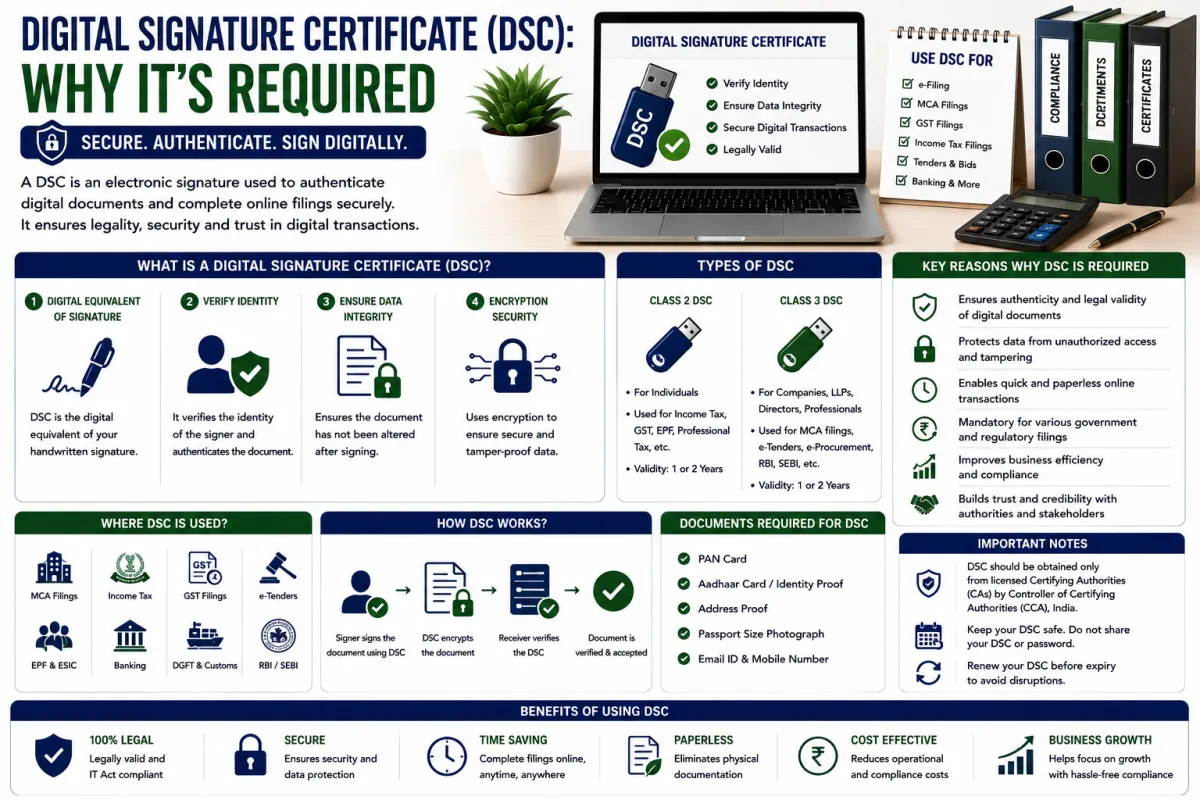
Digital Signature Certificate (DSC): Why It's Required

A Digital Signature Certificate (DSC) is an electronic signature used to securely sign digital documents and complete online government filings. It ensures authenticity, data security, and legal validity for businesses and professionals conducting online transactions.

Read More →
Blog

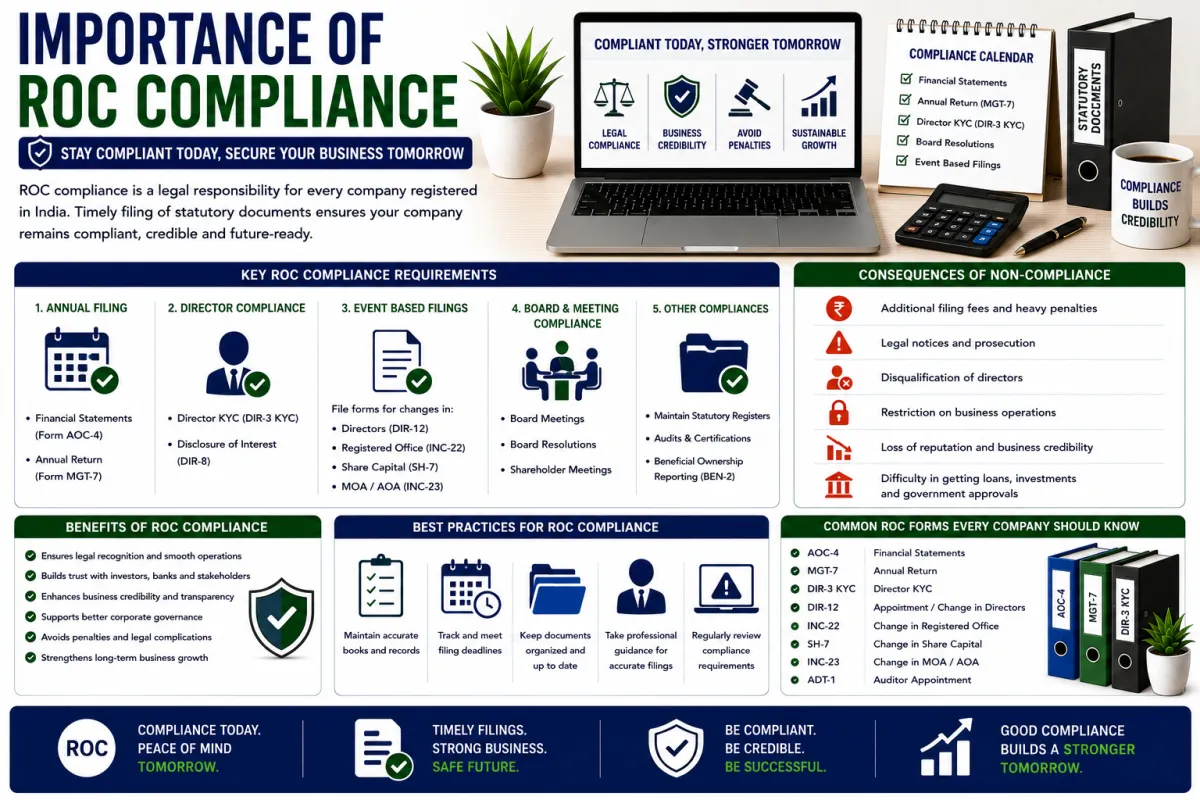
Importance of ROC Compliance: Why Every Company Must Meet Its Statutory Filing Requirements

ROC (Registrar of Companies) compliance is essential for companies registered in India to maintain legal status and avoid penalties. Timely filing of statutory documents helps businesses remain compliant, transparent, and financially credible.

Read More →
Blog

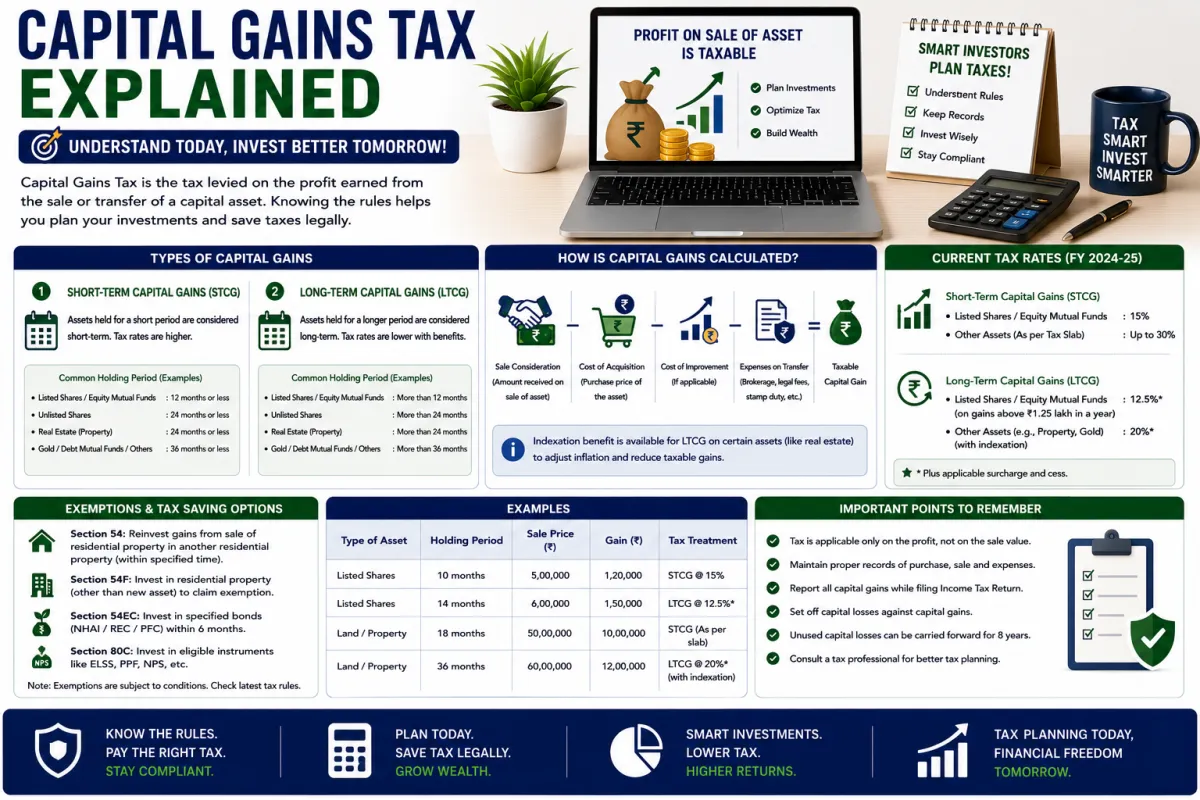
Capital Gains Tax Explained: A Complete Guide for Investors and Taxpayers

Capital Gains Tax is the tax payable on the profit earned from selling capital assets such as property, shares, mutual funds, gold, or other investments. Understanding how capital gains are calculated helps taxpayers plan investments wisely and remain compliant with tax laws.

Read More →
Blog

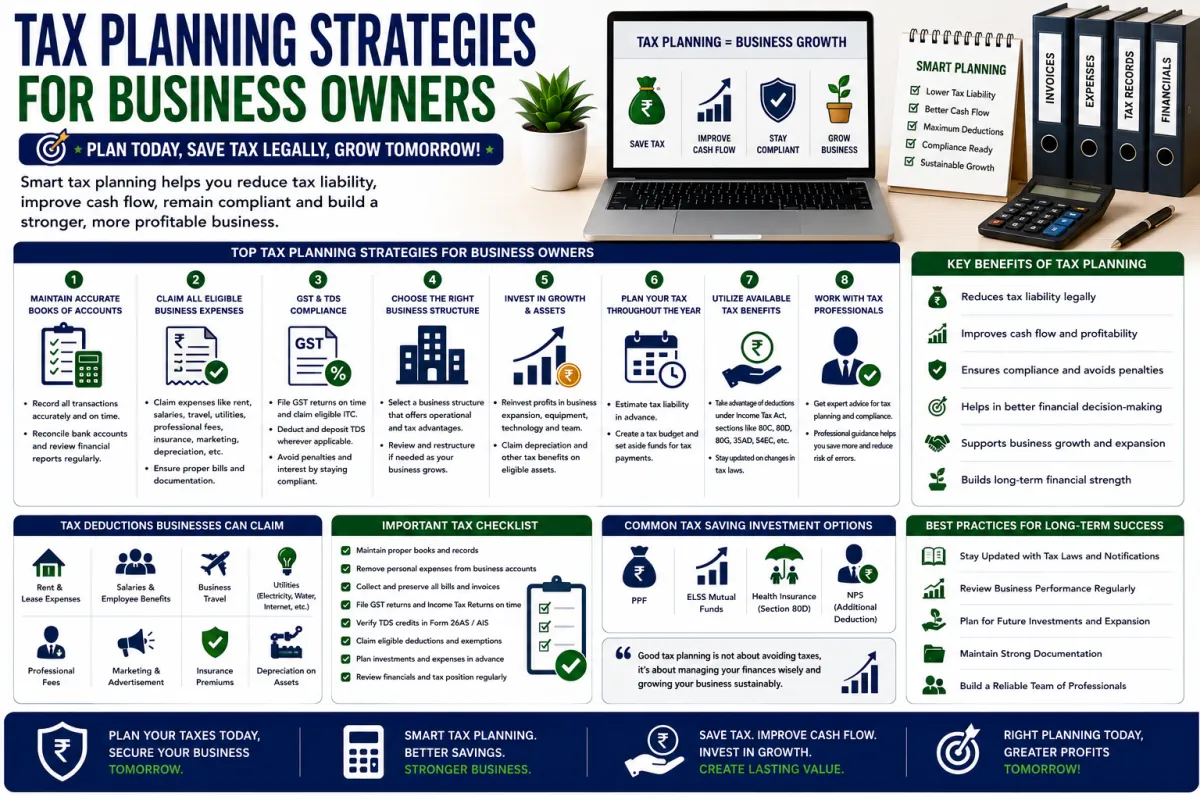
Tax Planning Strategies for Business Owners: Smart Ways to Save Taxes and Grow Your Business

Effective tax planning helps business owners reduce their tax liability legally while improving cash flow and financial stability. By planning taxes throughout the year, businesses can maximize eligible deductions, remain compliant, and support long-term growth.

Read More →
Blog

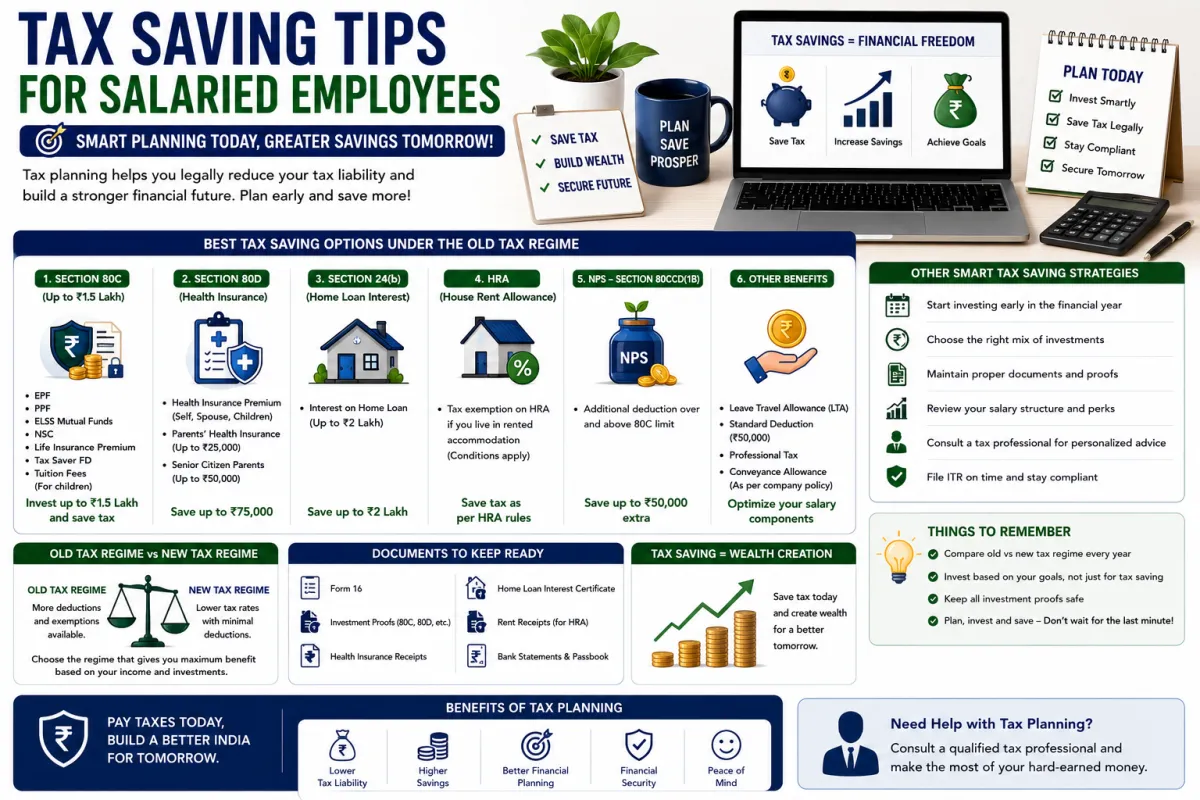
Tax Saving Tips for Salaried Employees: Smart Ways to Reduce Your Income Tax Legally

Proper tax planning can help salaried employees reduce their tax liability while remaining fully compliant with Indian tax laws. Understanding available deductions, exemptions, and investment options allows individuals to maximize savings and achieve better financial planning.

Read More →