Export Incentives are financial and policy-based benefits provided by the Government of India to promote international trade and encourage businesses to expand into global markets. These incentives are designed to reduce the overall cost of exports, improve the competitiveness of Indian products, increase foreign exchange earnings, and support economic growth. Whether a business is a manufacturer, trader, service exporter, or startup, understanding export incentive schemes can significantly improve profitability and business opportunities.
The primary objective of export incentives is to make Indian goods and services more competitive in international markets. Exporting businesses often incur additional costs related to logistics, customs procedures, transportation, compliance, quality certifications, insurance, and international marketing. Government incentive schemes help offset some of these expenses and encourage businesses to increase exports.
Before claiming export incentives, businesses must complete the necessary registrations. An Import Export Code (IEC) issued by the Directorate General of Foreign Trade (DGFT) is mandatory for most exporters. Depending on the business activity, exporters may also require GST registration, Udyam Registration, Registration-cum-Membership Certificate (RCMC), product-specific certifications, FSSAI registration, and other regulatory approvals.
Exporters should maintain complete and accurate documentation for every export transaction. Essential documents include commercial invoices, packing lists, shipping bills, bills of lading or airway bills, certificates of origin, bank realization certificates, GST records, customs declarations, insurance documents, purchase orders, and export contracts. Proper documentation is necessary for customs clearance, regulatory compliance, and claiming applicable export benefits.
Businesses should remain updated with export promotion schemes announced by the Government of India and relevant authorities. Various schemes may provide duty remission, tax benefits, financial assistance, export promotion support, market development assistance, interest subsidies, and incentives for specific industries or products. Eligibility conditions and benefits vary depending on the scheme, product category, and destination market.
Accurate accounting and financial record-keeping are essential for exporters claiming government incentives. Businesses should maintain books of accounts, export sales records, GST returns, bank statements, foreign exchange realization documents, customs records, inventory registers, and financial statements. Organized financial records simplify audits, statutory compliance, and processing of incentive claims.
Compliance with GST, Income Tax, customs regulations, foreign trade policies, and Reserve Bank of India (RBI) guidelines is equally important. Timely filing of statutory returns and adherence to regulatory requirements improve business credibility while ensuring eligibility for government benefits.
Modern accounting and ERP software help exporters efficiently manage export invoices, inventory, GST compliance, foreign currency transactions, shipment tracking, banking records, customs documentation, financial reporting, and incentive-related documentation. Digital systems improve operational efficiency and reduce manual errors.
Businesses should also carefully monitor international market trends, exchange rates, trade agreements, customer demand, and government policy updates. Strategic planning enables exporters to identify new opportunities, manage risks, and maximize the benefits available under various export promotion schemes.
Professional guidance from Chartered Accountants, customs consultants, export advisors, Company Secretaries, and international trade experts can help businesses understand eligibility criteria, prepare documentation, maintain compliance, optimize tax planning, and successfully claim export incentives. Expert assistance minimizes procedural errors and improves the likelihood of receiving available government benefits.
Export incentives should be viewed as part of a broader international business strategy rather than the sole objective of exporting. Businesses that focus on product quality, customer satisfaction, efficient logistics, regulatory compliance, and financial discipline are more likely to achieve sustainable success in global markets.
Export Incentives provide valuable financial support for businesses seeking to expand internationally. By obtaining the necessary registrations, maintaining accurate documentation, complying with regulatory requirements, leveraging technology, and seeking professional guidance, businesses can maximize available benefits while strengthening their global competitiveness. Effective utilization of export incentive schemes contributes to higher profitability, increased exports, and long-term business growth.
Export Incentives: A Complete Guide to Government Benefits for Indian Exporters

Akshii
@ Manaksh
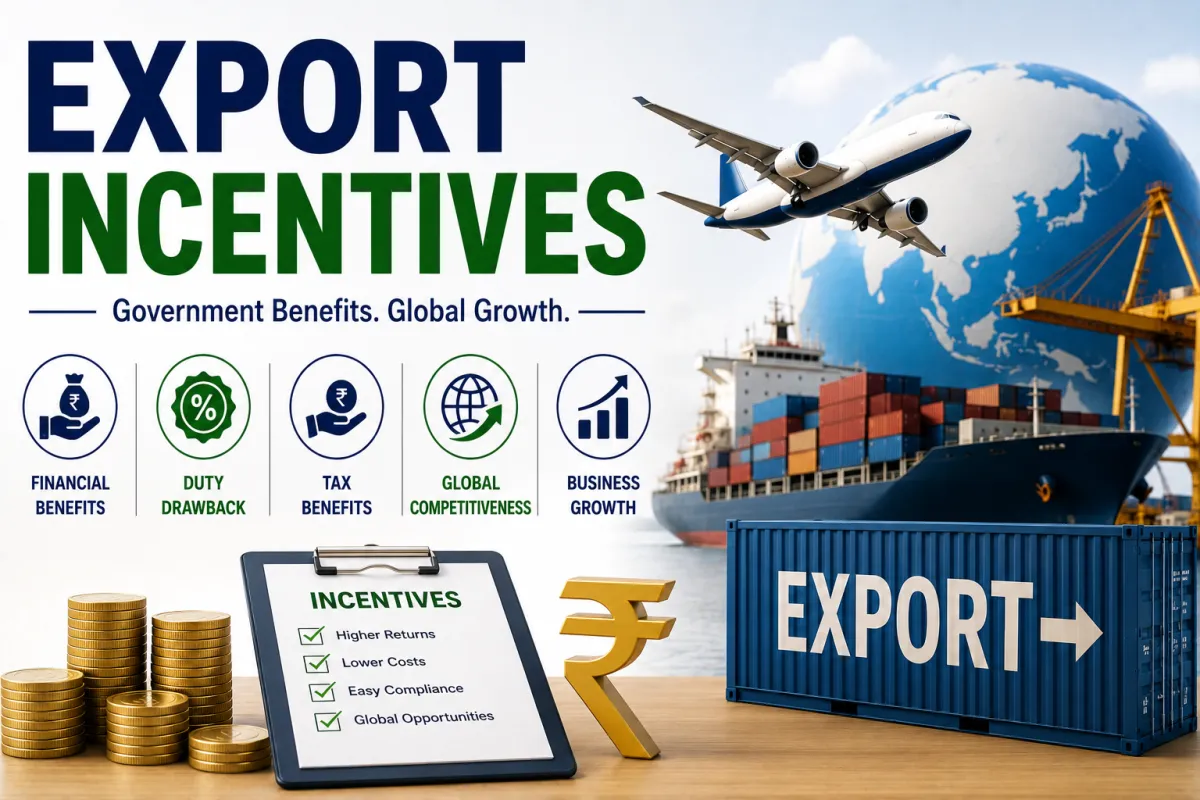
Export Incentives are government schemes and benefits designed to encourage Indian businesses to export goods and services. These incentives improve global competitiveness, reduce export costs, increase foreign exchange earnings, and support business expansion into international markets.



Comments (0)
Please login to comment.