Payroll management involves much more than calculating employee salaries. Every business must comply with various labour laws, tax regulations, and statutory requirements while processing payroll. A well-maintained payroll compliance system ensures that employees receive accurate salaries on time, statutory deductions are correctly calculated, and all legal obligations are fulfilled. Following a structured payroll compliance checklist helps businesses reduce compliance risks, improve operational efficiency, and build a trustworthy workplace.
The first step in payroll compliance is maintaining accurate employee records. Employers should keep updated information regarding employee identity, employment contracts, salary structure, attendance records, leave balances, bank account details, tax declarations, and statutory identification numbers wherever applicable. Proper documentation forms the foundation of an efficient payroll system and supports compliance during inspections or audits.
Accurate salary calculation is another essential element of payroll compliance. Employers should ensure that basic salary, allowances, overtime, incentives, bonuses, reimbursements, deductions, and other salary components are calculated according to company policies, employment agreements, and applicable legal provisions. Careful salary computation minimizes disputes and improves employee satisfaction.
Statutory deductions should be calculated and deposited within the prescribed timelines. Depending on the applicable laws and employee eligibility, businesses may need to comply with requirements relating to Provident Fund (PF), Employees’ State Insurance (ESI), Professional Tax (PT), Labour Welfare Fund (LWF), Tax Deducted at Source (TDS), and other statutory contributions. Timely deposit of these amounts helps businesses avoid interest, penalties, and legal complications.
Employers should also ensure timely filing of all applicable statutory returns and reports. Payroll-related compliance may include filing TDS returns, Provident Fund returns, ESI returns, Professional Tax returns, and other statutory reports required by relevant authorities. Filing returns within the prescribed due dates demonstrates responsible compliance and reduces regulatory risks.
Issuing salary slips to employees every pay cycle is another important payroll compliance practice. Salary slips should clearly display salary components, statutory deductions, tax deductions, employer contributions, net salary payable, and other relevant information. Transparent payroll documentation helps employees understand their earnings and deductions while promoting trust and accountability.
Proper maintenance of payroll records is essential for compliance and financial reporting. Employers should preserve salary registers, attendance records, tax records, payroll reports, employee declarations, statutory challans, and supporting documents for the period prescribed under applicable laws. Organized records simplify audits, inspections, assessments, and internal reviews.
Regular reconciliation of payroll data with accounting records and statutory filings helps identify discrepancies before they become compliance issues. Reviewing payroll calculations, tax deductions, statutory payments, and financial statements periodically strengthens internal controls and improves reporting accuracy.
Using reliable payroll and accounting software significantly simplifies payroll compliance. Modern payroll systems automate salary calculations, statutory deductions, tax computations, payslip generation, attendance integration, leave management, and compliance reporting. Automation minimizes manual errors, saves time, and improves overall payroll efficiency.
Businesses should also stay updated with changes in labour laws, tax regulations, minimum wage notifications, social security requirements, and other statutory obligations that may affect payroll processing. Since compliance requirements evolve over time, regular monitoring of legal updates is essential for avoiding non-compliance.
Consulting qualified Chartered Accountants, payroll professionals, Human Resource experts, or labour law consultants can help businesses establish efficient payroll systems and ensure compliance with all applicable legal requirements. Professional guidance becomes particularly valuable for organizations with growing workforces or complex payroll structures.
Payroll compliance is a vital component of responsible business management. By maintaining accurate employee records, processing salaries correctly, depositing statutory deductions on time, filing required returns, preserving payroll documentation, and staying updated with legal requirements, businesses can minimize compliance risks while fostering employee confidence and organizational credibility. A strong payroll compliance system not only supports legal compliance but also contributes to efficient business operations and long-term organizational success.
Payroll Compliance Checklist: Essential Requirements Every Employer Should Follow

Akshii
@ Manaksh
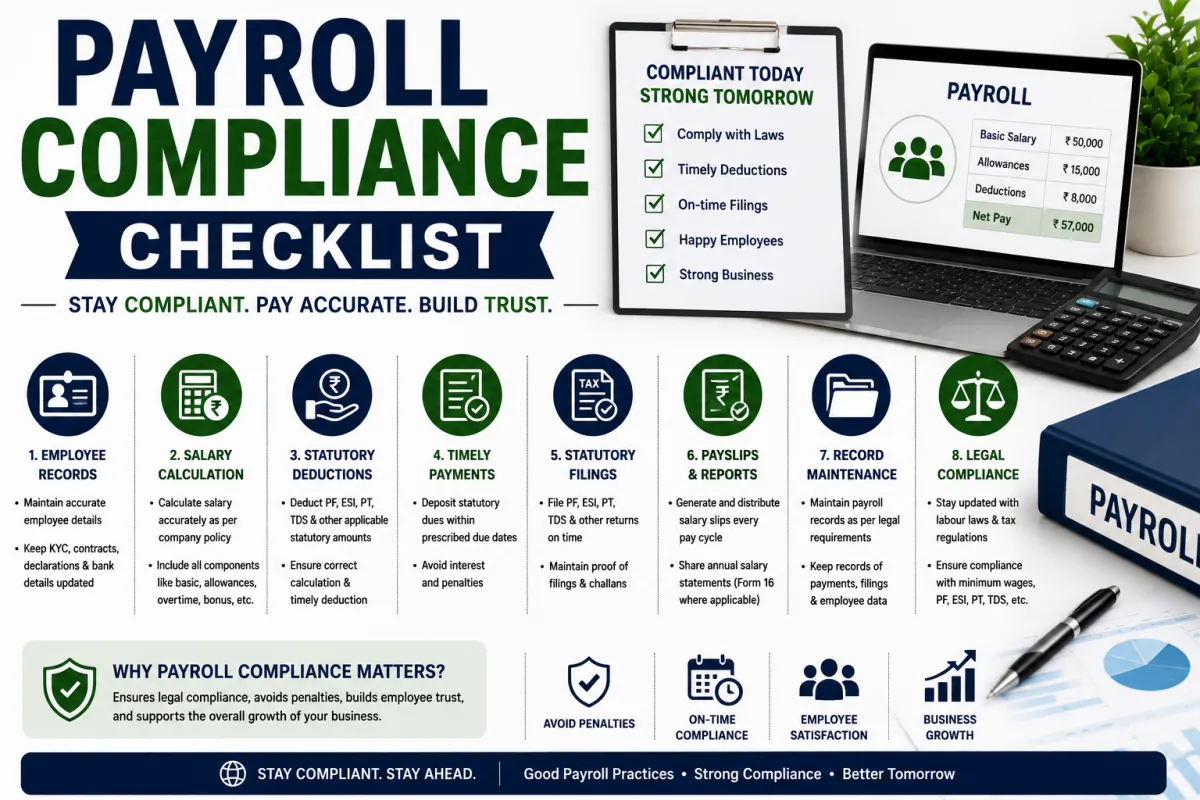
Payroll compliance is a crucial responsibility for every employer in India. Ensuring accurate salary processing, statutory deductions, timely filings, and proper employee records helps businesses remain legally compliant, avoid penalties, and maintain employee trust.

Comments (0)
Please login to comment.