Export documentation forms the backbone of every successful international trade transaction. Whether a business exports manufactured goods, agricultural products, handicrafts, machinery, or professional services, accurate documentation is necessary to comply with legal requirements, complete customs procedures, receive payments, and ensure timely delivery of goods. Proper documentation minimizes risks, supports regulatory compliance, and strengthens business credibility in global markets.
Before beginning export operations, businesses should obtain the necessary registrations. The Import Export Code (IEC) issued by the Directorate General of Foreign Trade (DGFT) is mandatory for most export activities. Depending on the nature of the business, exporters may also require GST registration, Udyam Registration, FSSAI registration, product-specific certifications, and other statutory approvals. Completing these registrations establishes the legal foundation for international trade.
One of the most important export documents is the Commercial Invoice, which provides details of the goods being exported, including product description, quantity, price, buyer information, seller information, payment terms, and shipment details. Customs authorities and financial institutions use this document to process export transactions and determine applicable duties where required.
The Packing List accompanies the commercial invoice and contains detailed information regarding the packaging of exported goods. It specifies the number of packages, weight, dimensions, packing method, and contents of each package. This document assists customs officials, freight forwarders, logistics providers, and buyers during shipment handling and inspection.
Shipping documents are equally important in the export process. Depending on the mode of transport, exporters receive documents such as the Bill of Lading for sea shipments or the Airway Bill for air cargo. These documents serve as evidence of shipment, facilitate cargo movement, and are often required during payment settlement and customs clearance.
The Certificate of Origin is another important document that certifies the country where the exported goods were manufactured or produced. Many importing countries require this certificate to determine tariff benefits under trade agreements or verify compliance with import regulations. Exporters should obtain the certificate from the appropriate authorized authority whenever applicable.
Insurance documents provide financial protection against loss or damage to goods during transportation. Exporters should evaluate the level of insurance coverage required based on shipment value, transportation risks, and contractual obligations agreed upon with the overseas buyer. Proper insurance minimizes financial exposure during international trade.
Maintaining accurate accounting records is essential throughout the export process. Businesses should preserve export invoices, shipping documents, bank realization certificates, GST records, foreign exchange receipts, purchase records, customs declarations, inventory records, and financial statements. Organized financial records simplify audits, tax compliance, export incentives, and business reporting.
Businesses should also comply with customs regulations, foreign trade policies, GST provisions, foreign exchange regulations, and destination-country import requirements. Regular monitoring of policy updates issued by DGFT, customs authorities, and relevant government departments helps businesses remain compliant and avoid unnecessary legal complications.
Modern accounting and export management software significantly improve documentation efficiency by automating invoicing, shipment tracking, inventory management, GST compliance, foreign currency accounting, document storage, and financial reporting. Digital systems reduce manual errors while ensuring timely preparation of export documentation.
Secure payment methods are equally important in export transactions. Businesses should consider internationally accepted payment options such as Letters of Credit (LC), Bank Guarantees, documentary collections, advance payments, or other mutually agreed payment mechanisms. Proper financial planning reduces commercial risks while ensuring timely receipt of export proceeds.
Professional guidance from Chartered Accountants, customs consultants, freight forwarders, export advisors, Company Secretaries, and banking professionals can help exporters understand documentation requirements, comply with legal regulations, prepare accurate paperwork, and manage international trade efficiently. Expert assistance minimizes procedural errors and supports smooth export operations.
Export documentation is an essential element of successful international trade. Proper preparation, accurate record-keeping, statutory compliance, and organized financial management ensure smooth customs clearance, secure payments, timely delivery, and stronger business credibility. By maintaining complete documentation and following regulatory requirements, exporters can confidently expand into global markets and achieve sustainable business growth.
Export Documentation: Complete Guide to Essential Documents for Successful International Trade

Akshii
@ Manaksh
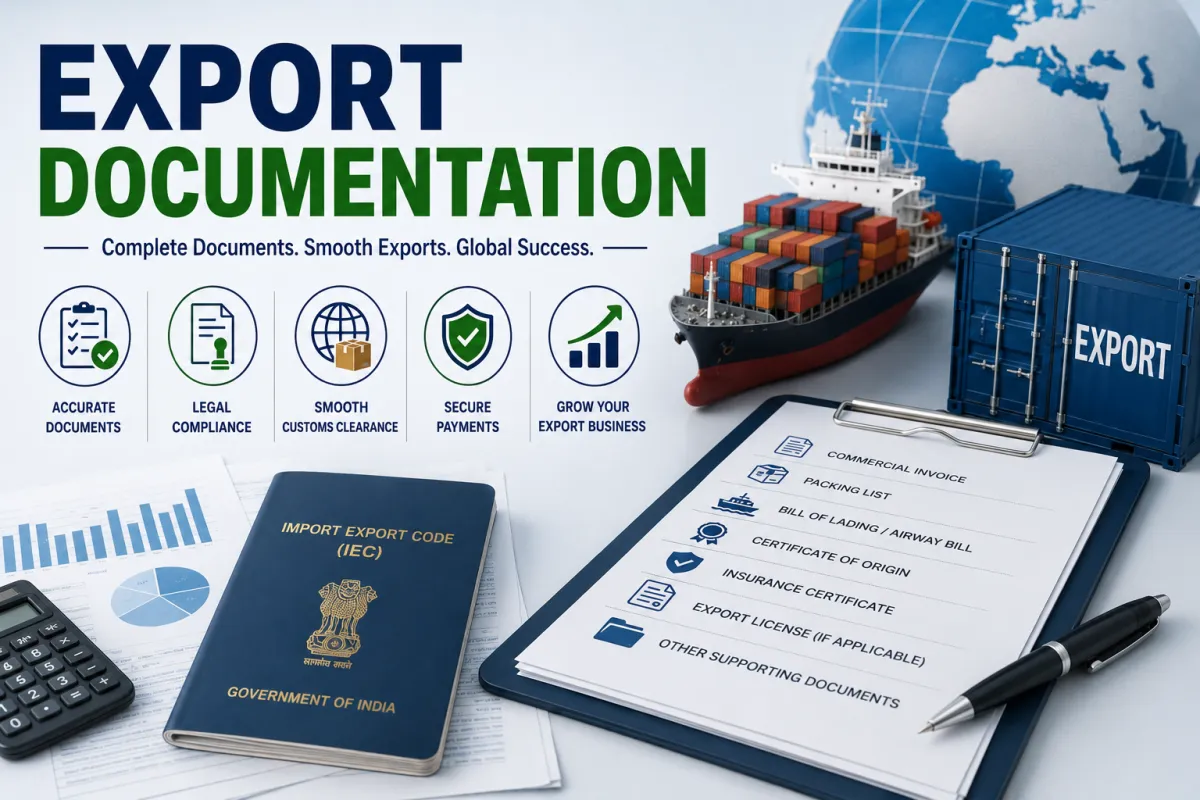
Export documentation is an essential part of international trade that ensures smooth customs clearance, secure payments, and compliance with Indian and international trade regulations. Proper documentation helps businesses avoid delays, penalties, and disputes while facilitating successful export transactions.



Comments (0)
Please login to comment.