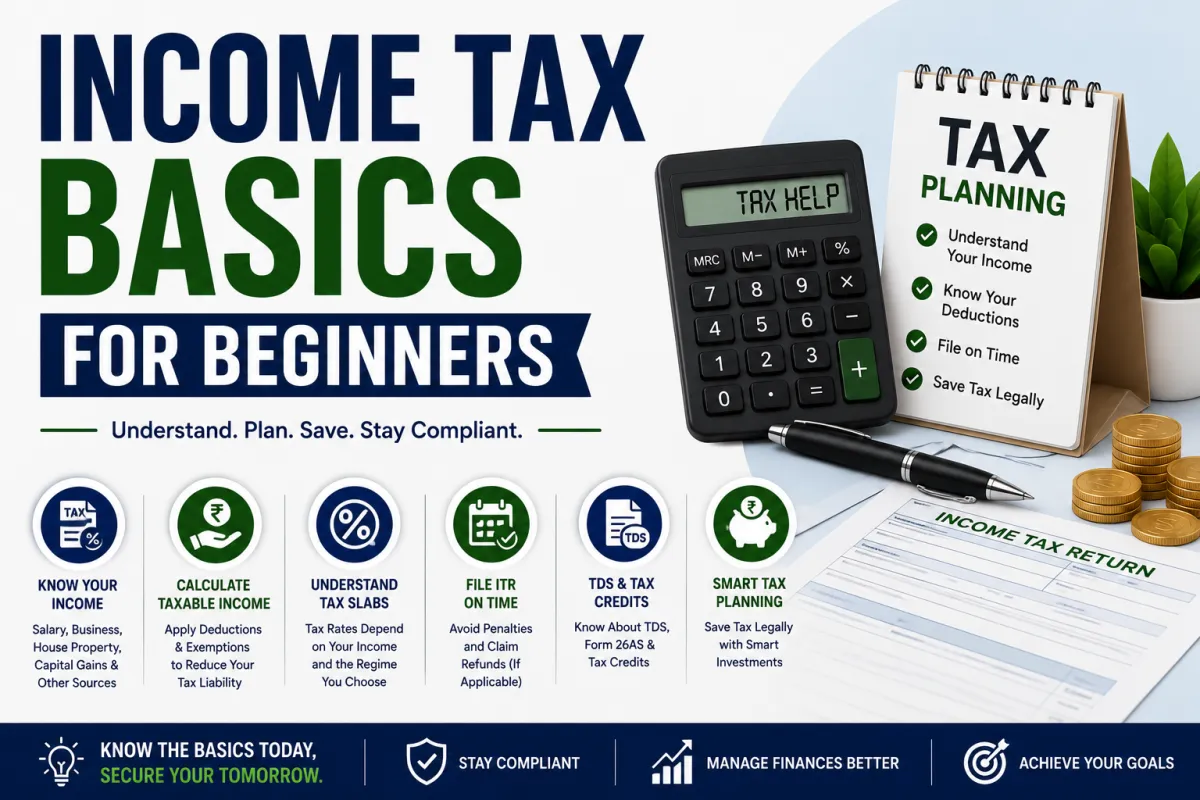
Income Tax is a direct tax levied by the Government of India on the income earned by individuals, businesses, and other entities during a financial year. It is one of the primary sources of government revenue and is used to fund public services, infrastructure development, healthcare, education, and various welfare programs. Every taxpayer should understand the fundamentals of Income Tax to ensure timely compliance, avoid penalties, and make informed financial decisions.
The amount of Income Tax payable depends on several factors, including the type of taxpayer, total taxable income, applicable deductions, exemptions, and the tax regime chosen. Income earned from salary, business or profession, house property, capital gains, and other sources may all be subject to Income Tax under the provisions of the Income-tax Act. Understanding these different sources of income is the first step toward proper tax planning.
Every financial year, taxpayers are required to calculate their taxable income after considering eligible deductions and exemptions as permitted under the applicable tax laws. Once the taxable income is determined, tax is calculated according to the applicable Income Tax slab rates. Maintaining proper records of income, investments, expenses, and tax-saving instruments helps ensure accurate tax computation and smooth return filing.
Filing an Income Tax Return (ITR) is an important compliance requirement for eligible taxpayers. An Income Tax Return is a declaration submitted to the Income Tax Department containing details of income earned, taxes paid, deductions claimed, and tax liability for the financial year. Filing ITR on time helps avoid penalties, enables taxpayers to claim refunds where applicable, and serves as proof of income for loans, visa applications, and various financial transactions.
Tax Deducted at Source (TDS) is another important concept that beginners should understand. Under the TDS system, tax is deducted by the payer while making specified payments such as salary, professional fees, interest, rent, or contractor payments. The deducted tax is deposited with the government on behalf of the taxpayer and can generally be adjusted while filing the Income Tax Return.
Tax planning is an essential aspect of financial management. By understanding the available deductions, exemptions, and eligible investments under the Income-tax Act, taxpayers can legally reduce their tax liability while remaining fully compliant with the law. Proper tax planning should be done throughout the financial year rather than waiting until the last few months before filing returns.
Maintaining proper financial records is equally important for Income Tax compliance. Individuals and businesses should preserve salary slips, bank statements, investment proofs, rent receipts, invoices, business expenses, tax payment challans, Form 16, Form 26AS, Annual Information Statement (AIS), and other supporting documents. Organized documentation simplifies return filing and provides valuable support during assessments or audits.
Using reliable accounting or tax preparation software can make Income Tax compliance easier. Modern software helps calculate taxable income, generate reports, track deductions, prepare returns, and minimize calculation errors. Digital record-keeping also improves accuracy and makes tax documentation easily accessible whenever required.
Since tax laws are amended periodically through annual Finance Acts and government notifications, taxpayers should stay updated with the latest Income Tax provisions. Consulting a qualified Chartered Accountant or tax professional helps individuals and businesses understand changing regulations, maximize eligible tax benefits, and ensure full compliance with applicable laws.
Understanding Income Tax basics is the foundation of responsible financial management. By maintaining accurate financial records, calculating taxable income correctly, filing Income Tax Returns on time, preserving supporting documents, and staying informed about changing tax laws, taxpayers can fulfill their legal obligations while optimizing their financial planning. A sound understanding of Income Tax not only promotes compliance but also contributes to better financial discipline and long-term financial stability.
Income Tax Basics for Beginners: Everything You Need to Know

Akshii
@ Manaksh
Income Tax is one of the most important direct taxes in India. Understanding the basics of Income Tax helps individuals and businesses comply with legal requirements, file tax returns correctly, and manage their finances more effectively.
Comments (0)
Please login to comment.