Capital Gains Tax is an important part of the Indian taxation system and applies when a person or business earns a profit from the sale or transfer of a capital asset. Capital assets may include residential or commercial property, shares, mutual funds, bonds, gold, jewelry, and other investments. It is important to understand that tax is levied on the gain or profit earned from the sale of the asset, not on the total sale value. Knowing how capital gains are calculated helps taxpayers make informed investment decisions, plan taxes efficiently, and avoid compliance issues.
Capital gains are generally classified into two categories—Short-Term Capital Gains (STCG) and Long-Term Capital Gains (LTCG). The classification depends on the type of asset and the period for which it was held before being sold. Different assets have different holding periods to determine whether the gain is short-term or long-term, and the applicable tax treatment may vary accordingly. Therefore, taxpayers should carefully identify the nature of the asset and the relevant holding period before calculating their tax liability.
The calculation of capital gains usually begins by determining the sale consideration received from transferring the asset. From this amount, eligible expenses related to the transfer and the cost of acquisition or improvement, wherever permitted under tax provisions, are deducted to arrive at the taxable capital gain. Depending on the applicable tax rules, certain adjustments and exemptions may also be available. Maintaining proper purchase documents, sale agreements, investment records, and supporting evidence is essential for accurate computation and smooth tax filing.
Indian tax laws also provide certain exemptions that may help taxpayers reduce or defer capital gains tax if specific conditions are fulfilled. In some cases, reinvesting the gains in eligible assets or specified investment instruments within the prescribed time limits may provide tax relief under applicable provisions. Since these benefits are subject to legal conditions and periodic amendments, taxpayers should verify the latest rules before making financial decisions.
Accurate reporting of capital gains while filing the Income Tax Return is equally important. Taxpayers should disclose all relevant transactions, verify tax credits where applicable, and maintain complete documentation to support their calculations. Failure to report capital gains correctly may result in notices, penalties, or additional tax liability. Individuals who frequently buy and sell investments or hold multiple types of assets may benefit from professional tax guidance to ensure proper compliance.
Capital gains tax planning should form an integral part of every investment strategy. Evaluating the tax implications before selling an asset can help investors maximize returns and make better financial decisions. Long-term investment planning, proper record-keeping, and timely tax compliance not only reduce legal risks but also contribute to stronger financial management. By understanding the basics of Capital Gains Tax and staying updated with the latest tax regulations, individuals and businesses can manage their investments more efficiently while remaining fully compliant with Indian tax laws.
Capital Gains Tax Explained: A Complete Guide for Investors and Taxpayers

Akshii
@ Manaksh
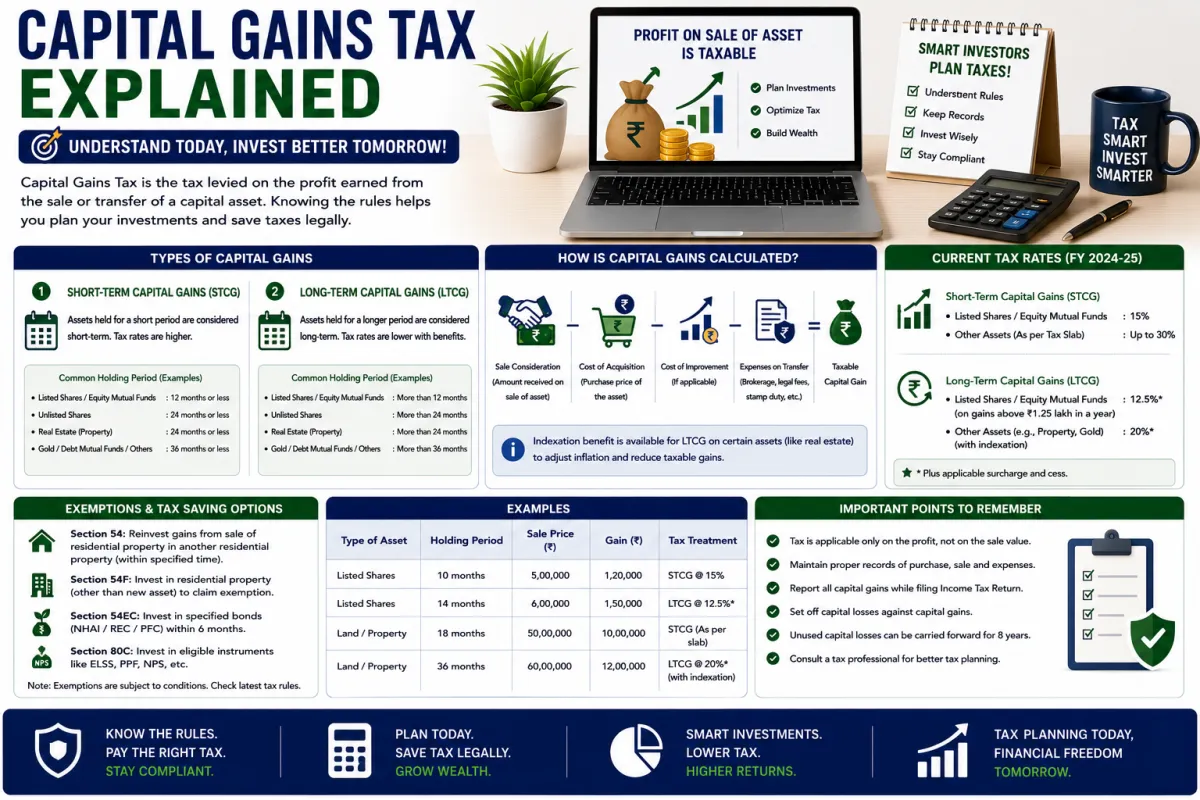
Capital Gains Tax is the tax payable on the profit earned from selling capital assets such as property, shares, mutual funds, gold, or other investments. Understanding how capital gains are calculated helps taxpayers plan investments wisely and remain compliant with tax laws.



Comments (0)
Please login to comment.