An audit is an independent examination of an organization’s financial records, internal controls, and business processes to evaluate their accuracy, compliance, and effectiveness. During the audit process, auditors often identify observations that highlight areas requiring improvement. These observations are not necessarily indicators of fraud or major errors; rather, they provide valuable insights that help businesses strengthen financial management, improve internal controls, and ensure compliance with applicable laws and regulations.
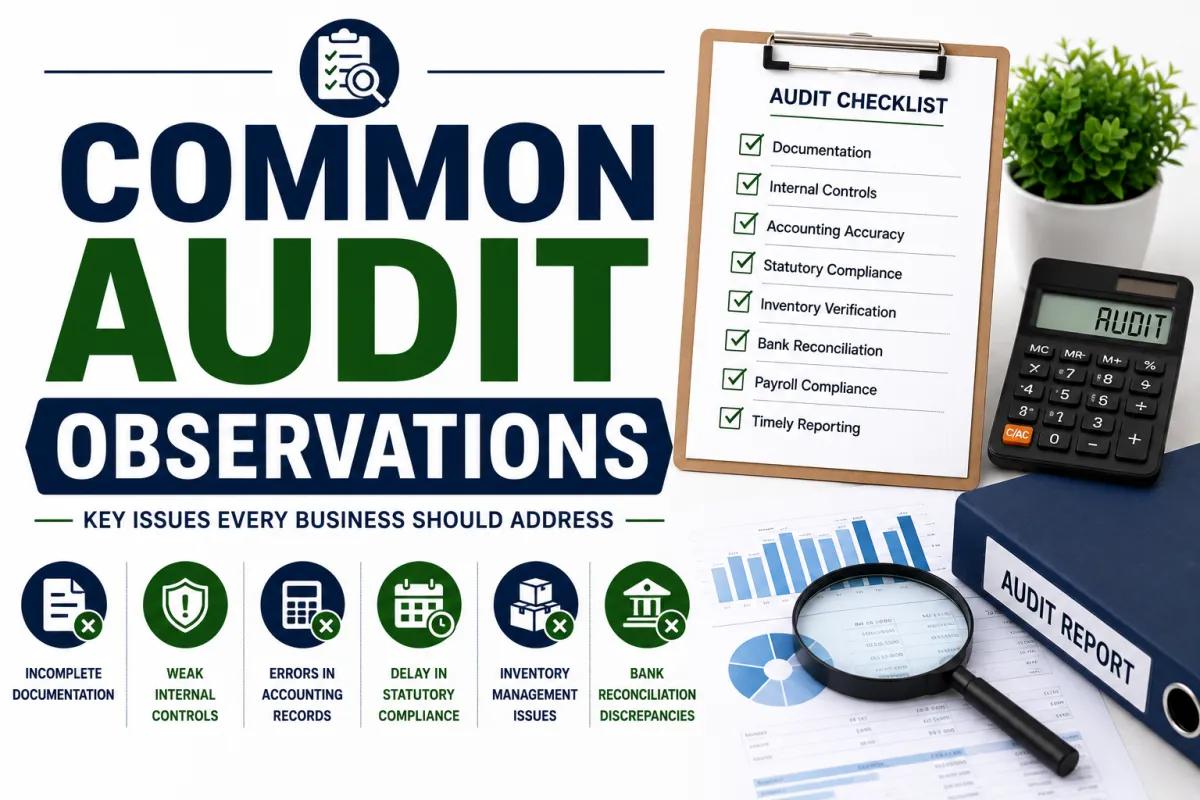
One of the most common audit observations relates to incomplete or inaccurate documentation. Missing invoices, unsupported expense claims, unsigned agreements, incomplete accounting records, or inadequate supporting documents can make it difficult to verify financial transactions. Maintaining organized and complete documentation helps improve audit readiness and financial transparency.
Weak internal controls are another frequently reported audit observation. Businesses may lack proper segregation of duties, authorization procedures, approval workflows, or regular supervisory reviews. Strengthening internal controls reduces the risk of errors, fraud, and unauthorized transactions while improving overall operational efficiency.
Errors in accounting records are also commonly identified during audits. Incorrect journal entries, misclassification of expenses, duplicate transactions, reconciliation differences, and inaccurate financial reporting can affect the reliability of financial statements. Regular review of accounting records helps minimize such errors and improves financial accuracy.
Auditors often observe delays or deficiencies in statutory compliance. Late filing of tax returns, delayed payment of statutory dues, incomplete regulatory filings, or non-compliance with applicable laws may expose businesses to penalties and legal consequences. Maintaining a compliance calendar and monitoring statutory deadlines helps organizations remain compliant throughout the year.
Inventory management issues are another common audit observation, particularly for businesses dealing with physical goods. Differences between physical stock and accounting records, inadequate inventory controls, obsolete stock, or improper valuation methods may affect financial reporting. Conducting regular stock verification and maintaining accurate inventory records strengthens internal control.
Bank reconciliation discrepancies are frequently identified during financial audits. Unreconciled bank balances, unrecorded transactions, outstanding cheques, or incorrect accounting entries may indicate weaknesses in financial recordkeeping. Performing periodic bank reconciliations helps ensure the accuracy of cash balances and financial statements.
Auditors also review payroll processes and may identify issues such as incorrect salary calculations, inaccurate statutory deductions, incomplete employee records, or payroll documentation deficiencies. Maintaining accurate payroll records and complying with statutory payroll requirements improves payroll accuracy and compliance.
Proper maintenance of statutory registers, corporate records, contracts, licenses, and legal documents is equally important. Missing corporate records or outdated licenses may be highlighted during audits and could affect regulatory compliance. Businesses should regularly review and update their statutory records to ensure completeness.
Using reliable accounting and audit management software can significantly improve audit preparedness. Modern software helps maintain accurate financial records, automate reconciliations, generate financial reports, organize supporting documents, and monitor compliance deadlines. Automation reduces manual errors and simplifies the audit process.
Management should treat audit observations as opportunities for continuous improvement rather than merely compliance requirements. Developing corrective action plans, assigning responsibilities, implementing stronger internal controls, and conducting periodic internal reviews help address audit findings effectively and prevent recurring issues.
Since accounting standards, tax laws, and regulatory requirements evolve over time, businesses should remain informed about the latest legal developments. Consulting experienced Chartered Accountants and audit professionals helps organizations strengthen compliance systems, improve financial reporting, and maintain effective internal controls.
Common audit observations provide valuable guidance for improving an organization’s financial and operational practices. By maintaining accurate records, strengthening internal controls, ensuring timely statutory compliance, conducting regular reconciliations, and implementing effective corrective measures, businesses can reduce audit risks and enhance overall governance. A proactive approach to addressing audit observations not only improves compliance but also contributes to stronger financial management and long-term business success.
Common Audit Observations: Key Issues Every Business Should Address

Akshii
@ Manaksh
Audits help organizations identify weaknesses in financial records, internal controls, and compliance processes. Understanding common audit observations enables businesses to strengthen internal systems, improve compliance, and reduce financial and operational risks.


Comments (0)
Please login to comment.