Provident Fund (PF) is one of the most important social security schemes for employees in India. Administered by the Employees' Provident Fund Organisation (EPFO), the scheme encourages long-term savings by requiring eligible employers and employees to contribute a prescribed percentage of wages to the Provident Fund account. For businesses covered under the applicable provisions, PF registration and ongoing compliance are mandatory legal requirements. Timely registration and proper compliance not only help employers avoid penalties but also demonstrate their commitment to employee welfare and responsible business practices.
The first step in PF compliance is determining whether the establishment is required to register under the Employees' Provident Funds and Miscellaneous Provisions Act. Businesses that meet the prescribed eligibility criteria should complete PF registration through the official EPFO portal by providing details such as the establishment's registration information, PAN, business address, bank account details, and information about employees. Once the application is approved, the employer receives a unique PF establishment code, enabling the organization to manage employee PF contributions online.
After registration, employers must calculate and deposit both employer and employee PF contributions within the prescribed due dates each month. Accurate payroll processing plays a crucial role in ensuring correct PF deductions and timely deposits. Employers are also responsible for maintaining employee records, generating Universal Account Numbers (UANs) where applicable, updating employee information, and filing required electronic returns through the EPFO portal. Maintaining complete and accurate documentation helps ensure smooth compliance and simplifies inspections or audits.
PF compliance extends beyond monthly contributions. Businesses should regularly reconcile payroll records with PF filings, verify employee details, and promptly report changes such as new employee onboarding, resignations, salary revisions, or establishment updates. Delays in depositing PF contributions or errors in statutory filings may result in interest, damages, penalties, and legal proceedings. Therefore, maintaining a compliance calendar and reviewing statutory deadlines is essential for every covered establishment.
Technology has made PF compliance significantly easier for businesses. Modern payroll software can automatically calculate PF contributions, generate statutory reports, maintain employee records, and integrate with payroll processing systems. Automation reduces manual errors, saves administrative time, and improves compliance accuracy. Many businesses also choose to outsource payroll and PF compliance to qualified professionals who can ensure that statutory obligations are fulfilled correctly and on time.
PF registration and compliance provide significant benefits for both employers and employees. Employees receive retirement savings, pension benefits, insurance coverage under applicable schemes, and long-term financial security. For employers, maintaining PF compliance enhances business credibility, strengthens employee trust, reduces legal risks, and supports smooth organizational growth. It also reflects a company's commitment to ethical employment practices and statutory responsibility.
As labor laws and compliance requirements continue to evolve, businesses should stay updated with the latest EPFO guidelines and regulatory changes. Regular compliance reviews, proper record-keeping, and professional guidance can help organizations manage their PF obligations efficiently. By prioritizing timely PF registration and consistent compliance, businesses can build a compliant workplace, protect employee interests, and establish a strong foundation for sustainable business success.
PF Registration and Compliance: A Complete Guide for Employers in India

Akshii
@ Manaksh
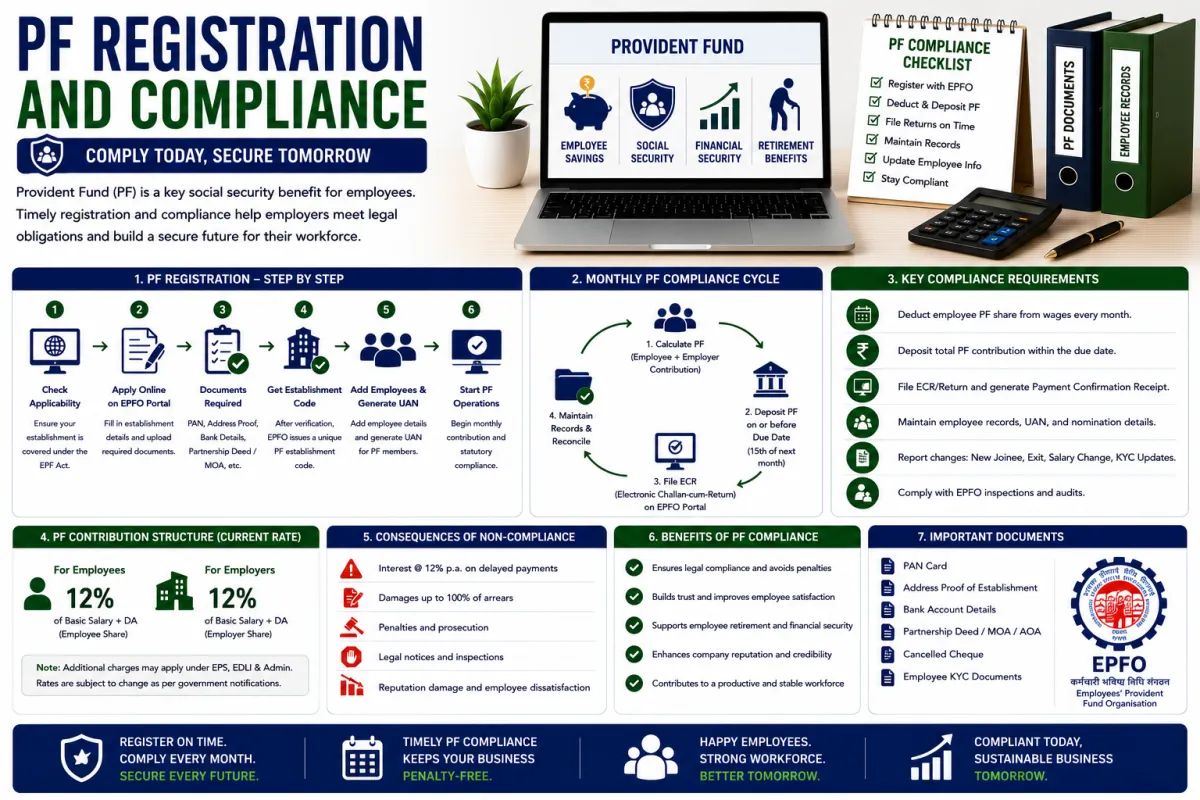
Provident Fund (PF) registration and compliance are essential responsibilities for eligible employers in India. Proper PF management helps businesses meet statutory obligations while ensuring employees receive valuable retirement and social security benefits.



Comments (0)
Please login to comment.