Debt Management is an essential aspect of financial planning that focuses on controlling, repaying, and reducing outstanding debts in a structured manner. While borrowing can help individuals and businesses achieve important financial goals such as purchasing a home, expanding a business, or funding education, excessive or poorly managed debt can lead to financial difficulties. Effective debt management helps maintain financial discipline, improves creditworthiness, and supports long-term financial stability.
The first step in debt management is understanding your current financial obligations. Individuals and businesses should prepare a complete list of all outstanding loans, credit card balances, personal loans, vehicle loans, business loans, mortgages, and other liabilities. Recording interest rates, repayment schedules, monthly EMIs, and remaining loan balances provides a clear picture of the overall debt situation.
Creating a realistic repayment plan is crucial for reducing debt efficiently. Borrowers should prioritize high-interest debts, such as credit card balances and unsecured personal loans, while ensuring that all minimum monthly payments are made on time. Timely repayments help avoid late payment penalties, reduce interest costs, and improve credit scores over time.
Maintaining a monthly budget plays an important role in successful debt management. Tracking income and expenses helps identify unnecessary spending that can be redirected toward faster loan repayment. Reducing discretionary expenses, increasing savings, and allocating surplus income toward outstanding debts can significantly accelerate financial recovery.
Avoiding unnecessary borrowing is equally important. Before taking a new loan or using a credit card, individuals should evaluate whether the borrowing is genuinely necessary and whether the repayment can be comfortably managed within existing financial commitments. Responsible borrowing reduces the risk of excessive debt accumulation.
Maintaining a healthy credit score is another important benefit of effective debt management. Consistently paying EMIs and credit card bills before their due dates, maintaining low credit utilization, and avoiding frequent loan applications contribute to a stronger credit profile. A good credit score improves eligibility for future loans at competitive interest rates.
Debt consolidation may be beneficial for borrowers managing multiple loans. Combining several high-interest debts into a single loan with a lower interest rate can simplify repayments, reduce monthly financial pressure, and improve overall debt management. However, borrowers should carefully compare costs and repayment terms before choosing this option.
Building an emergency fund alongside debt repayment provides additional financial security. Unexpected medical expenses, job loss, or business disruptions can otherwise force individuals to rely on additional borrowing. Maintaining emergency savings helps prevent new debt while supporting long-term financial stability.
Modern financial management applications and budgeting tools simplify debt management by tracking loan balances, sending payment reminders, monitoring expenses, forecasting cash flow, and generating financial reports. These digital tools help individuals and businesses stay organized and maintain consistent repayment habits.
Businesses should regularly monitor working capital, supplier payments, customer collections, and cash flow to avoid unnecessary borrowing. Strong financial planning, efficient receivables management, and careful expense control reduce dependence on loans while improving overall financial health.
Professional guidance from Chartered Accountants, financial advisors, debt management consultants, and banking professionals can help individuals and businesses develop effective repayment strategies, optimize cash flow, improve credit scores, negotiate loan restructuring where necessary, and create long-term financial plans. Expert advice can significantly reduce financial risks while improving overall financial well-being.
Debt Management is not simply about repaying loans—it is about building a financially secure future. By maintaining a realistic budget, prioritizing repayments, avoiding unnecessary borrowing, improving credit discipline, building emergency savings, using financial management tools, and seeking professional guidance, individuals and businesses can reduce financial stress, strengthen their financial position, and achieve long-term financial freedom.
Debt Management: Practical Strategies to Reduce Debt and Achieve Financial Freedom

Akshii
@ Manaksh
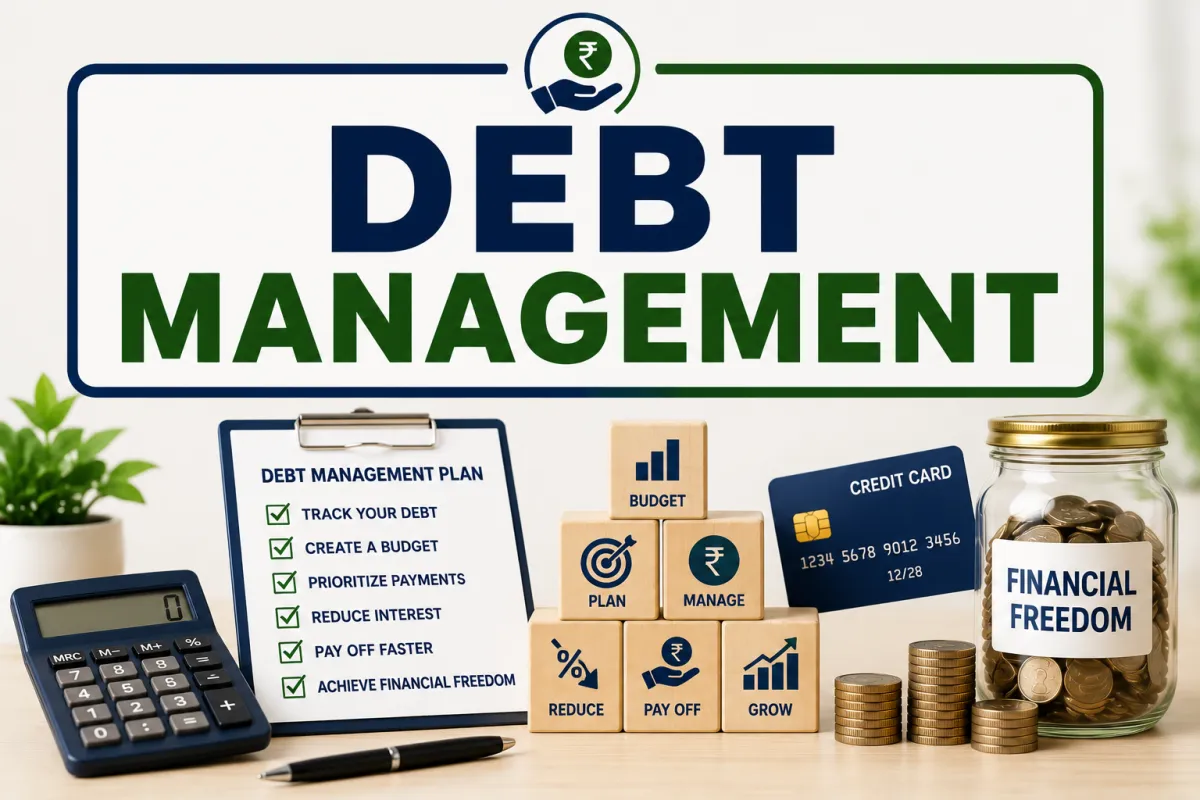
Debt Management is the process of effectively managing loans, credit cards, and other financial obligations to maintain financial stability and reduce financial stress. A well-planned debt management strategy helps individuals and businesses improve cash flow, maintain a healthy credit score, and achieve long-term financial goals.



Comments (0)
Please login to comment.