Income Tax Return (ITR) filing is an important annual responsibility for eligible taxpayers in India. A correctly filed return ensures compliance with tax laws, helps claim eligible refunds, and maintains a good financial record. However, many taxpayers make avoidable mistakes while filing their returns, resulting in processing delays, incorrect tax calculations, notices from the Income Tax Department, or loss of eligible tax benefits. Understanding these common mistakes can help individuals and businesses file accurate returns with confidence.
One of the most common mistakes is selecting the wrong ITR form. Different categories of taxpayers are required to file different Income Tax Return forms depending on their sources of income, business activities, and eligibility. Choosing an incorrect return form may lead to rejection of the return or unnecessary complications during processing. Taxpayers should carefully determine the correct ITR form before filing.
Another frequent error is reporting incorrect or incomplete income details. Some taxpayers unintentionally omit interest income, rental income, capital gains, freelance income, or income from other sources while preparing their returns. Since financial information is increasingly available through government reporting systems, incomplete disclosure may result in notices or reassessment. All taxable income should be reported accurately after reviewing the relevant financial documents.
Many taxpayers also fail to reconcile their return with Form 26AS and the Annual Information Statement (AIS). These records contain details of Tax Deducted at Source (TDS), tax payments, and various financial transactions reported to the Income Tax Department. Comparing personal records with these statements before filing helps identify discrepancies and reduces the likelihood of processing issues.
Incorrectly claiming deductions and exemptions is another common filing mistake. Taxpayers should claim only those deductions for which they satisfy the eligibility conditions and possess proper supporting documents. Unsupported or excessive claims may lead to disallowance during assessment and increase tax liability along with applicable interest or penalties.
Providing incorrect bank account details is another avoidable mistake. Bank account information is essential for receiving Income Tax refunds. Incorrect account numbers or IFSC codes may delay or prevent refund processing. Taxpayers should carefully verify all banking information before submitting the return.
Many individuals also forget to verify their Income Tax Return after filing. Filing alone does not complete the return process. The return must be verified through the prescribed verification method within the specified time limit. Failure to complete verification may result in the return being treated as invalid.
Late filing is another significant compliance issue. Missing the prescribed due date may attract penalties, interest on outstanding taxes, restrictions on carrying forward certain losses, and delays in refund processing. Preparing financial records well before the filing deadline helps avoid last-minute errors and ensures timely submission.
Poor record-keeping also contributes to filing mistakes. Taxpayers should preserve salary slips, Form 16, Form 26AS, AIS, investment proofs, bank statements, rent receipts, home loan certificates, business records, invoices, tax payment challans, and other supporting documents. Organized documentation simplifies return preparation and provides evidence if clarification is required later.
Using reliable accounting or tax preparation software can significantly reduce filing errors. Modern software assists with tax calculations, document organization, return preparation, and validation checks before submission. Automation improves accuracy while saving valuable time.
Since Income Tax laws are amended regularly, taxpayers should stay informed about the latest tax provisions, filing requirements, deductions, and compliance procedures. Consulting a qualified Chartered Accountant or tax professional helps ensure correct return filing, maximize eligible tax benefits, and avoid unnecessary mistakes.
Avoiding common Income Tax filing mistakes is essential for smooth tax compliance and effective financial management. By selecting the correct ITR form, reporting complete income, reconciling tax records, claiming only eligible deductions, verifying the return after filing, and maintaining proper documentation, taxpayers can minimize compliance risks and ensure timely processing of their returns. Accurate Income Tax filing not only fulfills legal obligations but also contributes to long-term financial discipline and peace of mind.
Common Income Tax Filing Mistakes: Errors Every Taxpayer Should Avoid

Akshii
@ Manaksh
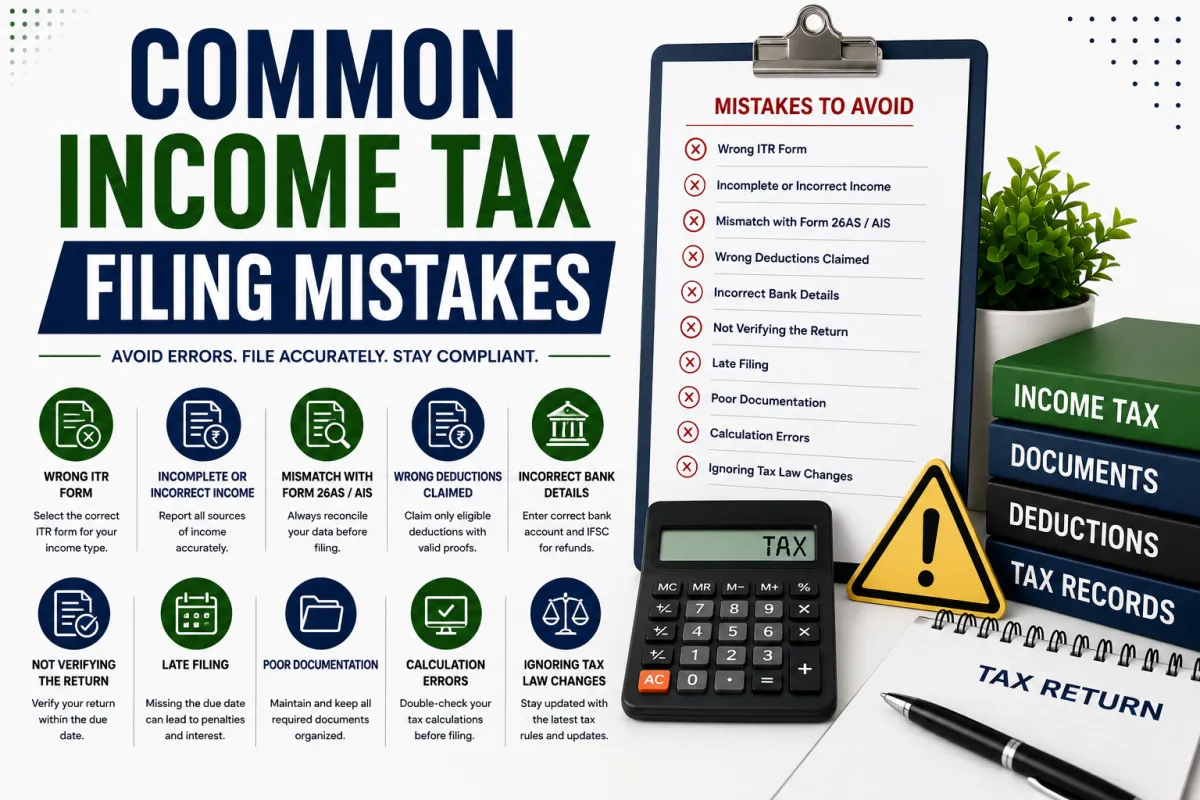
Filing an Income Tax Return (ITR) accurately is essential for every taxpayer. Even small mistakes can lead to notices, delays in refund processing, penalties, or additional tax liabilities. Understanding the most common filing errors helps individuals and businesses ensure smooth and compliant tax filing.

Comments (0)
Please login to comment.